If you are looking to add flowers to your garden for pollinators, I have 9 must-haves for you. These perennials attract more than just honeybees, they provide for many different kinds of pollinators. And they do well in a garden setting. I often read about the best perennials for pollinators from other sources, but often they include plants which are not tidy, or are weedy, or need special care. These 9 must-haves are almost carefree in my garden, and will be for you too!
I choose these 9 must-haves for their proficiency at attracting a wide range of pollinators, from bees and butterflies, to hover flies and hummingbirds. And beetles too! They are primarily summer and fall bloomers, so you may need some other things to fill early-season gaps. But they all bloom for several weeks on end. When I start hunting insects in my own gardens, these are the plants I look at first.
Purple Coneflower
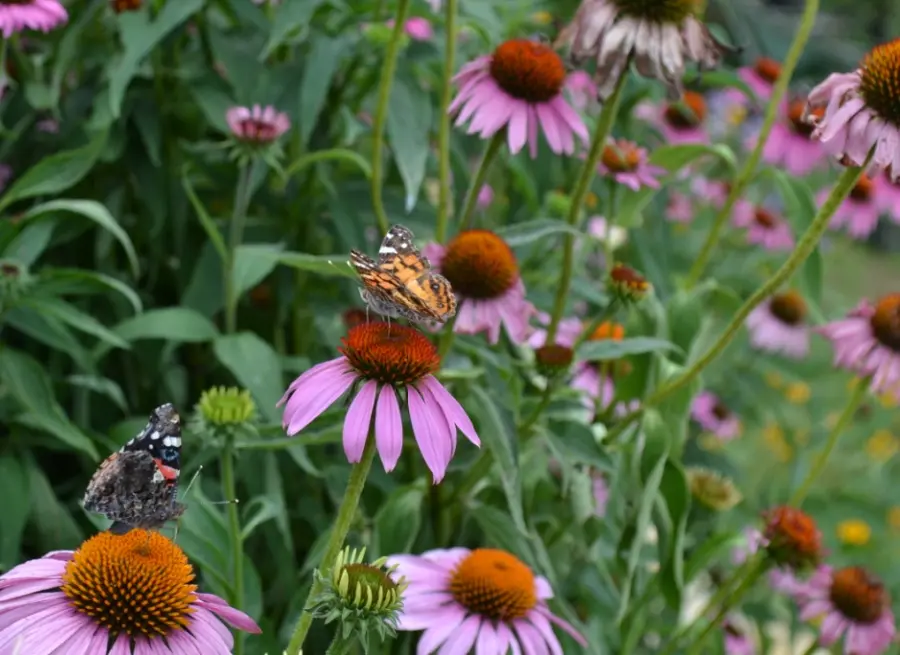
How can anyone grow a garden for pollinators and not use purple coneflower? I am not talking about the flashy, double-flowered coneflowers. Though I admire their looks, it is the straight purple coneflower for pollinators. These are surely must-haves for the garden. Purple coneflower is native to the eastern part of the US, primarily from the Missouri river to the Appalachian Mountains. It can be found in open prairies, meadows, and glades.
Over the years, plant breeders have done a lot with coneflowers, hybridizing and selecting for a variety of traits from flower color to petal count. Size has also played a role in coneflower breeding. But when it come to pollinators, they prefer just the native, or a select few cultivars. Cultivars such as 'Magnus', 'Wild Berry', and 'Prairie Splendor' have been well received by the pollinators and could be must-haves in the garden. Or you can just grow the straight species, Echinacea purpurea.
You can also add other native coneflowers to your garden, which compliment the purple coneflower. These include Topeka coneflower (E. atrorubens). pale purple coneflower (E. pallida), glade coneflower (E. simulata), and black Sampson (E. angustifolia). All these also have purple-pink flowers.
Pollinators & Pests
Now, when it comes to pollinators, the purple coneflower tends to attract a lot of our favorites, namely bees and butterflies. But there are a lot of other insect pollinators which are attracted to it also. The following is a short list of what could be found pollinating purple coneflowers.
- Painted lady butterfly
- American admiral butterfly
- Monarch butterfly
- Eastern tiger swallowtail butterfly
- Green sweat bees
- Buckeye butterfly
- Honeybees
- Skipper butterflies
- Sulphur butterfly
- Various bumblebees
- Longhorn bees
- Leafcutter bees
- Checkerspot butterfly
- Fritillary butterflies
- Blister beetles
- Soldier beetles
- Cuckoo bees
- Longhorn beetles
- Drone flies
When it comes to pests, there are some things which feed on the leaves and flowers of purple coneflowers. These must-haves do not have a host of problems, but there are some things to look out for. Powdery mildew is a fungal disease which causes white-powdery coatings on the leaves and can cause leaf drop. Prevent powdery mildew by planting in full sun whenever possible.
Several insects feed on the foliage and flowers, including the wavy-lined emerald moth, Silvery checkerspot butterfly, blackberry looper, sunflower moth, Common Eupithecia moth, Gorgone checkerspot butterfly, and pearl crescent butterfly. If you see caterpillars feeding in large numbers on the leaves of coneflowers or rudbeckia, then you are seeing silvery checkerspot butterfly caterpillars.
Common Boneset
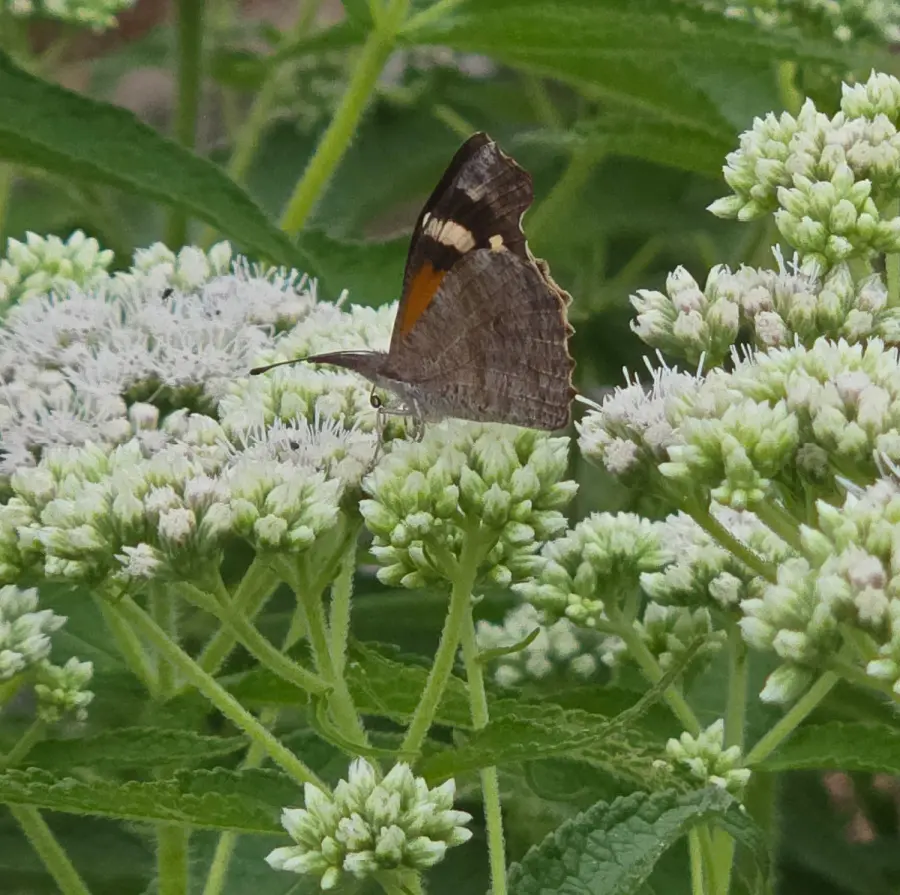
It was a toss up for me between boneset and Joe-pye weed. But it came down to bloom length. Common boneset is more of a fall bloomer, usually blooming from late August into September. Joe-pye weed blooms primarily for only a few weeks in July. And Joe-pye weed primarily attracts only bumblebees and large butterflies. Common boneset, Eupatorium perfoliatum, is native from the Great Plains east to the Atlantic Ocean. The white flowers attract a wide range of insects and can be found growing in meadows, wet prairies, and along forest edges.
Other look-alikes for the Central Great Plains include the tall boneset (Eupatorium altissimum) and late boneset (Eupatorium serotinum). In the garden these latter two are virtually unknown, though I have seen them in wild places around our region.
Pollinators & Pests
Often, white flowers attract a larger number of wasps and bees versus other colored flowers. It is important to attract wasp pollinators to your garden because most of them are predators of pests such as moths, beetles, bugs, and aphids. Insects which feed on the foliage or bore into the stems include the Clymene moth, lined ruby tiger moth, burdock borer moth, three-lined flower moth, and blackberry looper moth.
Pollinators of common boneset that I have observed include:
- Buckeye butterfly
- American snout butterfly
- Thread-waisted wasps
- Leafcutter bees
- Solitary wasps
- Marine blue butterfly
- Bee flies
- Hover flies
- Gray hairstreak butterfly
- Thyanid wasps
- Skipper butterflies
- Longhorn bees
- Paper wasps
- Robber flies
- Sulphur butterflies
Prairie Blazingstar
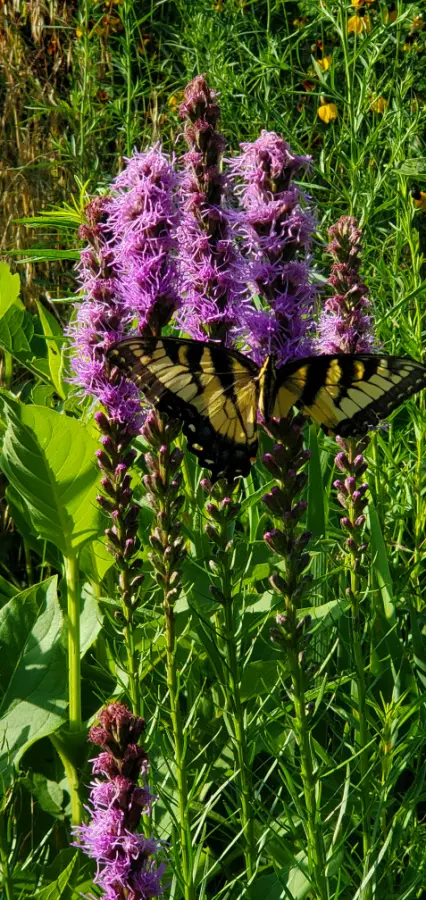
While all the blazingstars are must-haves, prairie (Liatris pycnostachya) is my favorite of the group. It is the tallest and the blooms seem to last longer in the garden than all the other species. While it does need some staking if planted alone, in a prairie or meadow setting it will be supported by other plants such as native grasses, perennial sunflowers, and milkweeds.
Prairie blazingstar is native from the eastern Great Plains to the Mississippi River Valley, from the Gulf of America north to Canada. It can be found growing in ditches, wet prairies and meadows, and in forest glades. The flowers are pink, similar to purple coneflower, and the plants grow 3 to 4 feet tall and in clumps up to 2 feet wide. In my garden, it is the second of the blazingstar species to flower, following on the heels of spike blazingstar (Liatris spicata). The bloom time is late July into August.
Other blazingstars to add to the garden may include the aforementioned spike blazingstar, plus rough blazingstar (L. aspera), dotted blazingstar (L. punctata), and meadow blazingstar (L. ligustylis).
Pollinators & Pests
There are few pests, only a couple of moths which feed on the foliage or flowers of prairie blazingstar. One of the more common is the wavy-lined emerald moth, which feeds on flowers and hides by covering itself with cut flower petals. Pollinators include a variety of bees, wasps, beetles, and butterflies, including:
- Red admiral butterfly
- Skipper butterflies
- Painted lady butterfly
- Various bumblebees
- Swallowtail butterflies
- Hummingbird moths
- Carpenter bees
- Fritillary butterflies
- Cuckoo bees
- Leafcutter bees
- Longhorn bees
- Drone flies
Rattlesnake Master
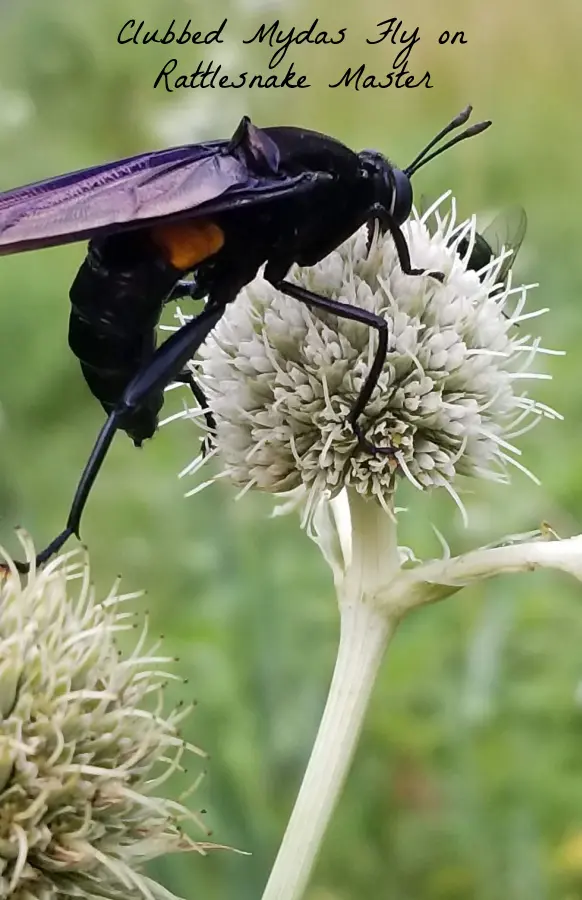
One of my all-time favorite must-haves in the garden, rattlesnake master is often misunderstood and definitely underused. This tall native perennial has uniquely architectural flower heads, rising 3 to 4 feet above the strap-like leaves. The leaves are blue-green, and are similar to yucca leaves, which is where the species name yuccafolium comes from. Native from the eastern Great Plains to the Atlantic Ocean, rattlesnake master grows in wet prairies, ditches, and meadows. It blooms white from July to August, sometimes lasting 6 to 10 weeks.
Rattlesnake master does best in mixed prairies with tall grasses such as big bluestem, switchgrass, and Indiangrass, as well as with tall forbs such as perennial sunflowers, New England aster, obedient plant, wild quinine, and downy skullcap.
Pollinators & Pests
There are only a handful of pests of the rattlesnake master, including the wavy-lined emerald moth, described above, along with some stem-boring moths and beetles. The hollow stems are useful for overwintering mason bees and wasps. Pollinators include a variety of wasps, bees, butterflies, and more. One of the most consistent visitor to my rattlesnake master is the clubbed Mydas fly, which is a predator of scarab wood-feeding beetles. Other pollinators include:
- Monarch butterfly
- American snout butterfly
- Painted lady butterfly
- Buckeye butterfly
- Square-headed wasps
- Cuckoo bees
- Bumblebees
- Scarab beetles
- Thread-waisted Wasps
- Paper wasps
- Spider wasps
- Sweat bees
Butterfly Milkweed
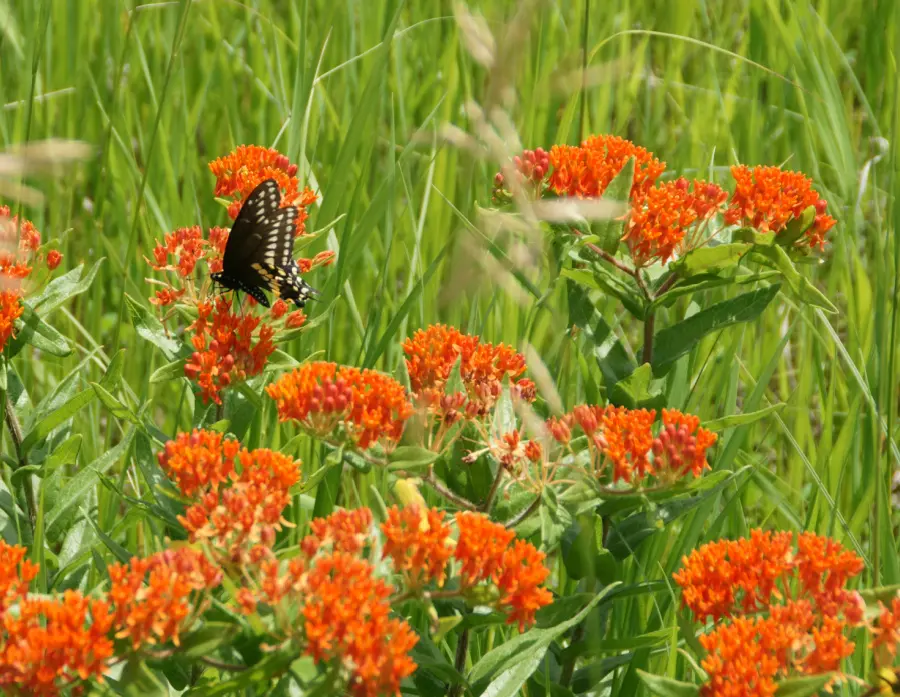
Of all the perennial must-haves for the garden, butterfly milkweed could be the most important. Besides being practically covered with pollinators from May through August, it is the easiest plant to grow in the garden. One of the most common milkweeds in North America, butterfly milkweed is native from the Great Plains eastward to the Atlantic Ocean, and from the Gulf of America north to Canada. The orange flowers are especially attractive, and the plants grow 2 to 3 feet tall and wide.
I love adding butterfly milkweed into the garden, as it fits in in so many different places. It grows wild in meadows and prairies, and can be added almost anywhere into the garden in full sun. Other milkweeds which grow well in garden settings include swamp milkweed (A. incarnata), purple milkweed (A. purpurea), and spider milkweed (A. viridis).
Pollinators & Pests
Other aphids, and the butterflies which feed on the leaves (monarchs), butterfly milkweed has no major pests. Pollinators include a wide variety of insects, including these below:
- Monarch butterfly
- Sulphur butterflies
- Hairstreak butterflies
- Fritillary butterflies
- Honeybees
- Sweat bees
- Sand wasps
- Bumblebees
- Longhorn beetles
- Pearl crescent butterfly
- Mason wasps
- Milkweed bugs
- Leafcutter bees
- Swallowtail butterflies
- Flies
- Day flying moths
- Carpenter bees
Blunt Mountain Mint
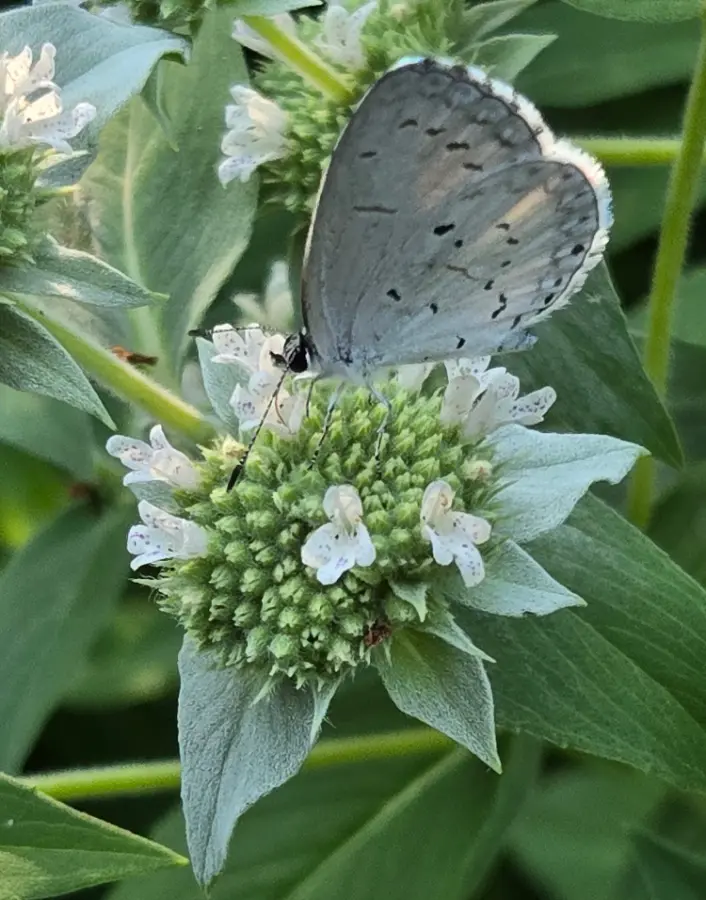
This was the 2025 Perennial Plant of the Year, and nothing deserved it better. Blunt mountain mint, Pycnanthemum muticum, is native to the southeastern US, but is very adaptable and grows well here in the Central Great Plains. In my own garden, it grows around 2 feet tall without irrigation, and 4 feet tall with. You would think that mints are aggressive, but mountain mints are slow spreaders, moving only 1 to 2 feet per year. And they are easy to rip out and relocate if needed.
The flowers of blunt mountain mint are small, tubular flowers which attract a lot of pollinators, especially wasps. It blooms from late June until September, making it one of the longest blooming perennials in the garden. Other mountain mint must-haves include Slender mountain mint (P. tenuifolium) and Virginia mountain mint (P. virginianum).
Pollinators & Pests
Surprisingly, there are 14 species of moths whose caterpillars feed on various parts of members of the mint family. That may or may not include mountain mints, but it is wise to know about it. Otherwise, they have no problems, unless you plant them in the wrong place. Pollinators include a lot of insects and hummingbirds may also visit the tubular flowers.
- Bumblebees
- Masked bees
- Cuckoo wasps
- Leafcutter bees
- Mason wasps
- Wedge-shaped beetles
- Thyanid wasps
- American snout butterfly
- Skipper butterflies
- Parasitoid wasps
- Sweat bees
- Hairstreak butterflies
- Weevils
- Hover flies
- Scarab beetles
- Bee flies
- Longhorn bees
- Blood bees
Ornamental Onion
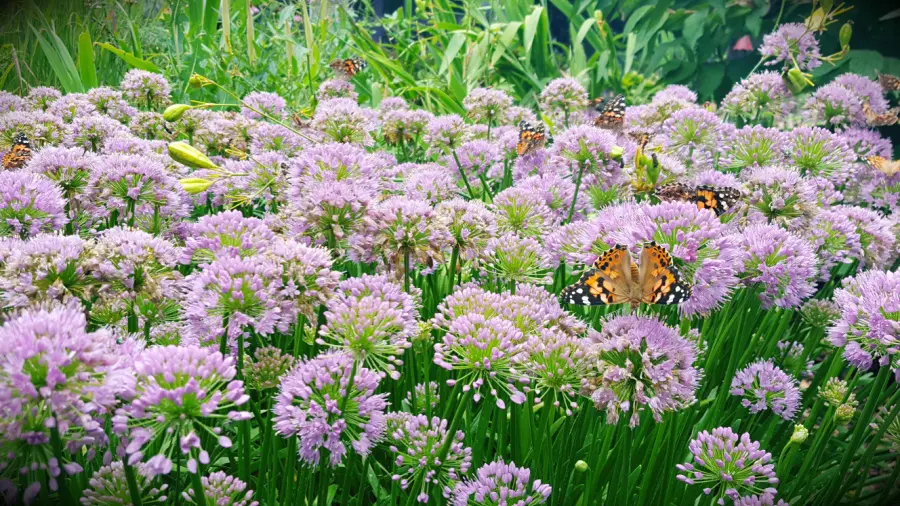
Whether you choose the latest cultivar or the oldest around, you can hardly go wrong with ornamental onion. I have planted 5 of the cultivars in my gardens, mostly as border plants, and it is wonderful to have so many blooming onions in July and August (pun intended). There are many cultivars and types of ornamental onions now, but one thing remains the same, they all attract a lot of pollinators. So they are must-haves in your garden.
Ornamental onions are mostly pink bloomers, although there are shades or purple or white. Most grow around 18 inches tall and wide. And they are super easy to propagate by division or seed. Now, I am not talking about chives or garlic chives here, but the ornamental onions such as Milennium, Medusa, Bubble Bath, or Serendipity.
Pollinators & Pests
Now, in the 10 years I have had ornamental onions in my gardens, I have yet to see a pest bothering them. Nothing eats the leaves! However, the flowers are visited by so many pollinators. Check out most of them below:
- Sulphur butterflies
- Painted and American lady butterflies
- Hairstreak butterflies
- Swallowtail butterflies
- Monarch butterfly
- Buckeye butterfly
- Skipper butterflies
- Viceroy butterfly
- Carpenter bees
- Sweat bees
- Honeybees
- Day-flying moths
- Cuckoo bees
- Bee flies
- Bumblebees
- Hummingbird moths
- Longhorn bees
- Drone flies
- Thread-waisted wasps
- Leafcutter bees
Perennial Salvia
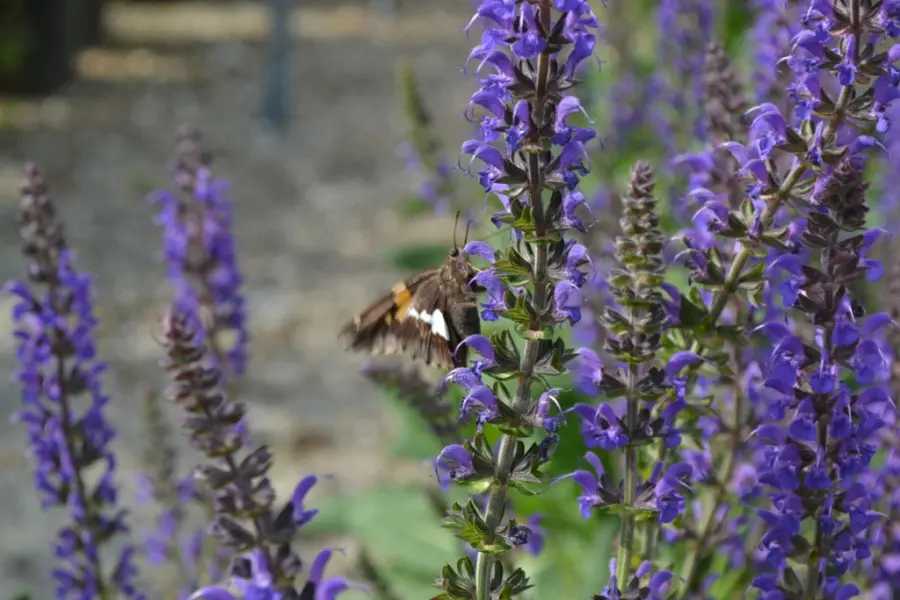
Up until recently, I was not the biggest fan of salvia. And as usual for me, it is because of the overuse of May Night salvia. Everyone it seems has used it in their gardens. But not me. However, I can see the benefits of adding salvia, whether May Night or some other cultivar, to the garden for pollinators. It is one of those plants which butterflies just seem to like more than others. Salvia comes in an array of colors, including purple, blue, white, pink, dark pink, and multi-colored. My favorite is Azure Snow, a white and purple variety.
Salvia is one of the easiest perennials to grow, preferring full sun conditions, and well-drained soil. As long as it gets plenty of sun and does not stand in water, it will do well. Most salvia grows 1 to 2 feet tall and wide and they bloom best in May and June, with a rebloom in August. They will bloom better if cut back by 2/3rds in early July.
Pollinators & Pests
Salvia has hardly any pests, being a member of the mint family, which has strong oils and scents. There are a few moths whose caterpillars will feed on the leaves or roots, and they can get powdery mildew if planted in too much shade or too wet of soil. Pollinators mainly includes bees and butterflies.
- Hummingbirds
- Honeybees
- Sulphur butterflies
- Monarch butterfly
- Fritillary butterflies
- Carpenter bees
- Bumblebees
- American snout butterfly
- Skipper butterflies
Tall Sedum
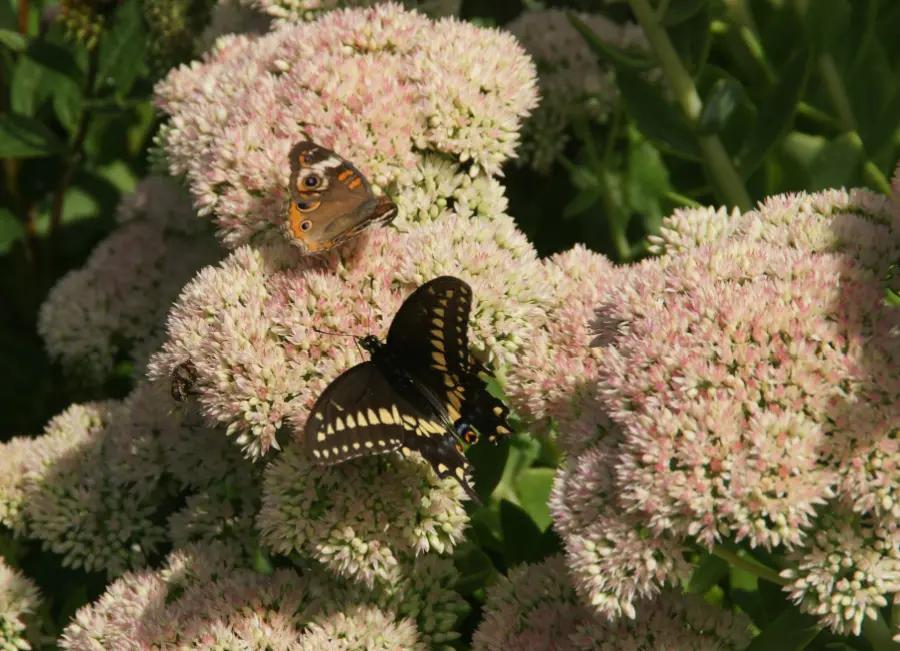
Our last of the must-haves in the garden, tall sedum is one of a gardener's favorites. When I first moved east to Northeast Kanas, I heard folks calling it live-forever, which I had never heard before. But it is true, if planted correctly, tall sedum seems to live forever. And it is super easy to propagate from roots or cuttings. Tall sedum can now come in a wide variety of flower colors, leaf colors, and sizes, all thanks to plant breeding. Most though, tend to grow around 1 to 2 feet tall and 2 to 4 feet wide.
Some of the best cultivars include:
- Autumn Fire
- Matrona
- Lemonjade
- Coraljade
- Back in Black
- Thundercloud
- Midnight Velvet
Pollinators & Pests
While tall sedum is not prone to pests, it can suffer from aphids if not cleaned up well in spring or fall, and it can get leaf spots if watered with overhead sprinklers. If you plant them in full sun, they should not have any problems, but in shade they tend to split open. Pollinators include a lot of late summer and fall flying insects.
- Buckeye butterfly
- Monarch butterfly
- Longhorn beetles
- Hairstreak butterflies
- Skipper butterflies
- Tachinid flies
- Square-headed wasps
- Bumblebees
- Mason wasps
- American snout butterfly
- Paper wasps
- Painted lady butterfly
- Mourning cloak butterfly
- Carpenter bees
- Soldier flies
- Scarab beetles
- Day-flying moths
- Sulphur butterflies
Conclusion
These 9 perennial must-haves are important plants for pollinators in the garden. If you do not already have some or all of them in your garden, look to get some as soon as possible. They will attract a wide range of pollinators between them, and some are host plants for the butterflies and moths.
Happy planting!