Even though the springtime brings warmer temperatures, leaves on everything, and sunshine, the flowers really do not shine until June. But there are still many perennial pollinator plants for gardens, blooming in April and May. We do get less pollinators for those plants in early spring, but there are still bees, flies, moths, and butterflies which overwintered as adults in leaf litter.
What can we do to attract in more pollinators for spring? Well, they are already there if they are going to be, either waiting as egg or larvae for the right conditions, or as adults flying. Trees and shrubs are blooming during the early spring, and they provide for the pollinators without our help. We want the perennials and low shrubs blooming so we can see the pollinators.
Other than trees and shrubs, there are the "weeds" which can help pollinators, but are not considered to be good for gardens. I am of course talking about dandelions, purple deadnettle, creeping veronica, henbit, wild mustards, and many more "weeds". Of perennial pollinator plants for the garden, I have a list of 9 plants, some native, some not, which are great.
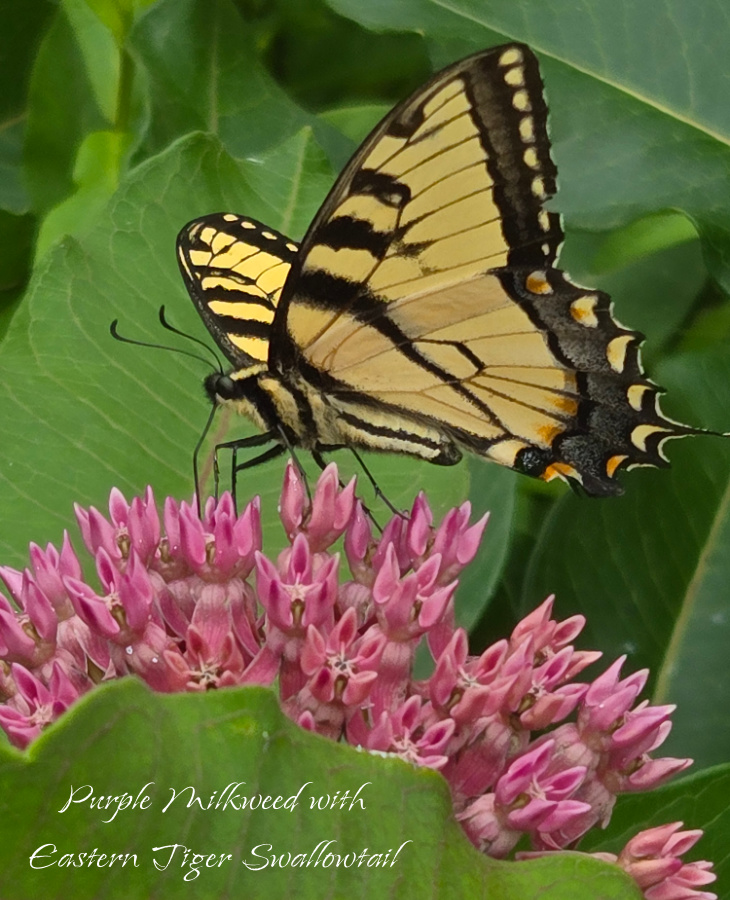
Purple Milkweed - Asclepias purpurea
Milkweeds are my favorite group of perennial pollinator plants. I have several in my landscape, both planted and native. I first planted purple milkweed after receiving some plants in a trade for Clematis fremontii seeds with a grower. In their first season in my garden, they bloomed in late April, but in every year since they have bloomed in May.
Purple milkweed has probably the showiest flower buds of all the milkweeds, and the flowers open dark pink to almost purple in color. In shady spots, the flowers are closer to true purple than in full sun. And surprisingly, that is where we typically find it growing wild, in the shade. I say surprising, because the flowers and plant sin the shade look spindly and are stretched toward any sun they can get. Clearly, this is a wet meadow or glade plant.
Anyways, it is a great perennial to add to the garden. Among perennials, the leaves, flower buds, and flowers all put on a show, and the flowers attract a large range of pollinators including butterflies, bees, flies, and beetles. And it is a host plant for the Monarch butterfly, as well as several moths.
Pair purple milkweed with native grasses, cutleaf coneflower, garden phlox, and other taller perennials. It grows 3 to 4 feet tall by 2 feet wide.
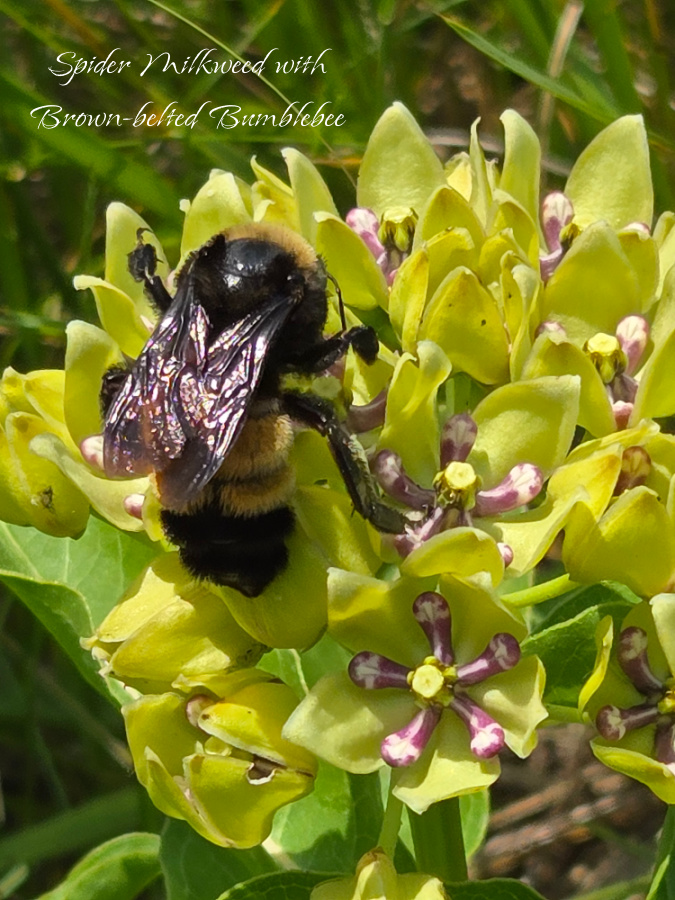
Spider Milkweed - Asclepias viridis
Also called green antelopehorns, spider milkweed is the earliest blooming milkweed in our region. It typically starts blooming in mid April, and can keep on blooming well into June and sometimes July in cooler springs. The flowers are not showy from far away, but as you move in, you will see the purple and green colors within. And because it is an early bloomer, and a milkweed, it attracts a wide range of pollinators, including:
- Early arriving Monarch butterflies
- Other early spring flying butterflies
- Moths (mainly at night)
- Beetles
- Bees
- Hover Flies
- Bee flies
Spider milkweed is not typically found as plants at the nursery because it does not like being in a container. But you can get seeds and plugs easily enough. It grows 2 feet tall and wide. It grows great alongside hardy geranium, spiderwort, sedums, salvia, and butterfly milkweed.
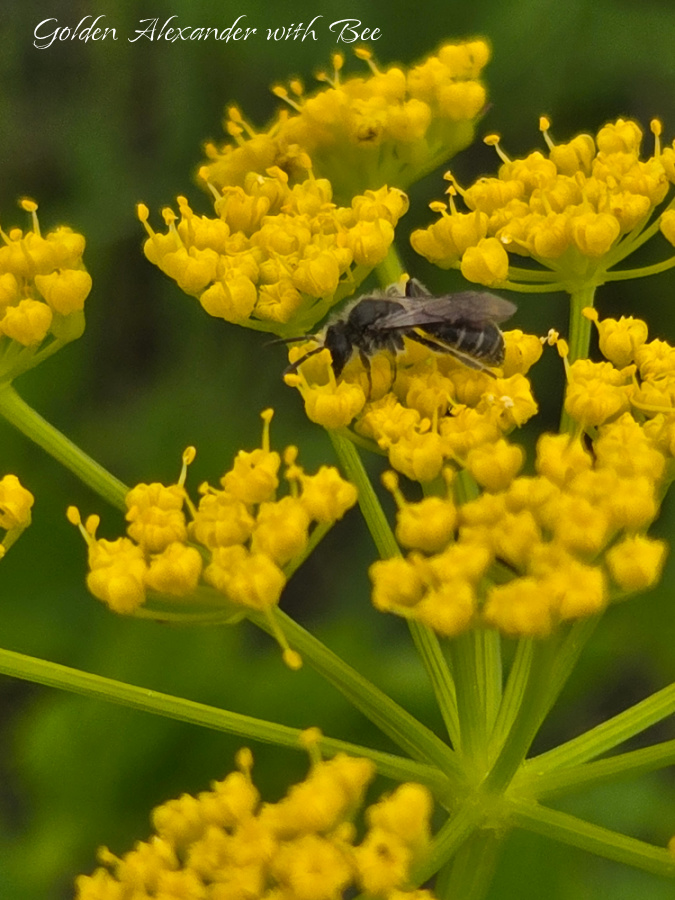
Golden Alexander - Zizia aurea
This is often an overlooked native in the garden. I have rarely seen it added as one of the perennial pollinator plants. But it would go great in a meadow garden, Monarch Waystation, or among other perennials in a cottage garden. Golden Alexander grows 2 to 3 feet tall and in clumps 1 to 2 feet wide. Being a member of the Carrot or Parsley Family, it has umbels of tiny flowers (yellow), that attract a wide range of pollinators.
It is especially attracts beneficials like early wasps, hover flies, and crab spiders. But you will also see bees and other pollinators as well. I would love to see more gardeners adding this native to their landscapes. Golden Alexander pairs well with Baptisia, Culver's root, tall sedum, and garden phlox.
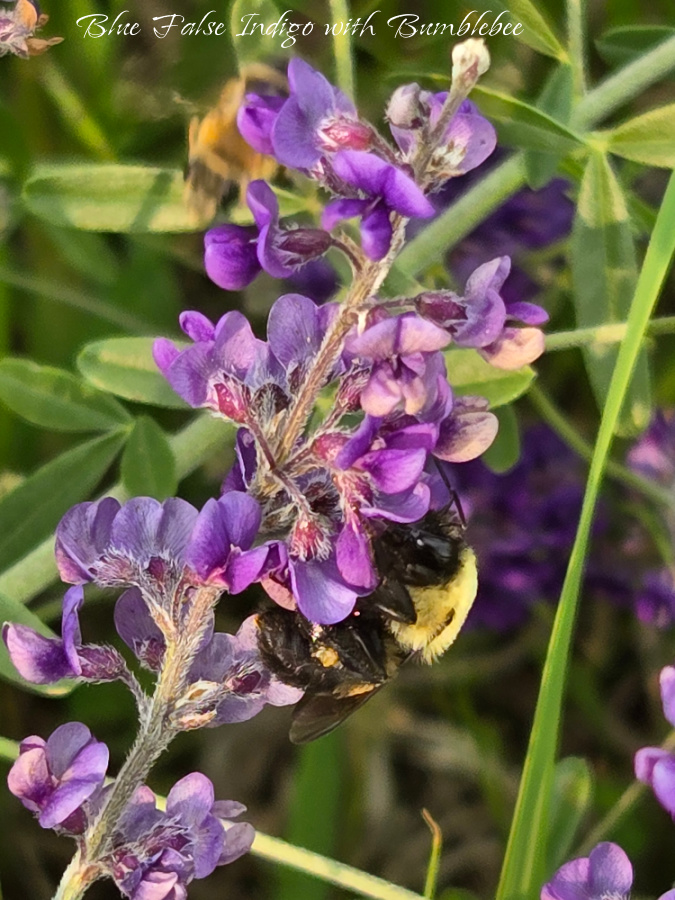
Blue False Indigo - Baptisia australis
This is probably the best selling of all the false indigos, even over the amazing selections of cultivars. Funny thing, I actually only have cultivars in my garden. But they still attract the same pollinators and are still host plants for the same insects. In fact, in 2025, I documented several species of moths and butterflies who chose one cultivar in my garden over the others (Baptisia Twilite 'Prairieblues'). On this one cultivar I found the larva for the Silver Spotted Skipper, Genista broom moth, wild indigo duskywing, and several unknown geometer moths.
As perennial pollinator plants, false indigos mainly attract bumblebees, but they can also attract some butterflies, other bees, flies, and beetles. You may even catch a hummingbird taking a peek at the flowers. Blue false indigo grows 3 to 5 feet tall and wide, depending on soil conditions and sunlight. Cultivars may grow up to 6 feet tall and wide. It can stand alone in the garden, or be paired with native grasses, roses, Culver's root, or other medium height perennials.
Blue Wood Phlox - Phlox divaricata
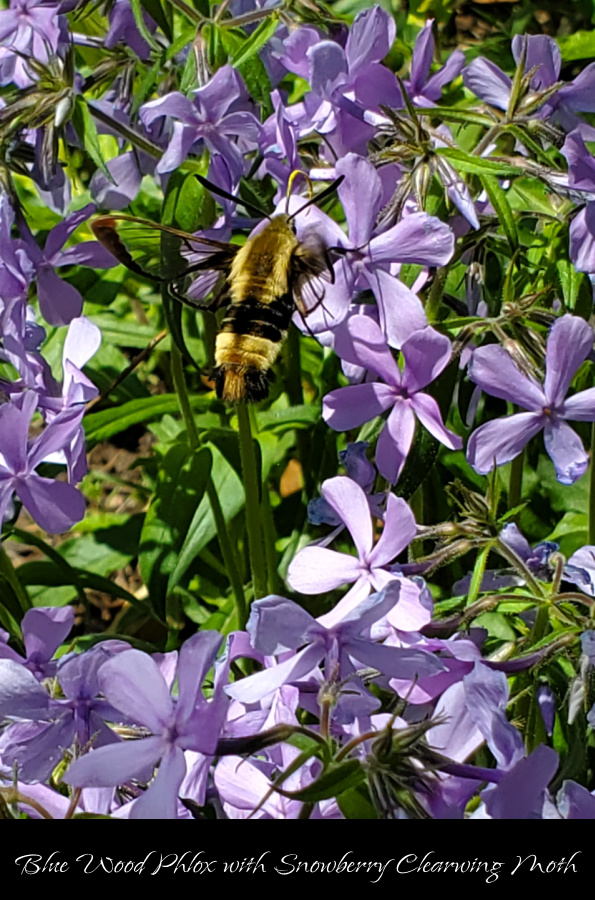
This is one of the best groundcovers for the garden, in part sun or full sun. you can even let it seed into an alternative lawn for some added color in spring. It only gets about 8 inches tall even with the blooms, but the blooms can last for several weeks from early April to June. Blue wood phlox flowers are typically blue, but can also be pink, lavender, or white. They care slightly tubular and are visited by long-tongued bees, bumblebees, sphinx moths, butterflies, and bee flies.
Although considered a groundcover, it only spreads outward about 18 inches from the center, but can reseed easily and spread that way. You could easily end up with many different shades of blue or lavender from seed. In the garden it pairs best with hostas, coral bells, hydrangeas, sedges, and woodland wildflowers.
Yarrow - Achillea species
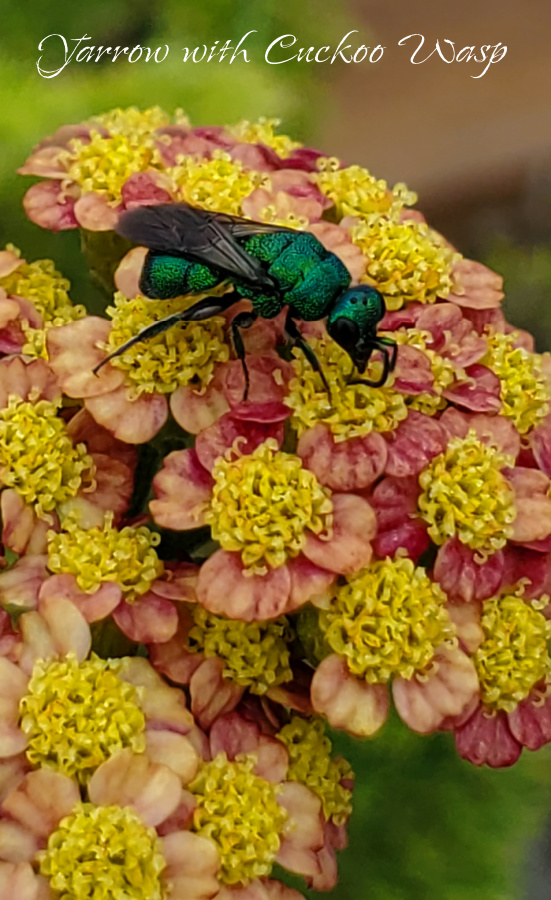
There has been a plethora of new cultivars of yarrow hitting the racks over the last few years. Thanks to breeding efforts, yarrow has continued an uphill climb in perennials, with new and longer-lasting colors. And it is one of the best perennial pollinator plants. With umbel type flower structures (like a v with a lid), it makes a sturdy platform for pollinators flying in.
Yarrow has been growing wild (supposedly naturalized not native) in the US for centuries. There is evidence of the Native Americans using it as a tea medicinally. It grows 1 to 2 feet tall and up to 3 feet wide, depending on the cultivar and species. And some cultivars may bloom from May to September (Peter Cottontail). The flowers can be white, yellow, red, pink, purple, or bicolor. Yarrow pairs well with butterfly milkweed, daylilies, sedum, blazingstar, penstemon, or other shorter perennials.
Pollinators attracted include:
- Crab spiders
- Beetles
- Cuckoo wasps
- Small butterflies
- Parasitoid wasps
- Bees
- Moths
- Hover flies
- Ants
Shasta Daisy - Leucanthemum species
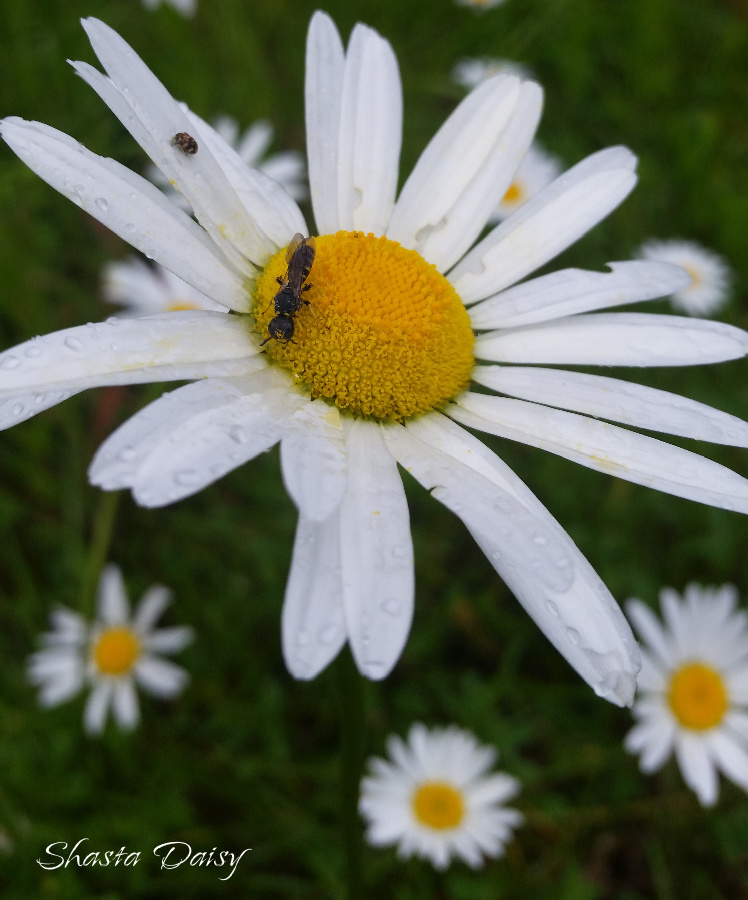
I would not usually recommend these to gardeners, because they can be short-lived in the landscape. But they attract a lot of pollinators during their bloom period. However, do not be fooled into thinking the double flowering varieties are the same - they rarely get a second look from insects. Instead choose ones with a nice yellow-orange center and white petals. Shasta daisies grow 2 to 3 feet tall when flowering, and the leaves can be in a rosette around 12 inches wide, or can spread like a groundcover.
Daisies, if contained, can be mixed into a cottage or meadow garden and paired with native grasses, iris, milkweeds, blazingstars, or black-eyed Susan. They attract beetles, bees, hover flies, true bugs, soldier flies, small butterflies, moths, skipper butterflies, small wasps, and crab spiders.
Meadow Sage (Salvia) - Salvia hybrids
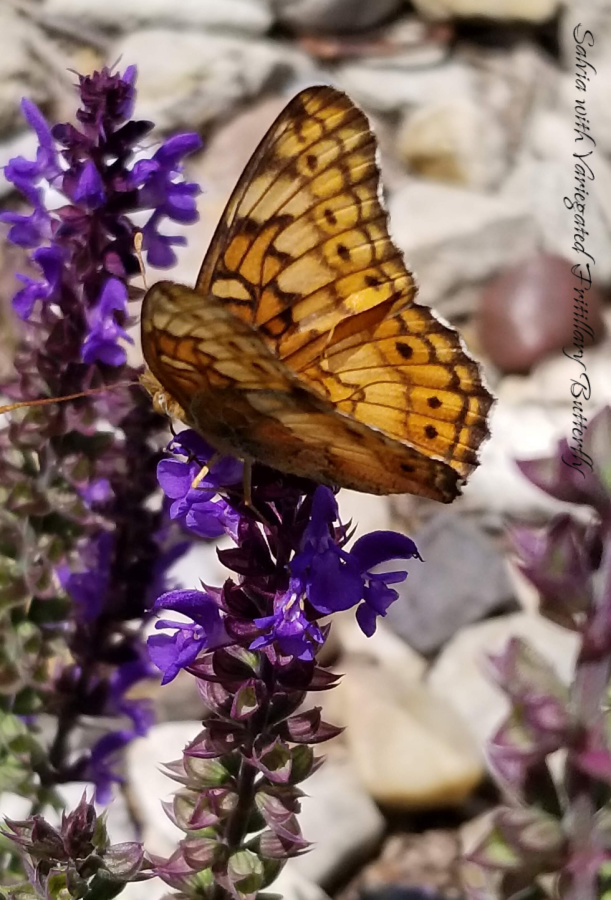
Salvia has become one of the most popular of the perennial pollinator plants. Mainly because it is drought tolerant, mostly pest free, easy to maintain, and provides continuous color from May to August. And if you cut it back hard in July, you can get new growth and fresher flowers through October. Proven Winners has developed several new lines or series of salvias, and their colors are dazzling. Shades come in pink, purple, blue, pale blue, white, lavender, and multicolor. My favorite is one called Azure Snow, which is a purple and white multicolor.
Salvia grows around 18 inches tall and wide, with some exceptions reaching 24 to 30 inches tall and wide. It can be planted alongside many other perennial pollinator plants such as butterfly milkweed, spider milkweed, Shasta daisy, yarrow, calamint, catmint, and more. The pollinators which come to salvia include:
- Fritillary butterflies
- Skipper butterflies
- Other large and small butterflies
- Bees
- Hummingbirds
- Hover flies
Conclusion
Spring blooming perennial pollinator plants may be short in number, but vast in variety. With the advent of new breeding programs like Proven Winners, there are a lot of new and exciting perennials for spring flying pollinators. And many of them are native or nativars. You get to decide which ones to add to your garden.
Happy planting!