Although it has been more than a decade since I first wrote about Monarch Waystations, they are just as important as before. Even as gardening trends more and more towards natives, pollinator protections, and converting traditional landscapes to eco-friendly landscaping, there are still problems to face. I recently started reading Sea of Grass by Hage, and it is an eye-opener about the destructiveness of American agriculture on our land. What does that have to do with Monarch Waystations?
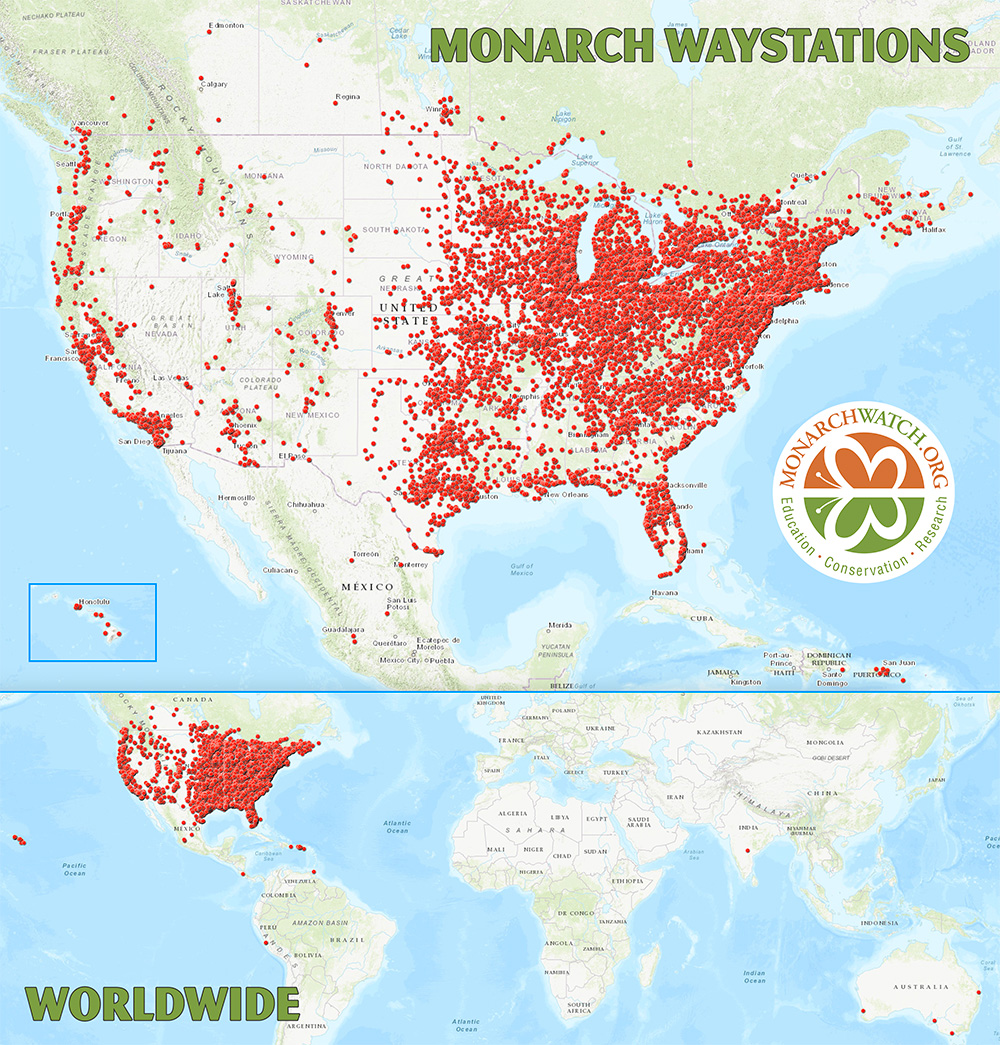
The Monarch Watch program was started in 1992 by Dr. Chip Taylor of Kansas University as a program to encourage public engagement in studies of monarchs and monarch conservation. The Monarch Waystation program was begun in 2005 to encourage the public to build habitats on their own scale for monarchs and other wildlife/pollinators. As of December 1st, 2025, there were more than 54,000 registered Monarch Waystations across North America.
Save the Monarchs!
Monarch butterflies face a host of problems; including habitat loss, pesticides, vehicles, and pollution. They, like all the other pollinators and insects in the country, need help to survive. Now, there will be those who say "there are still millions of monarch butterflies, why worry so much about them?". Well, to use another example, the passenger pigeon was a North American native bird, migratory by nature, which numbered in the billions in 1850 and was completely extinct from the wild by 1900. Its collapse was due to overhunting and trapping, not pesticides and habitat loss. But the comparison is important.
Right now, monarch populations are lower than the threshold numbers needed to sustain a population for the future. Monarchs are in peril to become extinct in the next 60 years if things do not change. And while there are some factors which we have little control over (weather, weather modification, migration), there are other things we can do to influence the plight of monarchs.
One thing we can do is reduce or eliminate the use of pesticides in our own home gardens and try to influence farmers into using less pesticides overall or to switch to regenerative farming. We can also plant Monarch Waystations.
Planning Monarch Waystations
So what is new with planning Monarch Waystations? When it comes to planning out a new Monarch Waystations, you must still think about the requirements to get it certified. Now, if you do not want to get certified, you can plan out your station any way you want to. But to meet the requirements and get certified you must:
- Include at least 2 species of milkweeds, and preferably 10 plants or more overall.
- Provide nectar plants for pollinators.
- Have a plan to maintain and sustain the garden.
Milkweeds for Monarchs (and other insects)
As I have mentioned in past posts, milkweeds can make great garden plants, but not all of them will fit into a tidy space. You need to take in account your region and weather when planting milkweeds. I lice to use BONAP's North American Plant Atlas when checking to see what will grow in my region and whether or not something is native. My own experience with milkweeds in my Monarch Waystation helps me to show you which are best to use.
If your Monarch Waystation is small (less than 200 square feet) and needs to be relatively tidy, such as those Monarch Waystations in downtown city areas, by churches or museums, or where untidiness is undesired, plant the following milkweeds with your other plants.
- Butterfly milkweed
- Purple milkweed
- Swamp milkweed
All the milkweeds I am recommending in this blog are for the Central Great Plains Region.
For larger or messier Monarch Waystations, you can add any of the following milkweeds to your design:
- Butterfly milkweed
- Purple milkweed
- Swamp milkweed
- Clasping milkweed
- Common milkweed
- Showy milkweed
- Spider milkweed
- Tall green milkweed
- Whorled milkweed
- Prairie milkweed

Nectar Plants
You have to choose wisely here. There are a lot of plants which fall into the category of nectar plants. I recommend starting with plants that fit your overall landscape, and natives. Monarch butterflies are more used to nectaring at native plants, though there are many non-native which they will visit. Plants of all types have become more and more available over the years, so your options are very nearly endless. It could come down to your design.
A prairie or meadow style Monarch Waystation will allow for more native plants and would look better with them. But a more contemporary styled design can allow for a mixture of types. You can use annuals, perennials, and shrubs. I would not recommend trees in your waystation, because they will eventually shade out your other plants.
Native Nectar Plants (Dry to Medium Soil Moisture)
- Rattlesnake master
- Golden Alexanders
- Hemp dogbane
- Pale Indian plantain
- Purple coneflower
- Pale purple coneflower
- Ozark coneflower
- Wavyleaf thistle
- Tall thistle
- Purple Joe Pye weed
- Indian blanket flower
- Curlycup gumweed
- Sneezeweed
- Tuberous Sunflower
- Willowleaf Sunflower
- False sunflower
- Spike blazingstar
- Prairie blazingstar
- Button blazingstar
- Wild quinine
- Compassplant
- Cup plant
- Giant goldenrod
- Stiff goldenrod
- New England aster
- Aromatic aster
- Ironweed
- Wingstem
- Snow on the mountain
- Purple prairie clover
- Slender mountain mint
- Garden phlox
- Blue vervain
- Woolly verbena

Nonnative Nectar Plants
- Yarrow
- Ornamental Onion
- Lavender
- Catmint
- Betony
- Sedum
Nectar Producing Shrubs
This list includes both native and non-native shrubs (less than 10 feet in height).
- Butterfly bush
- Leadplant
- Black chokeberry 'Snowfire'
- Blue Mist spirea
- Buttonbush 'Fiber Optics'
- Red Osier Dogwood
- Southern Bush Honeysuckle
- Virginia sweetspire
- Ninebark
- Sandcherry 'Jade Parade'
- Elderberry
- American bladdernut
Mulching and Other Maintenance
Before you plant it up, you better have your mulch and maintenance plan ready to go. I would suggest using only organic mulch in the garden, as it will break down and feed the soil. Never use weed fabric with native plants that want to spread by seed and rhizome. If you need to kill grass or block out weeds, then put down plain brown cardboard, covered with mulch. For the Monarch Waystations, I prefer to use partially composted wood chips, spoiled and chopped hay, or compost as mulch. You can add it on after planting, and again yearly.
What about after planting? You biggest problem is going to be weeds. If you mulch with both cardboard and organic mulch, you can eliminate 99% of weed problems. You will get some that blow into the mulch, and you will have to pull those. Watering too will be a problem if it is a dry summer. Check your plants in the morning by sticking a finger into the soil by each plant. If it not moist, then water until the water comes out and flows away.
Lastly, plan to leave the tops of the plants on through the winter, and cut back and remove debris in late March (put debris in a pile where overwintering insects can get out). If you have a more mature garden, more than 5 years old, you may be able to burn everything off. I usually stop mulching after year 5, leave soil under cover of the plants and allowing for ground-nesting bees.
Enjoying the Fruits of Your Labor
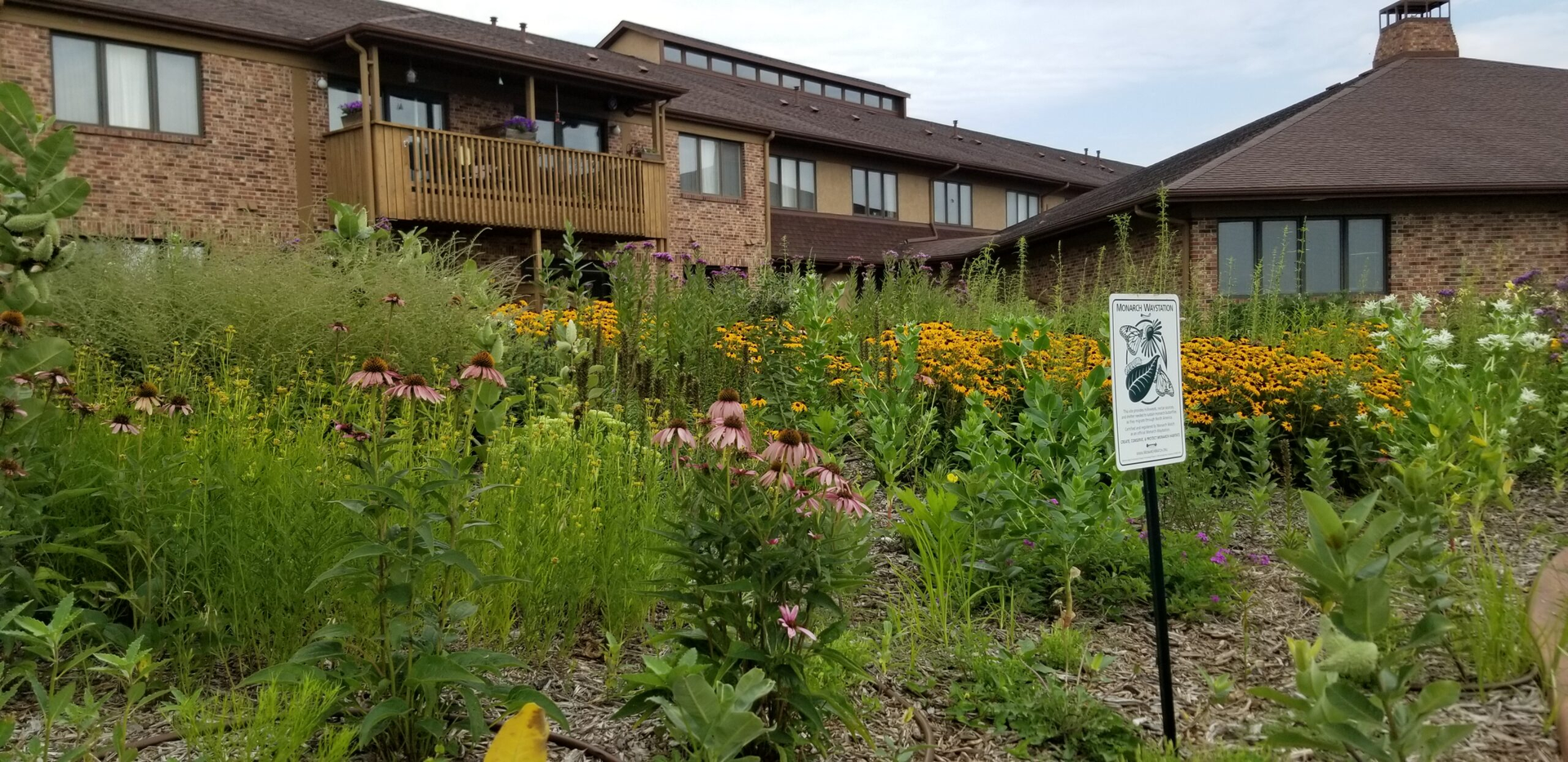
Once you have your Monarch Waystation planted, then its time to start enjoying it. The purpose is to have a place for monarch butterflies to rest, refuel, and lay eggs for the future. And a lot of other insects will utilize it too. Keep a record of what you see there. You might be surprised by all the life which comes to your spot. While you do not have to watch it all the time, or put up a camera, try to check it at least once week, if not daily. The first year the garden will mostly sleep, setting roots and doing light flowering. The second and third years you will see a great increase in flowers and plant growth.
The following is a short list of insects I would expect to see in a Monarch Waystation in the Central Great Plains:
- Monarch butterfly and caterpillars
- Great Spangled fritillary
- Eastern tiger swallowtail
- Black swallowtail
- Silvery checkerspot
- Huron skipper
- Painted lady
- Viceroy
- Pearl crescent
- Eastern tailed blue
- American bumblebee
- Honeybee
- Green sweat bees
- Leafcutter bees
- Bee flies
- Thread-waisted wasps
- Mason wasps
- Hover flies
- Syrphid flies
- Flower longhorn beetles
Conclusion
Creating Monarch Waystations is a good way to keep track of Monarch populations in your region, while providing food and fuel for them. Other insects, especially bees and butterflies will take advantage of your creation. And you can monitor your progress with a project on iNaturalist. No matter what, you can have a fun way to connect with other gardeners across the nation.
Happy gardening!