Our 2026 July Plant of the Month is bee balm, also known as wild bergamot and Oswego tea. This native perennial is a favorite for bumblebees and other pollinators throughout the country. Nearly every region within the lower 48 has a species of bee balm they can grow well in their gardens, and most have several options. Besides being variable across the country, bee balm has been hybridized extensively, is great for pollinators, and has a long bloom period, bridging the gap between spring and summer blooming perennials.
Across the United States, there are between 18 and 25 known species of bee balm, and many cultivars which have been mainly hybridized between Wild Bergamot (Monarda fistulosa) and Scarlet Bee Balm (Monarda didyma). There is a lot of variation in colors between species, including pink, yellow, white, red, purple, and various spotting on the flowers.
Uses in the Garden
A member of the Mint Family, bee balm has a strong odor in the leaves, stems and flowers. This makes it a great plant to use where deer and rabbits are problematic. Several of the species grow with rhizomes, similar to many other mint family members, and can spread to fill large areas. They are mostly drought tolerant, and are sun and heat loving, blooming primarily from June to August.
Bee balm is a great addition to the Cottage Garden, the Meadow Garden, or the Pollinator Garden. No matter which cultivar or native you choose, you are going to bet great blooms and fragrance.
The Medicinal Garden
Besides just adding it to your other gardens, bee balm is great as an additive in the medicinal garden. It contains thymol, a compound also found in thyme, and which is still used in modern antiseptics. Historically, bee balm has a place in the medicine cabinet for:
- Tea for colds, flu, chills, sore throats, and fevers
- Steam inhalation for congestion, coughs, and bronchitis
- As a gargle or mouth rinse for sore gums, tooth pain, or mouth infections
- Applied as a poultice for minor cuts, scrapes, insect bites, and skin infections
- As a digestive aid for upset stomachs, gas, and nausea (often in combination with mint or yarrow)
- Oswego Tea used as a substitute for imported black tea during the Revolutionary War
It was primarily used by indigenous tribes such as the Oswego, Blackfoot, and Ojibwe, but was later adopted for use by European settlers and early American herbalists.
Pollinators and Pests
In my own gardens, I have observed mainly bumblebees visiting my bee balm flowers. But that is mainly because I tend to watch more of the high-traffic pollinator plants blooming at the same time. But bee balm does attract a lot more pollinators than I see on my own plants. Including:
- Hummingbirds
- Various bumblebees and carpenter bees
- Swallowtail butterflies
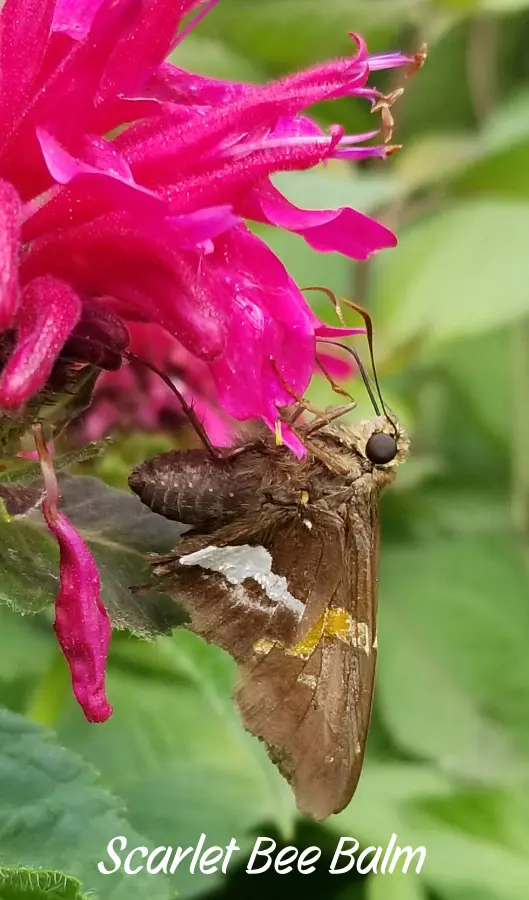
- Skipper butterflies
- Wasps
- Sphinx moths
While there are few pests that attack bee balm, there are 2 moths which feed on the foliage. the Hermit sphinx moth and the Gray Marvel moth both feed on the leaves. Otherwise, the only other problem is powdery mildew, a fungal infection that can affect the leaves and stems, and may cause a disruption in flowering. It can be prevented mostly by placing plants in full sun, where they can receive a breeze to prevent water buildup on the leaves after arain or irrigation.
Best Cultivars and Natives
I try to keep up with various trial gardens around the country, but there are none in the Central Great Plains. Which is too bad, because we can grow a wide range of native plants in our landscapes, despite our deep freeze in winter and baked earth in summer. But we can learn from other trial gardens and what they do. For the eastern US, the Mt. Cuba Research Center in Delaware has one of the best programs. The Chicago Botanic Gardens are also great place to check out for research on plants.
From my own experience, the following are the best species of natives and cultivars that I would recommend for the Central Great Plains Region.
Native Bee Balm for Our Region
- Wild bergamot, Monarda fistulosa - native to much of the United States, including most of the Great Plains, the Midwest, and the Gulf States, this bee balm grows 3 to 6 feet tall with lavender colored flowers. I have encountered in several prairie remnants around the state of Kansas.
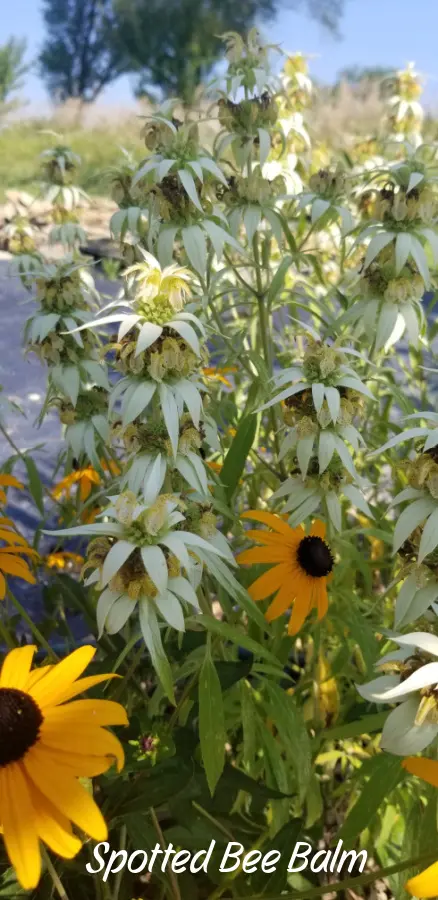
- Spotted bee balm, Monarda punctata - we first started selling this at Grimm's Gardens in 2025 and it went over very well. The only concern is that is likes drier soil, and we had it too wet in the nursery. It grows 2 to 3 feet tall with yellow flowers, spotted with brown. and it has pink-white sepals below the flowers.
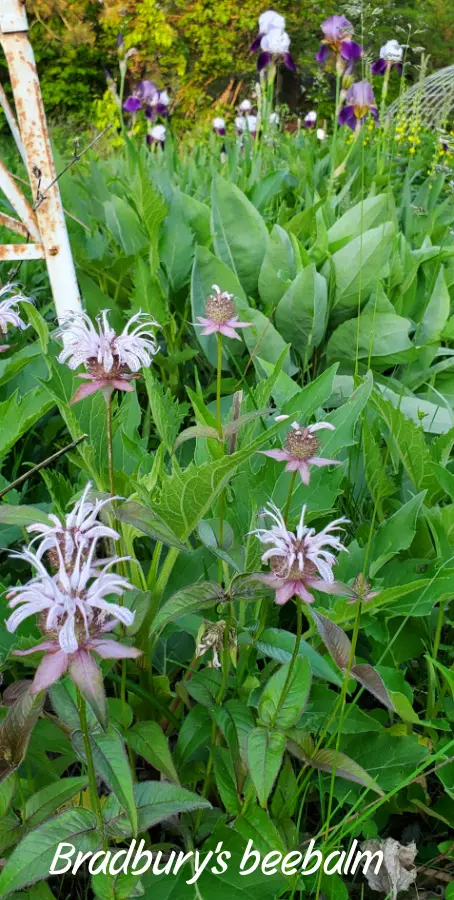
- Bradbury's beebalm, Monarda bradburiana - I planted this in my Meadow Garden as I was first developing it, and have been very happy with its clustering effect. It grows only around 2 feet tall with bright pink flowers spotted with red dots.
- Scarlet bee balm, Monarda didyma - native to the Northeastern US, this perennial is often used for hybridization. It has bright red or purple flowers, and grows 2 to 4 feet tall.
Cultivars for the Central Great Plains Region
- 'Purple Rooster' - had the best purple color and no powdery mildew in the Mt. Cuba trial. It grows 4 feet tall and spreads to 4 feet wide.
- 'Grand Parade' - a common variety, with lavender colored flowers on short stems, only growing to 16 inches tall by 3 feet wide. It does have good mildew resistance.
- 'Pardon My Cerise' - has dark pink to reddish flowers, on a squat plant. It grows 18 inches tall by 12 inches wide. Proven Winners selection
- 'Grape Gumball' - has dark purple flowers, but much shorter than 'Purple Rooster'. Plants grow 2 feet tall and wide.
- 'Fireball' - bright red flowers on stocky plants. It grows only 2 feet tall and wide.
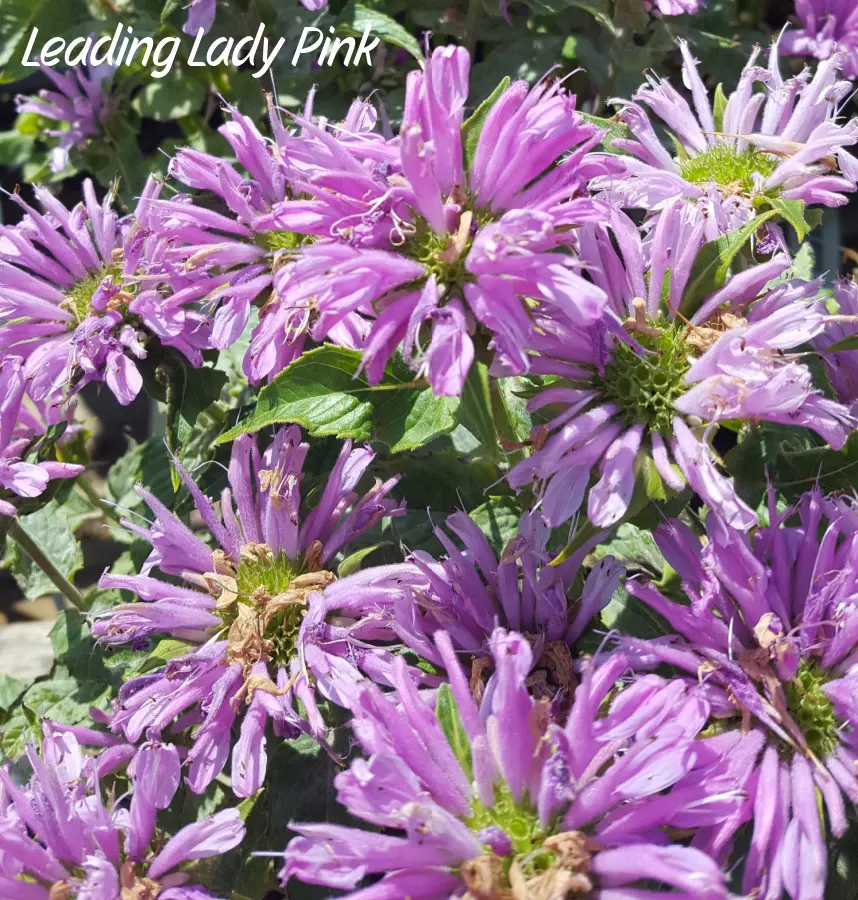
- 'Leading Lady Pink' - a Proven Winners variety, growing 14 inches tall by 24 inches wide, with bright pink flowers.
Companion Plants
In the garden, among other plants, bee balm can stand alone, or it mixes well into a variety of garden styles. The newer cultivars are more stocky, and fit among many other plants, while the natives can be mixed into borders or beds of many different kinds of flowers. They help bridge the gap between spring and late summer flowering plants.
Companions for Cultivars
- Lavender
- Asiatic lilies
- Betony 'Hummelo'
- Rudbeckia 'American Gold Rush'
- Daylilies
- Spike blazingstar
- Siberian iris
- Artemisia 'Silver Lining'
- Sea Lavender 'Dazzle Rocks'
Companions for Natives
- Switchgrass
- Big bluestem
- Little bluestem
- Rudbeckia 'Little Henry'
- Asters
- Goldenrods
- Perennial sunflowers
- False sunflower
- Joe Pye weed
- Common Boneset
- Purple coneflower
- Prairie blazingstar
- Fall phlox
- Rattlesnake master
- Agastache 'Blue Fortune'
- Culver's Root
Conclusion
Bee balm is a great addition to the garden, no matter what style of garden you have. It is great for bridging the gap between spring blooming and late summer blooming perennials and annuals. With several natives and many cultivars to choose from, you can add a lot of color to your garden with this native. It is great for pollinators and deer and rabbit resistant.
Happy planting!