Berries can be one the easiest ways to both add winter interest and attract birds to the garden. With the latest and greatest cultivars coming out more and more, there is a plethora of choices for berry producing shrubs for the garden. And while some of these are edible, many of them are for the birds alone!
If you are planning a new landscape after building a home or if you are just looking to refresh your outdated design, Grimm's Gardens can help. Besides having 3 designers on staff, we have an excellent selection of plants to choose from, including many berry bushes.
What is a Berry?
No, many of you immediately started thinking strawberry, blueberry, raspberry, etc. But the definition of a berry is a fleshy fruit from a single flower's ovary, containing seeds within its pulp. By definition, a "strawberry" is not a berry.
Other examples of actual berries are bananas, grapes, tomatoes, cucumbers, blueberries, and viburnum berries. Even rose hips are berries. But strawberries are not on my list.
Types of Berries for the Garden
When it comes to choosing berry bushes for the garden, you have to think about several factors. First, what style of garden do I have and can I put berries into it? For example, it can be difficult to find a good, well-behaved berry bush for a formal garden. But there are many berries which fit well into a cottage or informal garden setting.
And you have to think about purpose. Are you planning to harvest fruit, or just eat some here or there? Do you have kids in the garden? Pets? Are you trying to attract wildlife or birds into the landscape? What kind of lighting do you have? All these are considerations to think about before adding berries to your plan or existing garden.
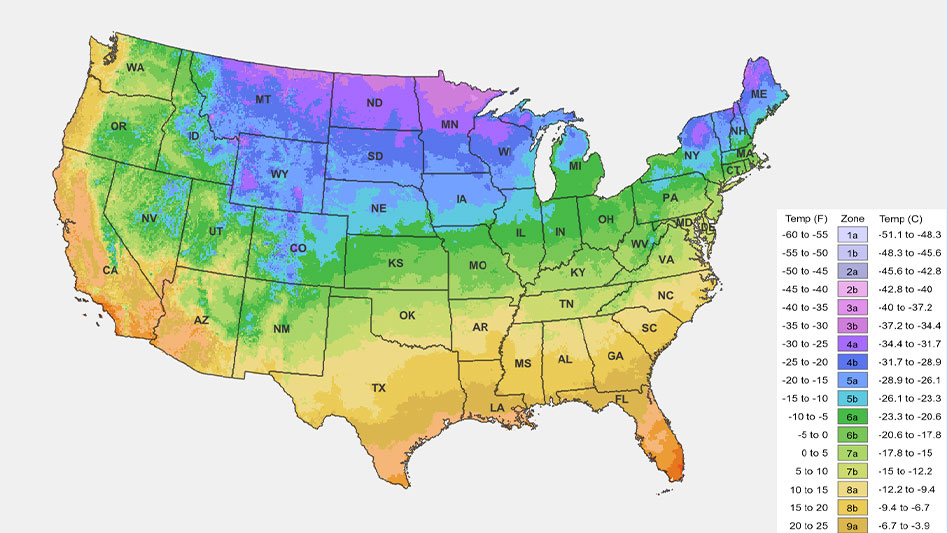
Another concern is location. Where in the country do you live? If it somewhere very hot or very cold, you might not be able to grow the berries you want. Check out your hardiness zone before you plan or plant.
Edible Berries
If you are planning to plant an orchard or put in fruit bushes around the garden, then these might not be for you. I am not talking about blueberries, blackberries, raspberries, currants, gooseberries, or elderberries. You can read about those in my other blogs.
These edible berries are often used more as landscape bushes than for their fruit. But they are still edible and can be used in a variety of ways in the garden.
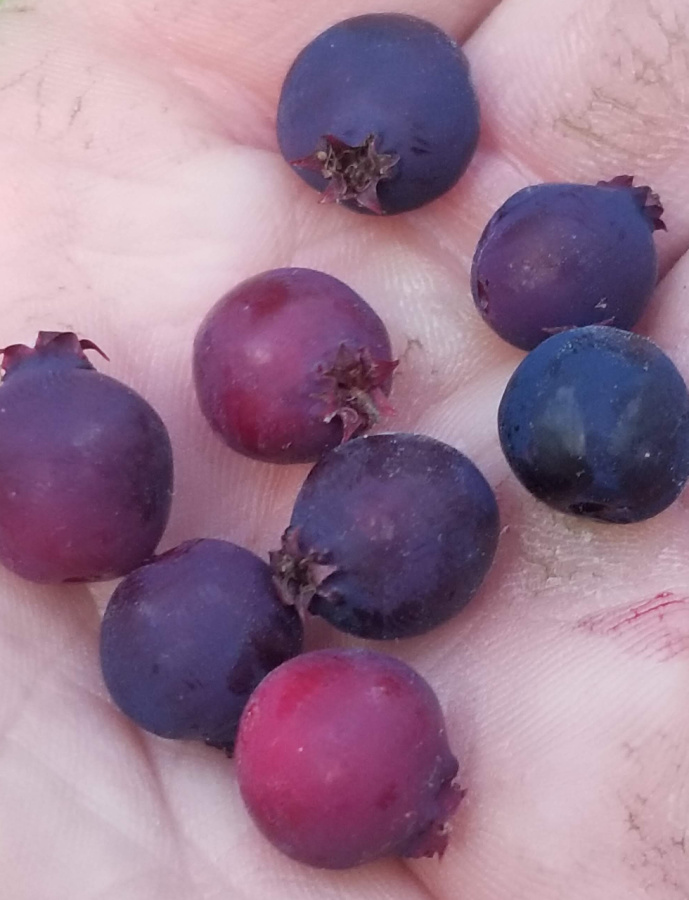
Saskatoon - Amelanchier alnifolia
Native to the north and northwestern portions of the United States, there are actually some small populations of saskatoon in Kansas and Nebraska. I first came across this shrub while doing my college internship in central Minnesota.
When I found the berries, which ripen in June (they are also called Juneberries), I thought them similar to blueberries, but with an apple-like tartness to them. In size and color, they look like blueberries.
Saskatoon bushes grow 3 to 6 feet tall and form small clumps 6 feet in width. In April and May, the plants are covered with small, fragrant white flowers which are pollinated by bees and butterflies. The berries follow the flowers and ripen in June. After the fruit is consumed (by you or the birds), the autumn show begins. Fall color is spectacular in shades of red and orange. 'Regent' is the most well-known cultivar of Saskatoon.
In the landscape, it can be used as a hedge, or planted singly or in masses. It pairs well with native grasses, evergreens, and other berry bushes.
Black Chokeberry - Aronia melanocarpa
Now, this is not your pick off the plant and eat type of edible berry. Certainly, your kids will do this, and will not do it again after. My son likes to hike with me and when we see berries of any kind he asks if he can try them. If they are edible I encourage him, knowing full well some berries are too astringent to eat raw. Astringent foods cause the mouth to feel dry or sore, sometimes like eating a cotton ball.
But chokeberry in the landscape is great for a lot of reasons. With all the new cultivars for landscapes coming (mostly Proven Winners), there is a lot to choose from. In the past, the newest cultivars came from European breeders, who were developing it for its berries, not for landscape qualities.
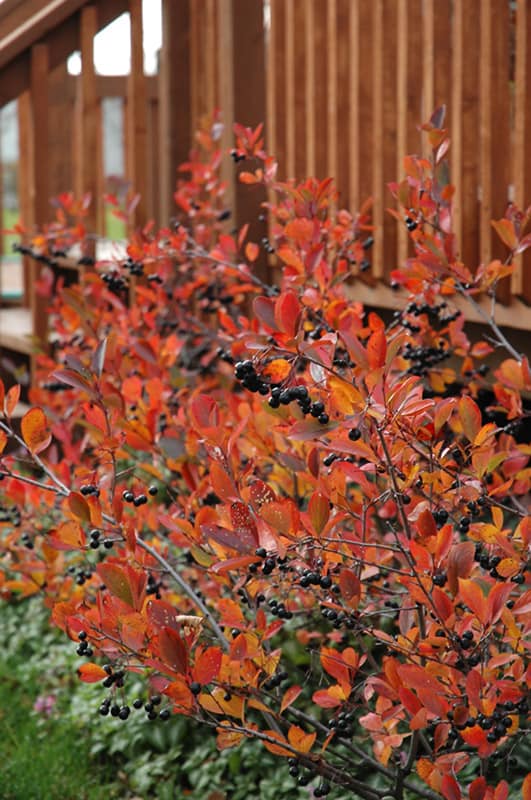
In the landscape, black chokeberry can be used as a groundcover, hedge, or screen, or planted in masses. Blooming in April, it has pinkish buds which open white, then glossy green leaves. The fruit is black, about the same size as a blueberry, and persistent through the winter. It is usually the last resort for hungry birds. And who can forget fall color? It is a myriad of oranges and reds.
Cultivars for the Garden
If you are looking for black chokeberry to grow more for its fruit (the berries are high in antioxidants, vitamin C, and flavonoids), then try Viking or McKenzie. But for the landscape, the following cultivars are best.
Ground Hug only grows 14 inches tall and can spread out like a groundcover up to 5 feet in diameter. I really like this one in place of perennial sun groundcovers, because to does not need any pruning.
Autumn Magic was one of the first cultivars selected for the landscape. It stays a tidy 5 feet tall and wide, perfect for hedges.
LowScape Snowfire was our best seller in 2025. And no wonder, this chokeberry boasts a nice size at 6 feet tall by 4 feet wide, with gorgeous flowers in early spring.
LowScape Mound is the perfect size for foundation plantings at 3 feet tall and wide. Just like other varieties, it has glossy green leaves and excellent fall color.
Honeyberry - Lonicera caerulea
Also called haskaps, these shrubby berries have only recently been introduced into our landscapes. Native to the boreal forests of North America, Siberia, and Japan, they thrive in cool, moist environments. Surprisingly, they are tolerant of our heat in the Central Great Plains, especially if planted on the north side or under shade.
And they grow quickly too! I planted a "throwaway" plant from work, one that was half dead, and it quickly grew to 3 feet wide in 1 year. But make room for them, they can get 6 feet tall and wide, though pruning to shape is an option.
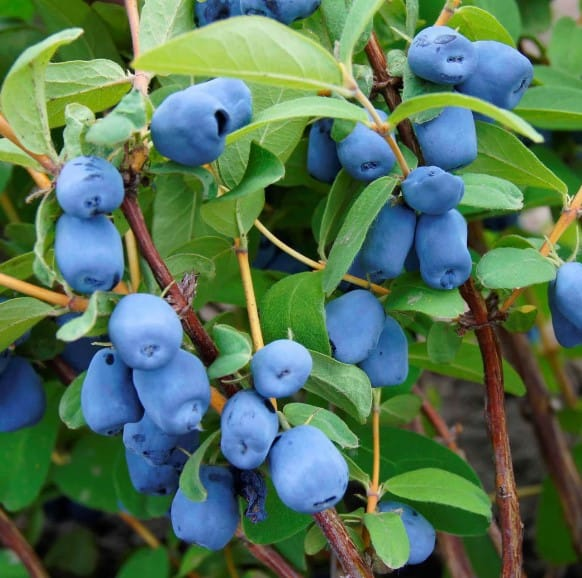
In the landscape, honeyberries can be used as a hedge, shrub border, or planted in mixed borders. The pair well with taller shrubs and small trees, grasses, and evergreens. Honeyberries flower in early spring, bright yellow tubular flowers, which are pollinated by bees. The leaves are soft, light green, and the fruit is cylindrical, deep blue or purple in color. Do not worry about cold temperatures when these are blooming, they love the cold and will produce a crop even in freezing weather!
Cultivars
With selection and breeding, there are a few cultivars which can produce fruit without a companion. But most varieties require another different variety to successfully produce fruit. Choose 2 to get fruit.
Yezberry Solo from Proven Winners can fruit on its own, but will produce better with another cultivar. It grows 6 feet tall and wide.
Tundra has firm berries and is considered a midseason berry, ripening later than other berries. It grows 6 feet tall and wide.
Aurora is considered to be the best for fresh eating, with large berries. And the plants are smaller, around 4 feet tall and wide.
Cinderella is a smaller sized shrub, growing only 3 feet tall and wide. It is a good cultivar to plant alongside Aurora.
Nannyberry - Viburnum lentago
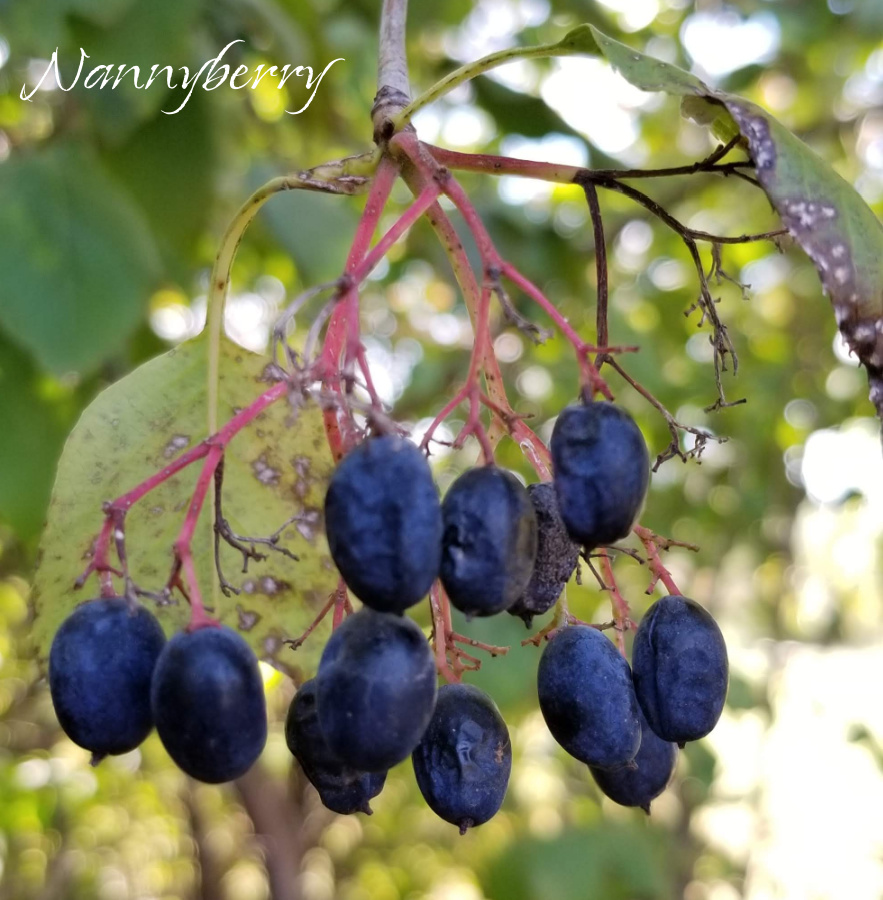
One of my favorite shrubs in the landscape, the nannyberry is not a berry that many gardeners would consider for eating. Despite that thought, it does have edible fruit, but with a large seed. The flavor is similar to a dried blueberry, once you get around the seed.
Native to the Upper Midwest and Northeastern Great Plains, nannyberry does very well in the Central Great Plains. I have one customer who uses it as a hedge, letting it grow 12 feet tall and shearing the plants every year. It can grow 16 feet tall and wide!
It has large flat flowerheads loaded with white flowers in mid spring, followed by flattened, blue-black berries. The leaves are shiny green, turning rich burgundy red in autumn. It is a great plant for hedges, screens, and the shrub border.
Blackhaw Viburnum - Viburnum prunifolium
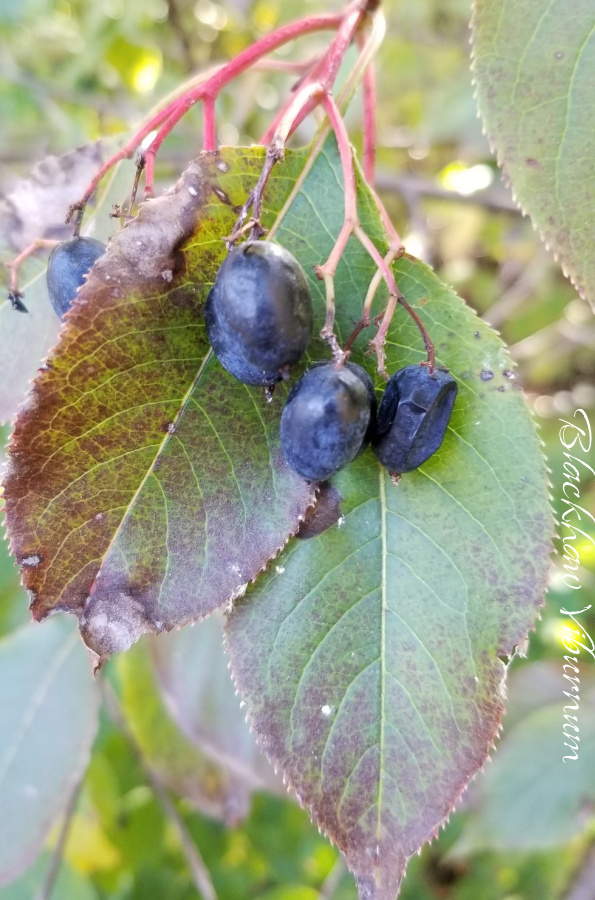
Another edible viburnum, this one is native to the Midwest and Eastern Great Plains region. Indeed, I have found it growing wild in Atchison, KS and farther south along the west side of the Missouri River. Similar to nannyberry in taste and fruit size, the plants also grow quite large, but can be trained into tree form if desired.
The leaves of the blackhaw are more rounded than nannyberry, but also shiny green with excellent burgundy red fall color. It can grow 12 to 20 feet tall and wide. The white flowers attract bees and flies during flowering. And the fruit is loved by many types of birds. It makes a great specimen plant, screen or hedge, or can be used in a shrub border.
Inedible Berries
While there are more shrubs with edible berries I could mention, the above plants are the best ones to be used in landscaping. The following berry bushes are considered inedible, and should not be consumed. I will mark poisonous if they should be avoided completely.
Roughleaf Dogwood - Cornus drummondii
As I have mentioned before, this is an underused plant in the landscape. Outside of naturalistic landscapes, it is unused. And that is too bad. It makes an excellent hedge or screen, growing 6 to 10 feet tall. The width and breadth can be limited with regular pruning or mowing.
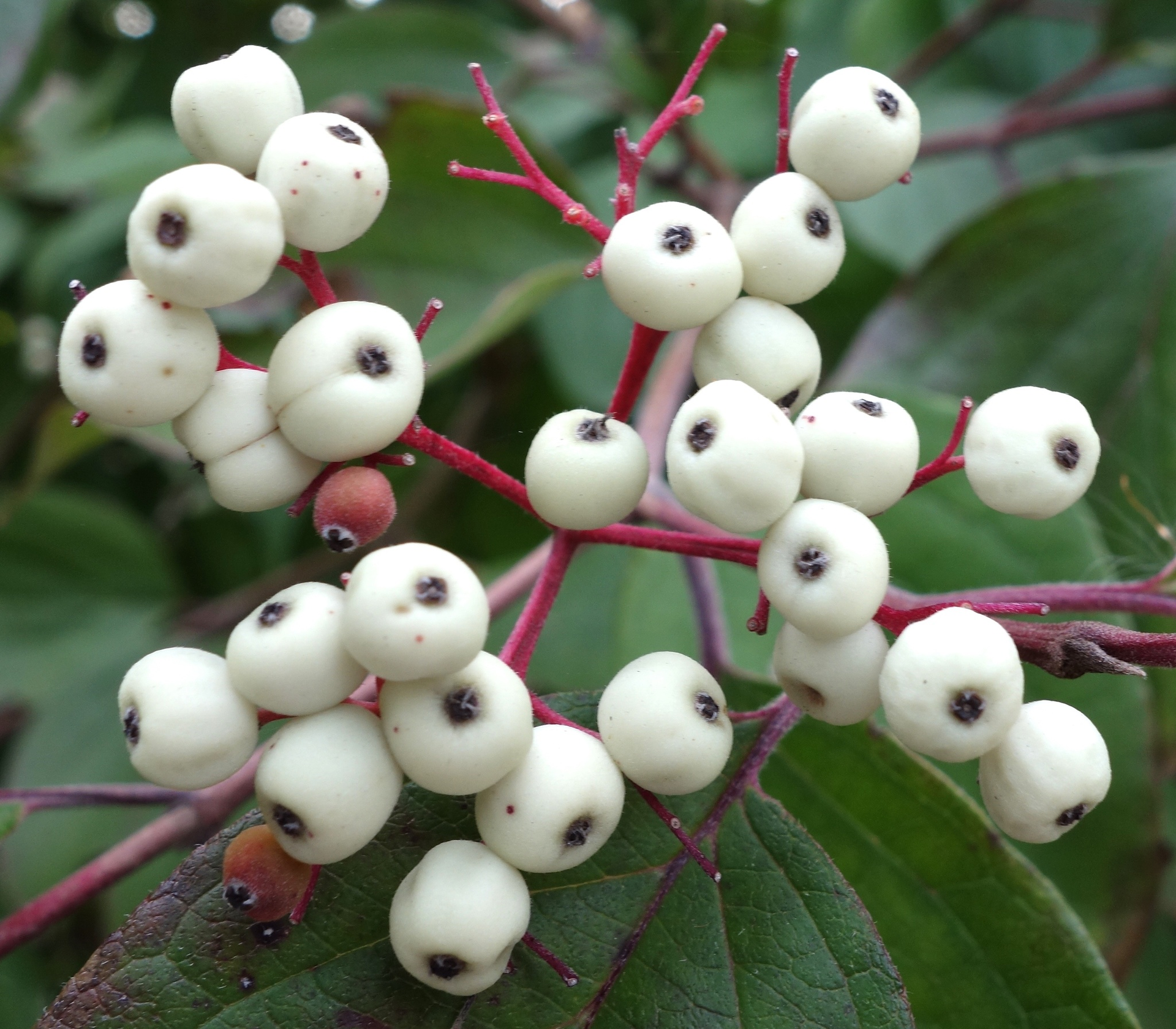
Roughleaf dogwood flowers in May and June with large, flat flowerheads of white. A lot of different types of pollinators visit the flowers. After flowering, white berries are borne on the tops of the plants where the flowers were, and are eaten by many birds. They are not poisonous to humans, but are bitter and full of tannins. The fall color is outstanding in red.
Beautyberry - Callicarpa americana
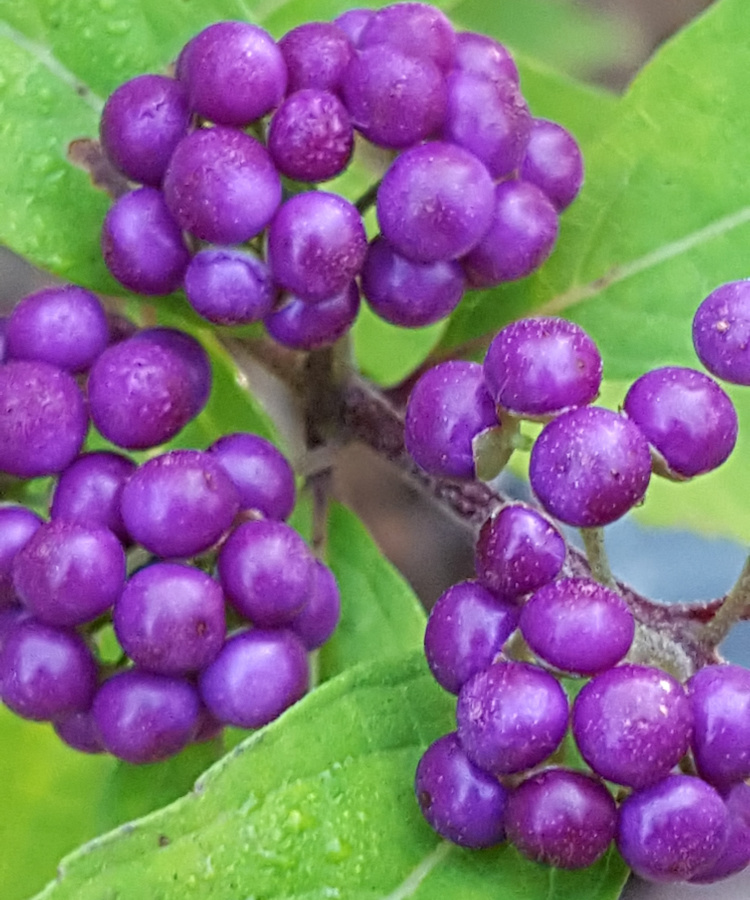
This is one of the most outstanding native berries for the landscape, because the berries last so long through winter. Eventually, the birds do snatch them up, but it almost seems like a last resort.
It is a very popular garden plant, because you can prune it down like a perennial each spring, and it will still grow 3 to 5 feet tall and produce flowers and berries. The flowers, though not large, are soft pink and all along the stem where the berries will be. Plants are vase shaped, and fit will into a mixed perennial border, in masses, or as a foundation plant.
While beautyberries are considered edible, they are usually just used for jelly and winemaking, because the fruit is too astringent to eat raw.
Cultivars
While there are not many cultivars of the true American beautyberry, there are several cultivars of other species which are great for the landscape.
Welch's Pink is an American beautyberry with pink fruit instead of the dark rich purple of the species. It grows 3 to 5 feet tall and wide.
Pearl Glam is a hybrid with dark purple-green leaves and dark purple fruit. It is a Proven Winners choice and grows 5 feet tall by 4 feet wide.
Cotoneaster - Cotoneaster species
There are a lot of species and cultivars of this shrubby berry plant. We have only carried a few over the past years because there are so many to pick from and gardeners usually prefer shrubs with more pretty flowers. But let me tell you, some of the cotoneaster picks are excellent replacements for burning bush and other fall favorites.
Maybe the fruit deters them, since the berries are considered mildly poisonous to humans and pets, causing vomiting, diarrhea, and abdominal pain. But that is if eaten in large quantities. The bitter taste of the fruit should turn anyone away.
The berries are eaten by birds however, and the plant has few problems, not being bothered by Japanese beetles or disease. Cotoneaster can be used as a hedge, planted in the shrub border, or mixed into a rock garden.
Cultivars
Autumn Inferno caught my attention in 2025 as I was selecting shrubs to sell in the nursery. It easily could out-perform burning bush for fall color, and the berries are a nice addition too. And it does not get spider mites like burning bush. It grows 5 to 6 feet tall and wide.
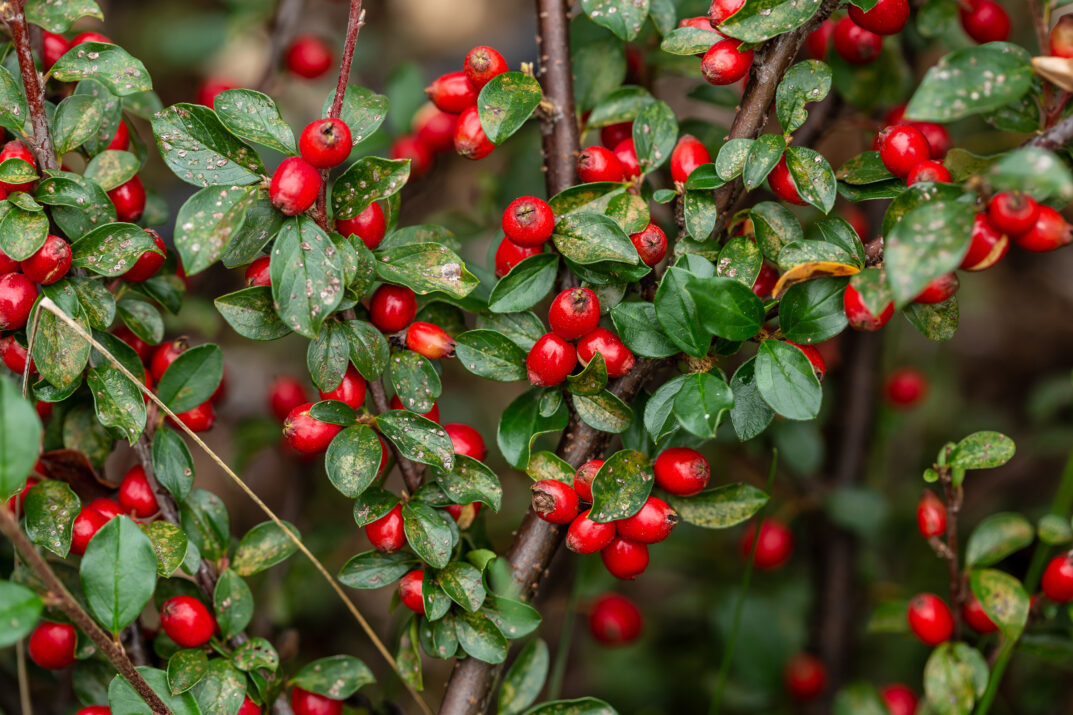
Tom Thumb is a smaller, rockspray or groundcover type of cotoneaster, growing 2 feet tall by 5 feet wide.
Cranberry is another low growing, mounding variety, great for rock gardens and shrub borders. It grows 3 feet tall by 6 feet wide.
St. Johnswort - Hypericum species
This shrub is fairly new to a lot of people, though cultivars have been around for decades. Only recently has the industry recognized them for their large berry-like fruits. Easy to care for, the St. Johnswort plants can be trimmed back by 1/3 to 1/2 in early spring to control size, as they bloom and fruit on new growth.
The plants range in size, but are prized for their showy bright yellow flowers which attract bees, and for their showy capsule fruits, which can range in colors. Fall color can be tones of red or orange.
While the fruit is not poisonous, it is inedible for humans.
Cultivars
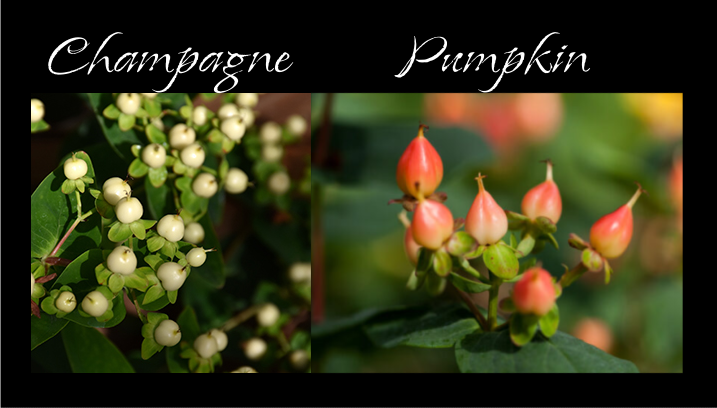
Champagne is a newer cultivar from Monrovia which has the pure yellow flowers of the species along with bright white berries in autumn. It grows 3 feet tall and wide.
Pumpkin is another great cultivar, chosen for its berries, though it does have excellent flowers. The berries are orange-red in color and persist into winter. Plants grow 3 feet tall and wide.
Albury Purple has purple-red new growth on the foliage, and red fruits following the yellow flowers. It grows 3 feet tall by 2 feet wide.
Sunburst has been the standard for years, growing 3 feet tall and wide with bright yellow flowers.
Snowberry - Symphoricarpos albus
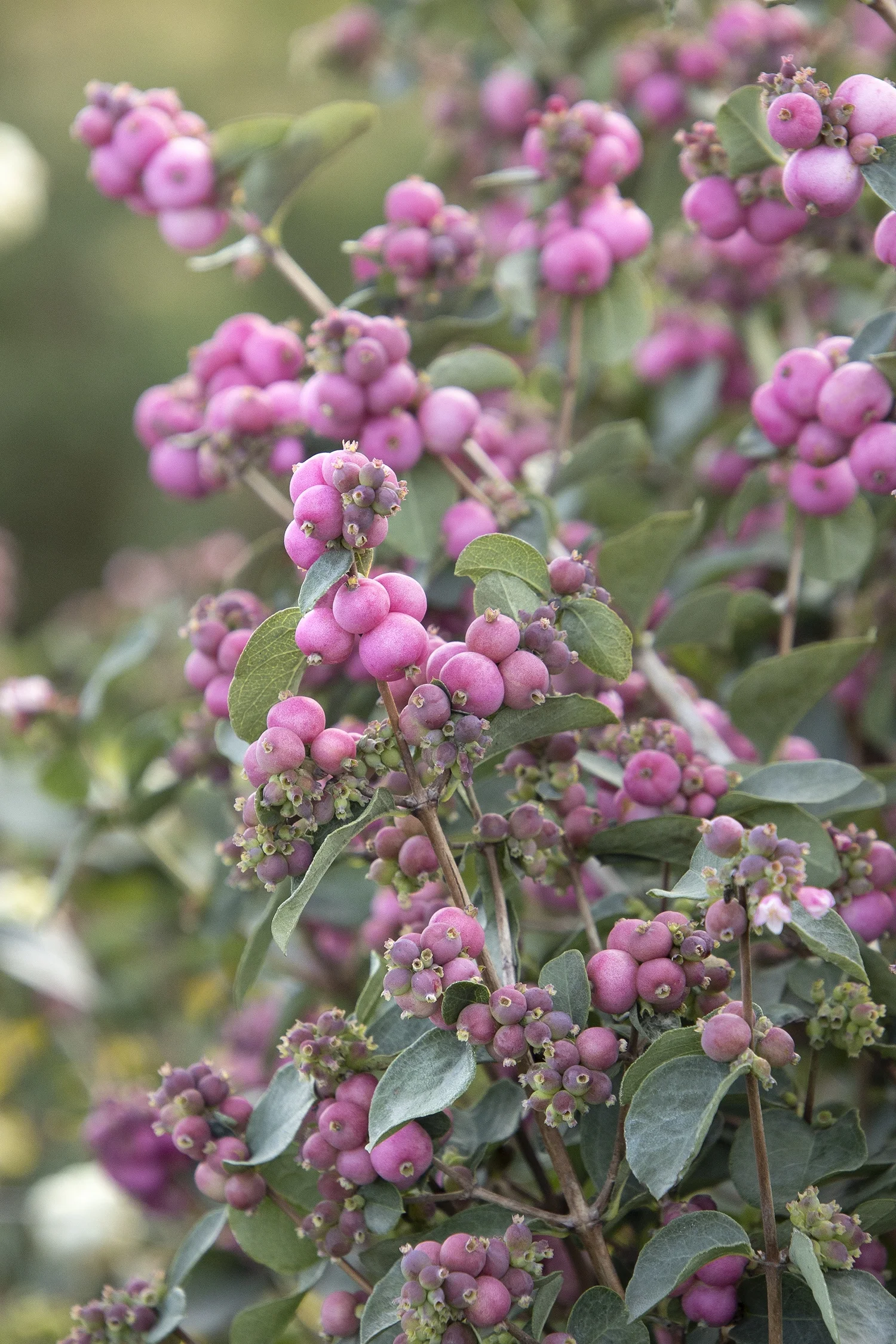
Native to the Pacific Northwest and the Upper Midwest regions, snowberry has enjoyed slight fame in the plant breeding world, but little in the garden. I think that many gardeners overlook its simple beauty and durability. Related to our native coralberry, snowberry can have white or pink fruit, instead of red. And the berries are larger than those of coralberry.
The berries are not edible and are considered mildly poisonous to humans, causing vomiting, diarrhea, and dizziness if consumed in large quantities. However, they are consumed by birds. The snowberry clearwing moth, which is a type of sphinx moth (hummingbird moth) feeds on the foliage.
The plants themselves are unprepossessing, small in stature, and very tough. They have no major pests or diseases, and can be pruned to the ground or just thinned out each spring before new growth starts.
Snowberry can be used for mass wildlife plantings, in tough, dry spots, or as a small hedge.
Cultivars
Proud Berry Pearl is a Proven Winners selection with bright white berries. Plants grow 3 feet tall and 2 feet wide.
Pink Symphony is a pink fruiting selection from Monrovia. Larger than other varieties, it grows 4 feet tall and wide.
Charming Fantasy has white berries with a pink blush on 4 foot tall and wide plants.
Galaxy is a First Editions cultivar with bright white berries which create a weeping habit from their weight. Plants grow 3 feet tall and wide.
Birds that Feed on Berries
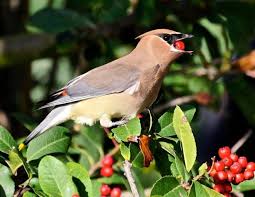
Typically, most birds not only eat caterpillars and insects, but also raise their young with them. There are few birds which eat primarily berries. However, during the winter, there are more birds which rely heavily on berries to keep their calorie intake up for survival. These include the following:
- Cedar Waxwing
- American robin
- Varied thrush
- Eastern bluebird
- Northern mockingbird
- Yellow-rumped warbler
- Pine grosbeak
- Hermit thrush
- Townsend's solitaire
- Woodpeckers
- Brown thrasher
- Scarlet tanager
- Ruffed grouse
- Bobwhite quail
Conclusion
Berries can be used in the landscape for a mix of reasons, for food, to attract birds and wildlife, or just because many of them are excellent for hedges and privacy.
Happy planting!