Suckering shrubs are not what most homeowners are looking for in their tidy landscapes. But with trends in landscaping veering towards natives and providing more for wildlife, why not add in suckering shrubs? These are the ultimate in leave me alone plants. They prefer not to be pruned or maintained. Adding them to the landscape can help fill in, in ways that more manicured shrubs cannot do.
The places where suckering shrubs are better at filling in include wild areas around the perimeter of the property, wildlife areas, native woodlands, meadow gardens, and as screening for animal pens, chicken houses, and outbuildings. The shrub border can also be a place for these, as they will fill in quicker and need less numbers than more contained shrubs.
For Shade...
Why put suckering shrubs in the shade at all? Most shade gardens are tidy affairs, with gardeners trying to showcase Japanese maples, redbuds, hostas, or other leafy plants. But there is some room for suckering shrubs as well, especially as they can fill in in ways that other shrubs cannot. And they often work well with our favorite shade perennials and trees.
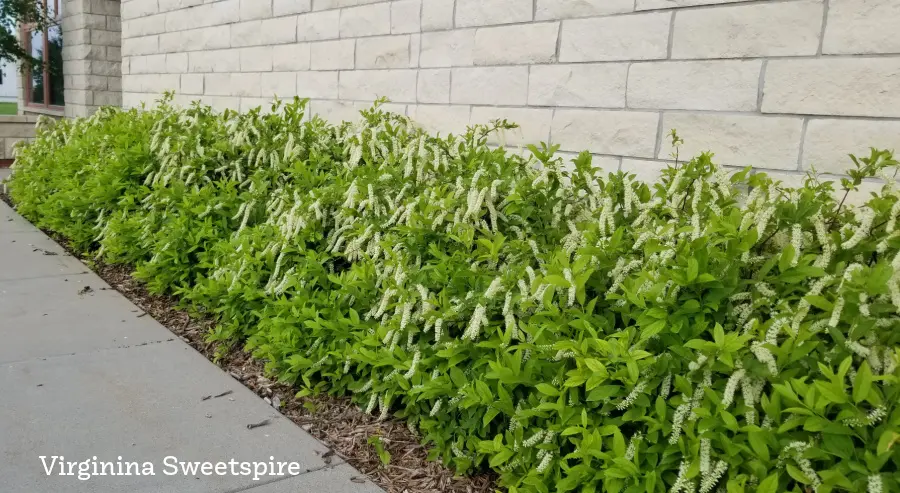
Virginia Sweetspire - Itea virginica
This is one of those shrubs which can thrive in either sun or shade, at least in the Central Great Plains. Native to the Southeastern US, this suckering shrub prefers well-drained to slightly boggy soils, lower on the pH than our typical garden soils. I recommend fertilizing sweetspire 2 times a year (spring and fall) with an acid fertilizer, such as Fertilome Acid Loving Plant Food.
In the wild, sweetspire may grow between 3 and 9 feet tall, suckering into large thickets, great for nesting birds. With breeding, gardeners can add varieties with more compactness, but with the same suckering ability. Although, the newest cultivars aim to lessen its spread. As the flowers, which are white, tend to droop or descend, they are highly fragrant and pollinated mainly by bees and flies. The fall color of this shrub is outstanding, usually a deep wine-red with some shades of orange.
- Henry's Garnet - is one of the largest cultivars, growing 5 to 6 feet wide and spreading at least 6 feet in diameter. This is the best selection for suckering.
- Little Henry - is reported to only grow 3 feet tall and wide, but suckering will likely spread it out more.
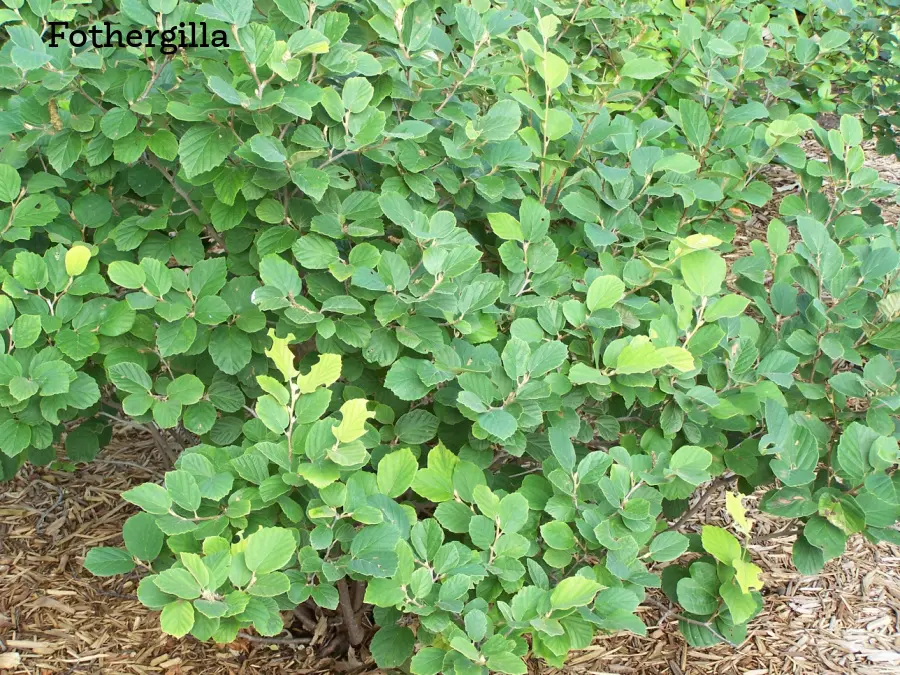
Fothergilla - Fothergilla gardenii
Our 2026 April Plant of the Month, fothergilla, aka witch-alder, is another native from the Southeast. It also like shade and acidic soils. Unlike sweetspire though, fothergilla does not get quite so tall, usually around 6 feet, and does not provide as much cover for birds or wildlife. Its main attraction to wildlife is its early spring, bottlebrush flowers, which provide nectar for bees and spring-flying butterflies.
In the garden fothergilla can be placed in the shade, as a backdrop for hostas, coral bells, or shady natives. The blue-gray leaves have a soft, powdery texture, and turn shades of apricot, orange, and lemon in autumn.
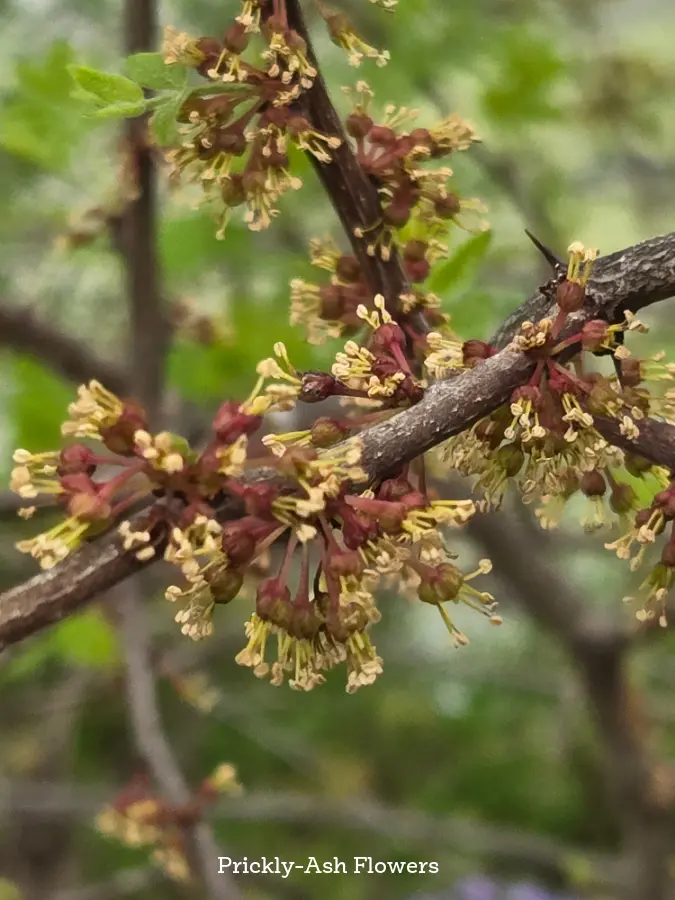
Prickly-Ash - Zanthoxylum americanum
One of the most unknown and underused shrubs in American landscapes, prickly-ash deserves to be included in a list of suckering shrubs. This large shrub to small tree does best in part shade in the Central Great Plains region. I have seen it in full sun, where it appears stunted and scraggly, covered with burnt leaves. But in the shade, it thrives. Prickly-ash grows 5 to 12 feet tall, and can for a large, semi-dense thicket, great for nesting birds. The small thorns are annoying!
The flowers, though yellow, are insignificant, but are followed by edible (mainly as a spice) red fruits, in small clusters. Fall color is yellow. What makes prickly-ash so special is that it is one of the best plants for hosting the giant swallowtail butterfly.
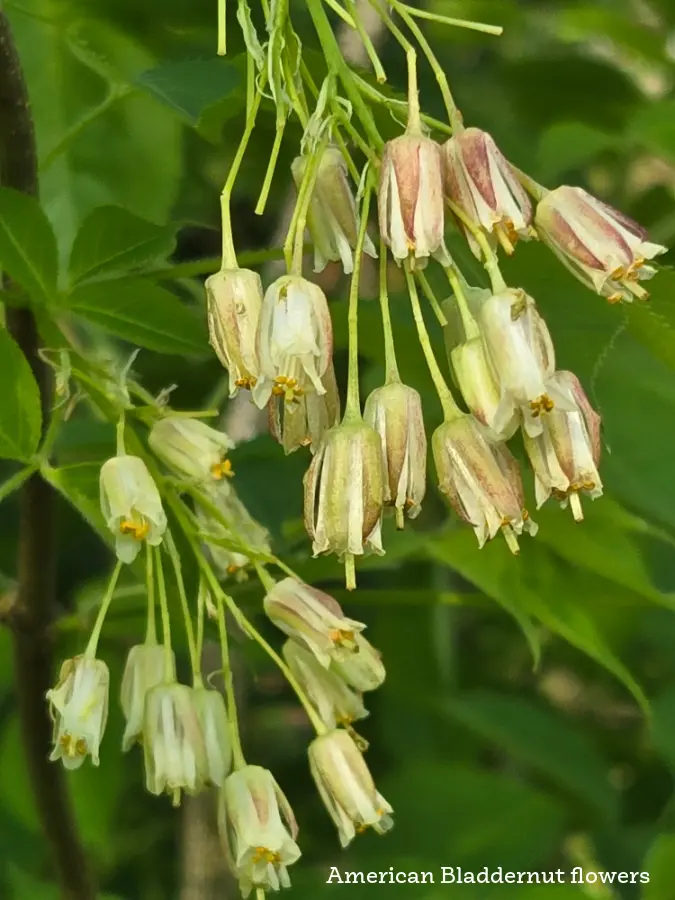
American Bladdernut - Staphylea trifolia
This is another completely underused suckering shrubs in the landscape. It can be shaped or pruned to maintain a small, tree-like appearance, but it best left to grow as a thicket. In the woods, bladdernut grows to 12 feet tall and can spread slowly into 10 foot clumps. It has small, white, bell-like flowers which are visited by bees in early spring. The leaves are light green, turning yellow in autumn. It is called bladdernut becuase the seed is in a bladder-like pod, which pops! when you open it.
For Sun...
One of the best places for using suckering shrubs in full sun is as a screen or backdrop along the outside edge of a property. There, they can help hide views of unwanted neighbors, farmland or crops, and/or protect wildlife corridors. Some shrubs will produce huge thickets, capable of protecting nesting birds, deer, and other wildlife trying to find a safe haven.
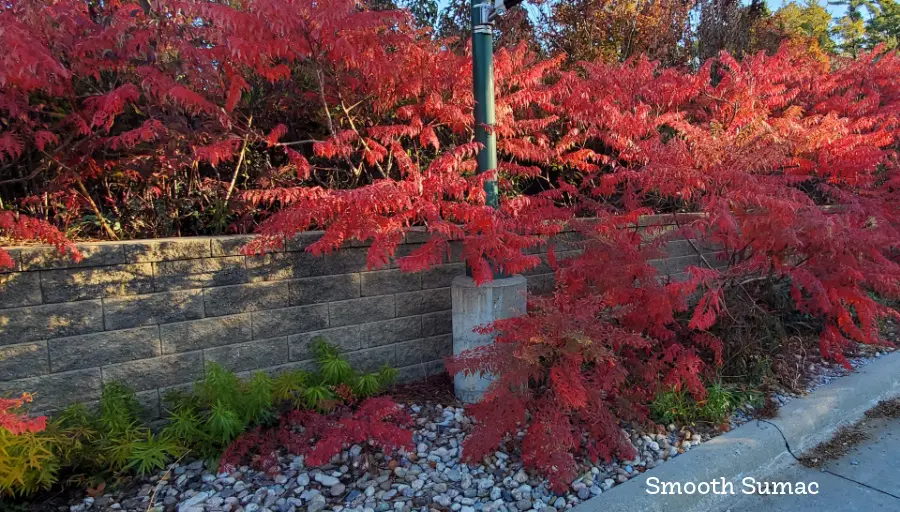
Smooth Sumac - Rhus glabra
Now, this is a shrub I would not want in every place. It can be aggressive! But in the right location, smooth sumac can be contained with mowing and burning pressure. I have a clump of this in my backyard, because the leaves of my clump are chartreuse yellow, similar to 'Tiger Eyes' staghorn sumac. But I have to keep an eye on it, or it will take over my entire meadow garden.
Smooth sumac can grow 5 to 12 feet tall and fill vast areas of landscape. The flowers are bright yellow, and visited mainly by small bees and flies, but turn into red fruits which can be used as winter decorations, or collected to make tea, syrup, or jelly with a citrus-like flavor. Fall color of the leaves is bright red to orange.
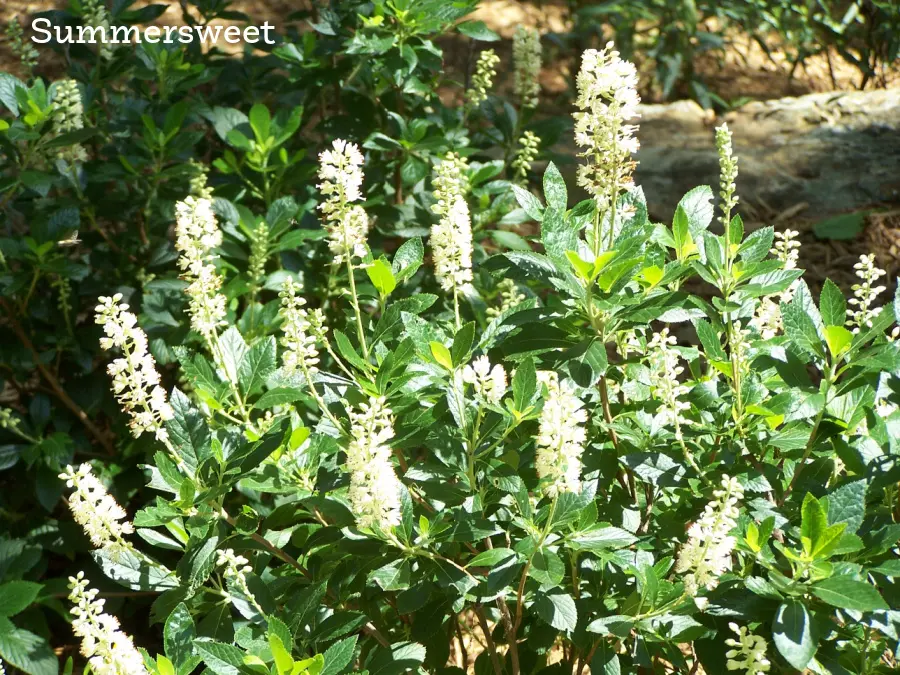
Summersweet - Clethra alnifolia
Another native of the Southeastern US, summersweet is somewhat underused, at least in the Central Great Plains region. We do not use it nearly enough. It is a late summer flowering shrub, with very fragrant, spike flowers. The flowers can be either pink or white. It can grow 4 to 12 feet tall and can form large suckering thickets. These thickets are great for nesting birds, and the flowers provide nectar for bees, hummingbirds, and other pollinators. Fall color is typically yellow, but can also be shades of orange.
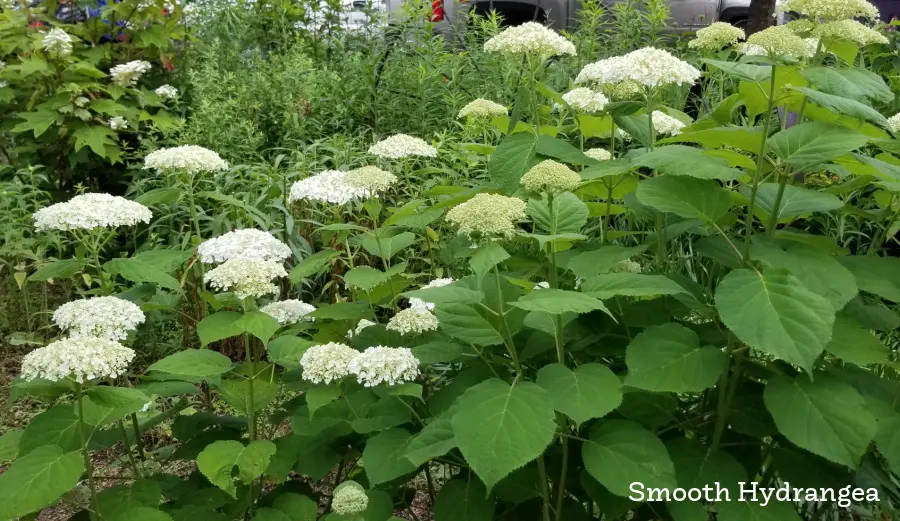
Smooth Hydrangea - Hydrangea arborescens
Most people would not think about hydrangea when thinking about suckering shrubs. But smooth hydrangea does just that. Except for the newest cultivars, which are bred to stay in one place. Smooth hydrangeas are native to the eastern half of the US, from the Missouri River eastward. They do exceptionally well in our region and we can grow them in full sun to part shade. I have 3 cultivars, and they do best where they get at least 6 to 8 hours of direct sun per day.
Smooth hydrangea grows 3 to 6 feet tall and can spread over a 10 foot area. It does bloom best if cut down near ground level each season, but you do not have to do that. There are lots of cultivars, but many of them have had the suckering mostly bred out of them. But you cannot go wrong with the straight species, or 'Annabelle'-an older variety which still suckers and spreads, though it typically stays around 3 to 4 feet tall.
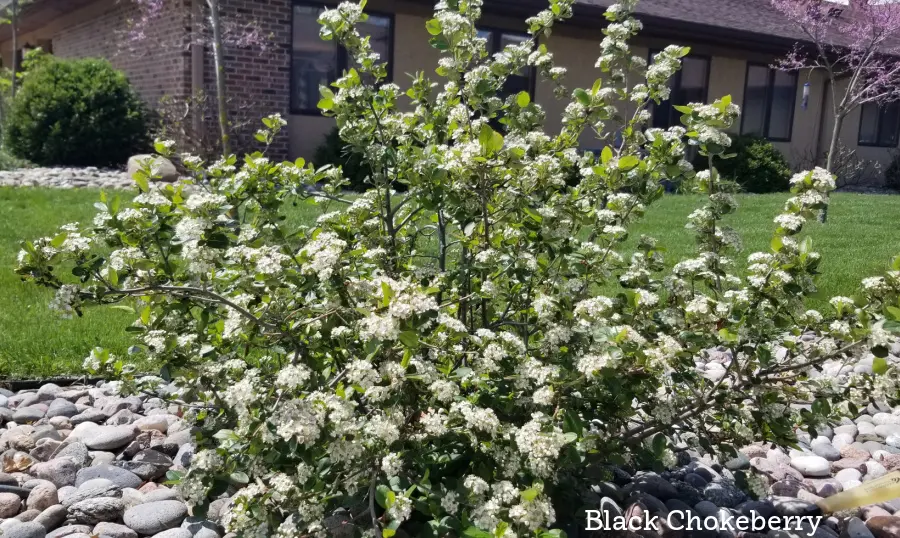
Black Chokeberry - Aronia melanocarpa
One of my favorite of the suckering shrubs, black chokeberry is a 4 season plant! Native to the Northeastern US, black chokeberry fits so well into so many landscapes, that it has been bred for a variety of attributes. Growing between 3 and 8 feet tall, it prefers slightly acidic and boggy locations, making it great for wet spots in the landscape. But it is also quite drought tolerant once established.
Why is it a 4 season plant? In the spring, black chokeberry starts blooming around mid-April, with pure white, fragrant flowers. The flower buds are slightly pink before they open white. Those flowers attract bees, butterflies, and other early pollinators. After flowering, black chokeberry produces shiny, dark green leaves, and edible blue-black berries. The fall color is shades of red, orange, and rust, depending on how much water and light it gets. And the berries persist into winter if not picked for syrup or jelly. There are a lot of cultivars, and most of them retain some level of suckering.
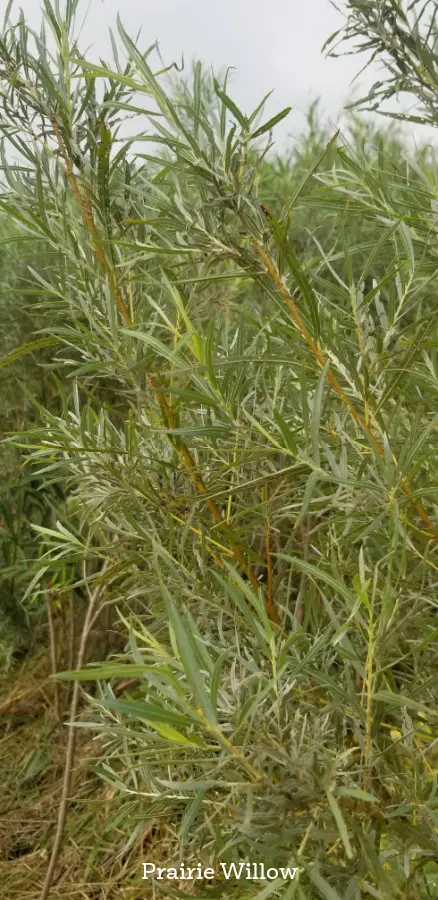
Prairie Willow - Salix humilis
Native to the Eastern half of the US, from Central Kansas eastward, prairie willow is an excellent choice for a large screen. Growing 6 to 16 feet tall and wide, prairie willow is much more drought tolerant than other willows, though it can grow in moist soils. And it responds really well to hard rejuvenation, growing back quickly after a hard cut. Prairie willow is also a great plant for butterflies, with early spring flowers. And they are a host for several species of butterflies and moths, including the Viceroy, the Mourning Cloak, and the red-spotted purple butterfly.
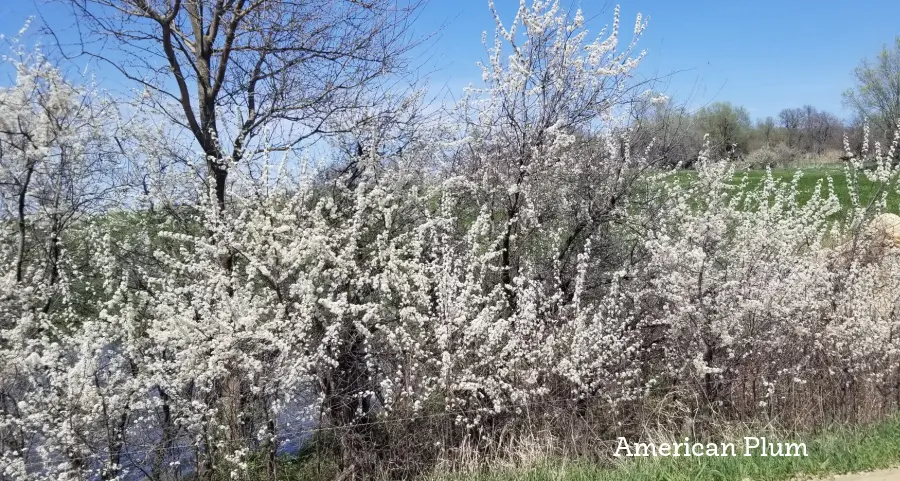
American Plum - Prunus americana
The American plum has always been one of my favorite shrubs. I have memories tied to its blooms, which are very fragrant. When I was a junior in high school, we had prom at the time of its flowering, and I recall putting branches of flowers in my vehicle to keep it well scented. The flowers are white, and bloom profusely in April. However, the plants can grow 10 to 20 feet tall and with suckering can cover a large area. The biggest clump I have found so far was 30 feet deep and 60 feet wide. It is a great place for nesting birds, deer, and other animals.
While it does not truly have thorns, there are stems which grow thorn-like, with few leaves on them, only 1 to 2 inches long. After flowering, American plum produces loads of golf-ball sized plums, orange to red when fully ripe. They are sweet and pleasant tasting, great for jam, jelly, or preserves. The autumn color of the leaves is usually orange, but can also be reddish orange. And they are host plants for many kinds of moths, butterflies, and other insects.
Conclusion
There are many ways to use suckering shrubs in the landscape, especially if you are trying to promote or protect wildlife around you. Some are great just for their multi-season interest, or they can be used to screen the property from unwanted sights. By planting them along the edge of your property, you can allow them space to run and still provide cover for wildlife.
Happy planting!