Dogwoods have become a very important part of our landscapes, even as they have always been important to the natural landscapes around us. Did you know there are at least sixteen species of dogwood native to the United States? Only three of them are tree form. We use one of them quite regularly in our landscapes, at least in the eastern half of the country. That one is White Flowering Dogwood, Cornus florida.
However, the number of shrubby dogwoods is higher, with at least ten species. We also have to contend with the non-native species which can be detrimental in to native landscapes. Planting dogwoods in the right place with precaution will keep these invaders from taking over the landscape.
When we start to talk about growing dogwoods in our gardens, we have two main types: tree form and shrub form. There are also three species of groundcover types, but they are not considered to grow in the Central Great Plains region, so I omitting them. There are five tree species, two native and three non-native which we can grow in our landscapes. As for shrubs, there are six which will grow well in our region, and only one is not native.
Tree Forms
I am going to start with the introduced species of dogwood. Some of these have been available for a very long time in the landscape, introduced to collectors and botanical gardens in the 1800s. They are often hybridized with native dogwoods to produce more cold or heat tolerance, or for more resistance to disease. So far, they have not show to be invasive over most of North America, with a few exceptions. The Kousa dogwood is invasive only in New York, while the Corneliancherry dogwood is invasive in Illinois, Michigan, Pennsylvania, and New York. This is likely for over planting in major cities, not necessarily widespread through those states.
Giant Dogwood - Cornus controversa
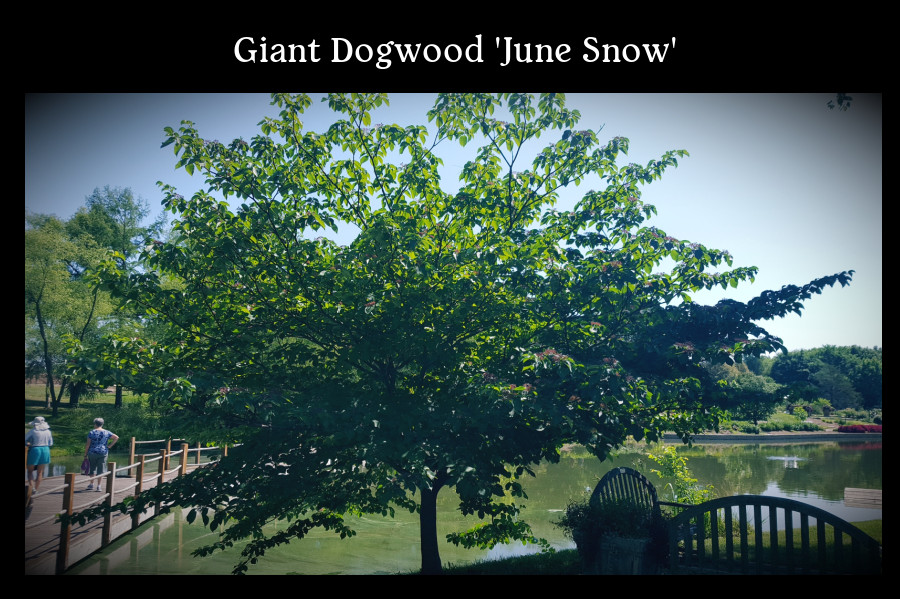
It is probably called giant because it is the largest of the dogwood trees, though that size is not considerable in comparison to our best shade trees. The "controversa" in the name has to do with the alternate leaf arrangement, which is unusual in dogwoods. I first came across this species at the Overland Park Arboretum in Overland Park, KS. There is one there called 'June Snow' which is a J. Frank Schmidt introduction, and which I have added to the nursery.
Giant dogwood grows up to 50 feet tall and wide in the wild. Native to Asia, giant dogwood has clusters of small white flowers which are attractive to many pollinators, but mainly bees. There are several cultivars available including 'Variegata' which has green and white variegation on the leaves, and grows 35 feet tall by 30 feet wide. The aforementioned 'June Snow' grows 30 feet tall by 40 feet wide and can have a similar shape to a large Japanese maple. They all turn bright red in the fall and even the stems are reddish like many of the shrubby dogwoods.
Corneliancherry - Cornus mas
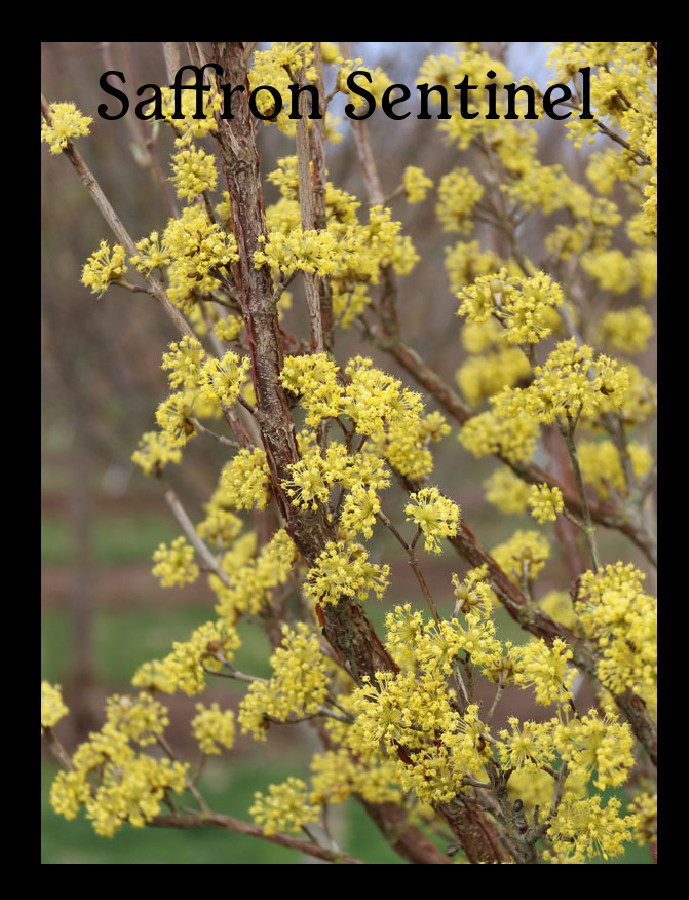
This is one of the more interesting and strange dogwoods in the landscape. Not only are the flowers super early, blooming in March, but they are bright yellow and very small in clusters. And this tree produces edible fruit in late summer and into fall. The fruit is sweet, and I recommend adding it into an orchard or landscape with kids in mind. Corneliancherry is native to Europe, mainly France, Italy, and the Pyrenees Mountains.
Corneliancherry grows best in part shade to full sun. Indeed, in full sun it does appear stressed, at least that is the look in my garden. I planted the cultivar 'Saffron Sentinel' which grows 22 feet tall by 12 feet wide, a columnar form. Seedling trees can grow 25 feet tall by 20 feet wide, with a suckering habit. Cultivars aim to reduce that suckering through grafting. Another great feature of this tree is its resistance to dogwood anthracnose.
Kousa - Cornus kousa
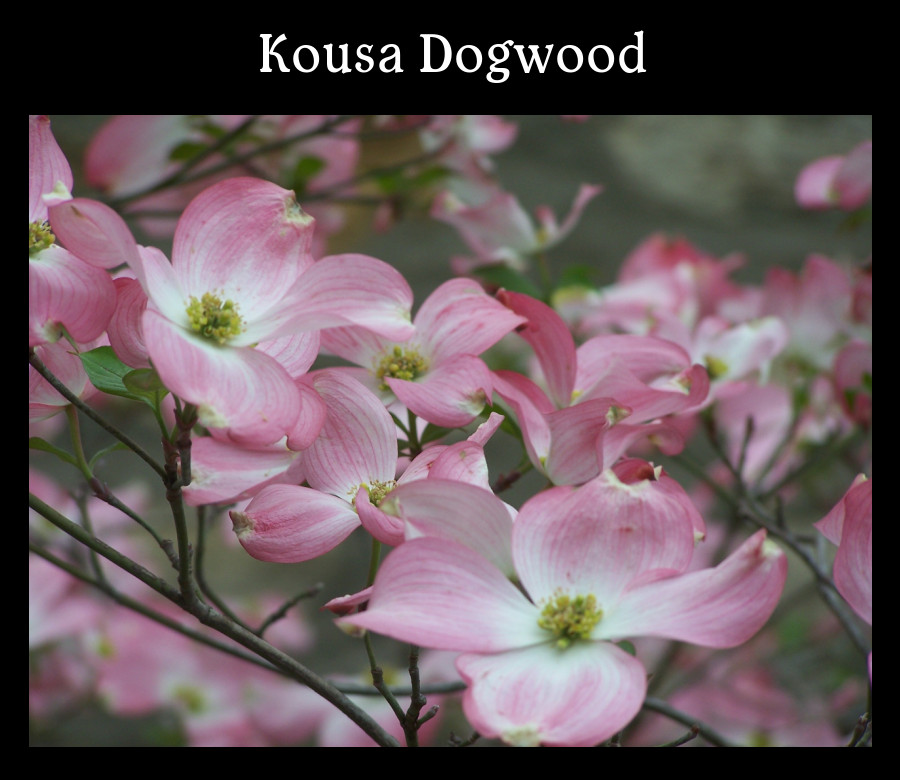
A native of Asia, the Kousa dogwood has been widely planted throughout North America, in a variety of landscapes. They can grow 30 to 30 feet tall and wide, with exfoliating bark as they get older. The flowers can be pink or white and there are many cultivars with variegated leaves. The fruit is also showy, though inedible. It is very drought tolerant, despite having a shallow root system. Flowering time is April into May. Some of the best cultivars are hybrids between Kousa dogwood and the native Flowering Dogwood, Cornus florida.
Noted cultivars for the Central Great Plains include the following:
- Heart Throb - with pink flowers, growing 30 feet tall and wide.
- Milky Way select - is an old standard with milky white flowers, growing 20 feet tall and wide.
- Scarlet Fire - is considered the best pink variety, with dark pink flowers, growing 20 feet tall and wide.
- Cloudburst - is a new white flowered variety, growing 20 feet tall and wide, and is a hybrid with C. florida
White Flowering - Cornus florida
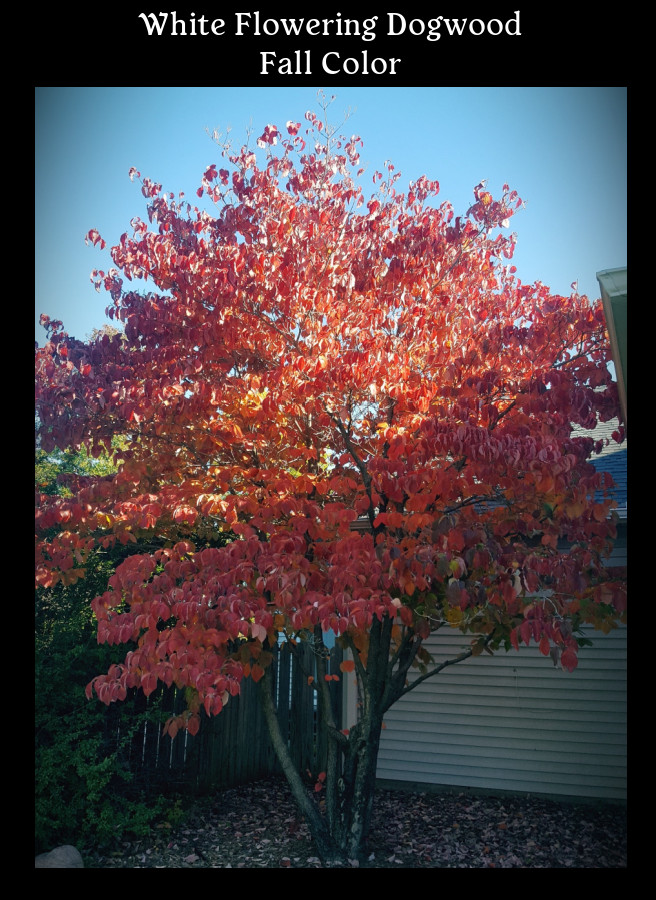
Our beautiful native dogwood is found throughout the Southeastern US, and up into New England. It can also be found in Cherokee County Kansas, in the extreme Southeast corner of the state. I personally have found wild growing flowering dogwoods in a park in Cherokee County. Flowering dogwood can grow 30 to 50 feet tall, and 30 to 40 feet wide, but is typically on the smaller side of those numbers in our region.
Flowering dogwood can have white or pink flowers, and is a four-season plant with white spring flowers, dark green leaves turning red in autumn, bright red berries, and rough interesting bark. In our region, they prefer to grow in part shade but can take full sun if they get late afternoon shade. There are several cultivars available including:
- Cloud 9 - white flowering
- Cherokee Princess - white flowers
- Cherokee Chief - pink flowers
- Firebird - green/pink/white variegated foliage with pink flowers
- Appalachian Spring - white flowers
- Prairie Pink - pink flower
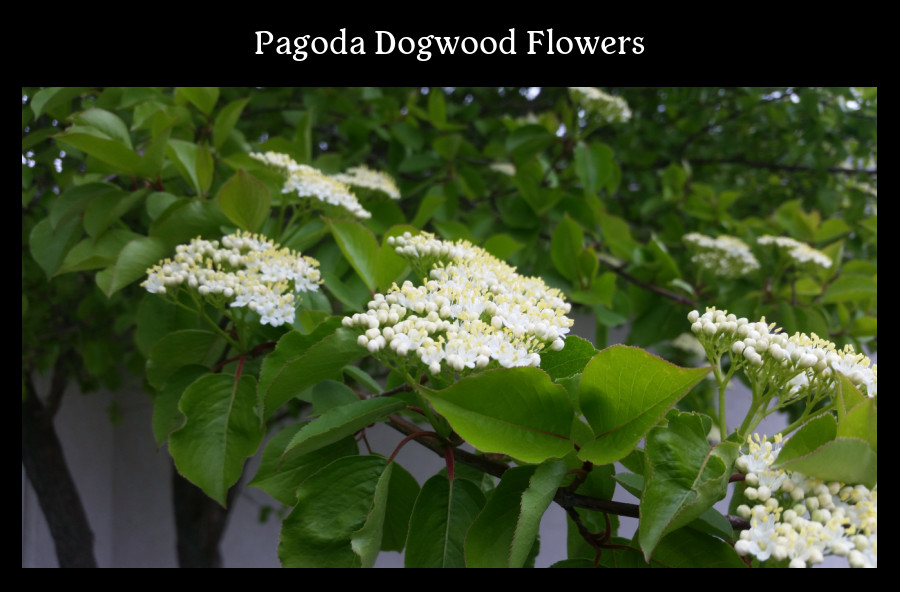
Pagoda Dogwood - Cornus alternifolia
Despite the name, Pagoda dogwood is native to the eastern United States. Like the giant dogwood, Pagoda dogwood has alternate leaf arrangement, which is unusual. It can be difficult to find these trees in nurseries because they are susceptible to stem blight and canker. However, despite that, I know of several large specimens in Kansas and Nebraska. The flowers are borne in clusters similar to the shrub species, and very attractive to bees and other pollinators in early summer. The foliage turns bright red in autumn.
After flowering, blue-black fruits develop which are picked off by birds. There are only a few cultivars of Pagod dogwood in the trade, mostly for variegated foliage, which can either be green/white or green/yellow. Pagoda dogwood grows 15 to 25 feet tall and wide.
Shrub Types
Shrub form dogwoods fit into many different types of landscapes. Many people grow them primarily for their winter stem color, but the leaves and flowers are a nice addition to the landscape as well. And they can take full sun to part shade filling into many spots. Some people shear them into hedges or leave them natural, it all depends on your preference. They are very forgiving on pruning and only need rejuvenation once every three years.
Tartarian Dogwood - Cornus alba
One of the best dogwood shrubs, Tartarian can grow 10 feet tall and wide, with many cultivars available. Most of our variegated cultivars come from this species, and the bright red stems in winter are very attractive. Flowers are clusters of bright white, utilized by a long list of pollinators and the white berries are gobbled up by fruit eating birds such as robins, cedar waxwings, and brown thrashers.
Although native to Siberia, China, and North Korea, this species has adapted well in our landscapes and grows similar to Red-Osier dogwood, its native counterpart. Below are some of the better cultivars:
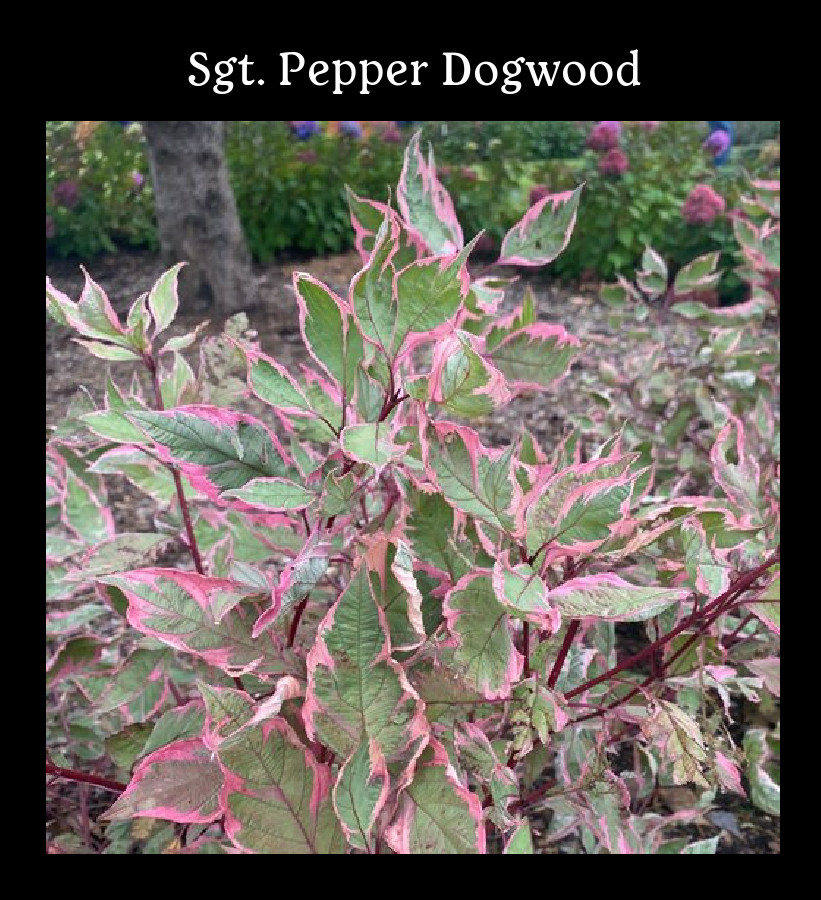
- Sgt. Pepper - a new cultivar with white/pink/green variegated leaves. 6 feet tall by 8 feet wide.
- Ivory Halo - green & white variegated foliage turns pink-red in autumn with bright red stems. 6 feet tall and wide
- Aurea - has chartreuse colored leaves in the summer and does best in part shade. It has red stems in the winter. 8 feet tall and wide.
- Prairie Fire - has chartreuse yellow summer color, white flowers and berries, and red stems in winter. 5 feet tall and wide.
Roughleaf Dogwood - Cornus drummondii
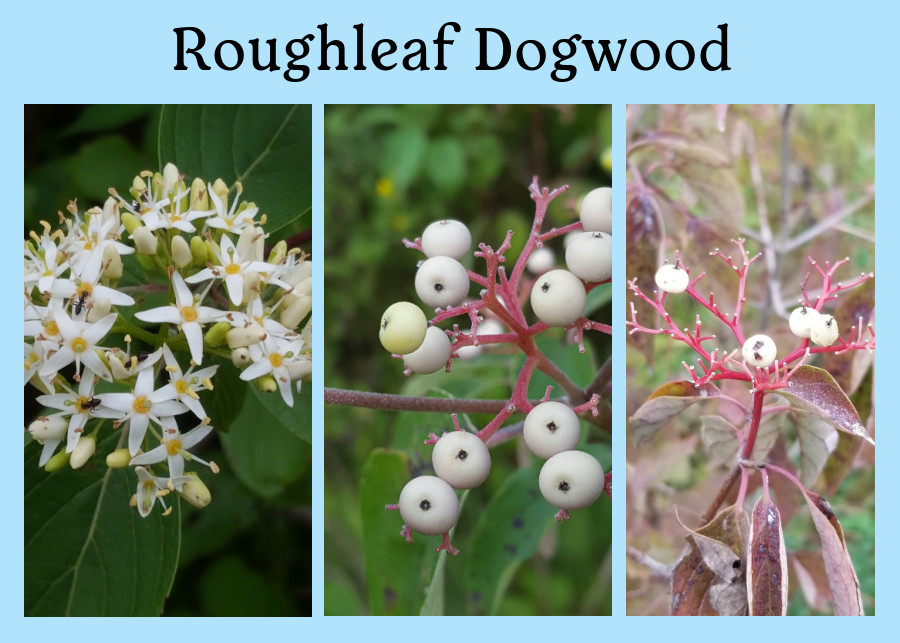
In my opinion, this is an underused shrub in the landscape. Unlike many other shrub dogwoods, the stems are mostly gray in the winter, except the current season's growth and tips which are red. I like it because a lot of wildlife depends on this species for food, from the birds feeding on the white berries, to insects pollinating and eating the leaves, and to deer and mammals feeding on stems and bark. It is native through the Central Great Plains and east to the Appalachian Mountains.
Roughleaf dogwoods grow in full to part sun n ditches, roadsides, pastures, prairies, and along the edges of woodlands. It grows 6 to 12 feet tall and can form large patches or clumps, as it is a suckering shrub. The white flowers bloom in June and are followed by the white berries. Fall color is reddish-orange. If you have room for a large shrubby screen or are planning a woodland or meadow garden, make a place for this shrub. The pollinators alone will thank you.
Swamp Dogwood - Cornus obliqua
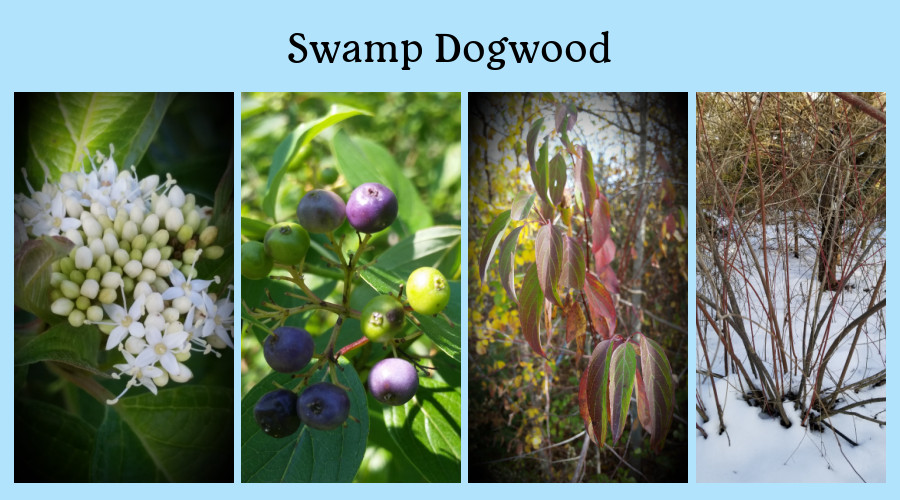
This is another underused native dogwood shrub. Along with roughleaf dogwood, I have this growing in my back pastures, along the wet sloughs and drainage areas. It can take an abundance of water, even standing water for short periods of time. They can grow 12 feet tall and wide, similar to roughleaf dogwood, but grow in clumps not large patches. Longer stems tend to grow wildly and regular pruning in the landscape is a must for this shrub.
White flowers bloom in May and June and are followed by blue fruits which are eaten quickly by birds. The younger stems are bright red in winter and fall color is bright red. 'Red Rover' is the only cultivar of this species.
Gray Dogwood - Cornus racemosa
Native to the upper Midwest and eastern Great Plains, this species is yet another underused dogwood. Michael Dirr calls it a sleeping giant in the world of dogwoods, in his Encyclopedia of Trees and Shrubs. It can grow in sun or shade, and gets 10 to 15 feet tall and wide. The flowers are creamy white in June and followed by white fruits which are eaten by birds and mammals. The fall color is an excellent shiny red. Only a couple of cultivars have been introduced. 'Snow Lace' was introduced by North Dakota State University as a slightly more compact cultivar of 6 to 9 feet tall and wide.
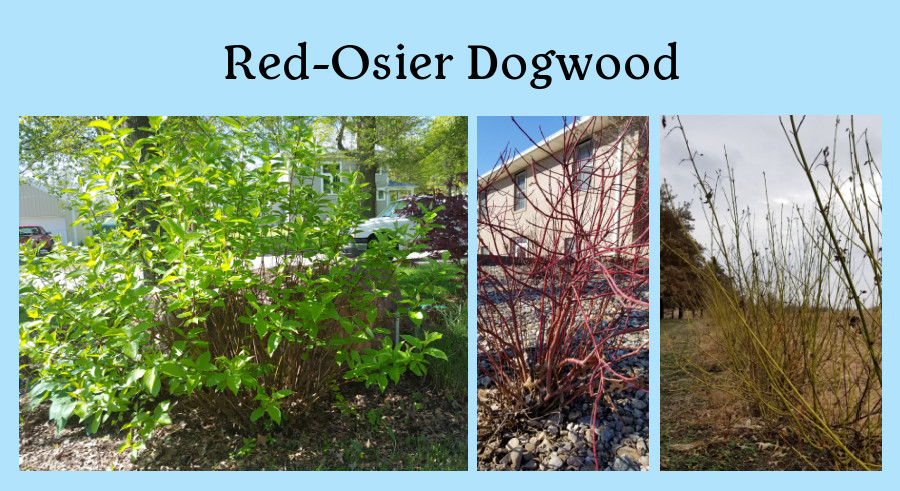
Red-Osier Dogwood - Cornus sericea
Our final species is the red-osier, native across the northern states and into Canada but as far south as Nebraska and Virginia. In the wild it grows 8 to 10 feet tall and wide. It is more colonizing and suckering than Tartarian dogwood, but is the native equivalent of it in all other respects. Stems are usually red, but there are also yellow cultivars. White flowers arrive in May and June and are followed by white fruits. Fall color is bright red.
Cultivars include:
- Kelseyi - which grows 2 to 3 feet tall and wide
- Silver and Gold - has green and white variegation with yellow stems.
- Arctic Fire - grows 5 to 6 feet tall and wide with brilliant red stems
- Arctic Fire Yellow - grows 6 feet tall and wide with bright yellow stems
Pests and Disease Problems
While I have not seen major outbreaks of either pests or diseases on dogwoods in the Central Great Plains, it is best to be prepared for what could happen when you plant them. Certainly, anytime you have stress on a tree you run the risk of susceptibility to diseases and pest pressure. So keep you trees watered and mulched, and plant them in the proper place.
Diseases
The biggest and most known disease of dogwood is Dogwood Anthracnose. This disease causes brown lesion in irregular shaped patterns across the leaves and flower bracts. This results in twig dieback, reduced flowering, spring defoliation, and in severe cases - death. In recent years however, the disease has become less common and is rare in our region. A fungicide can be applied to prevent infections.
Other diseases which can affect dogwoods are:
- Spot anthracnose - causes small purple spots and distortions on leaves and flower bracts. It is favored by wet springs.
- Powdery mildew - a white fungal infection caused by lack of wind and too much moisture in early summer.
- Scorch - not actually a disease but shock to the leaves caused by too much heat, hot sun, or hot wind.
Pests
There are only a few "pests" of dogwoods. While there may be several moth species whose caterpillars munch on the leaves, there are only a few insects which may cause some concern during the growing season. Dogwood sawfly is more common on shrubby dogwoods than on tree forms, but it only defoliates plants on rare occasions. The white larvae look like caterpillars but are actually closely related to wasps.
There are three types of borers which can cause problematic damage:
- Dogwood borer - a clearwing moth which can girdle branches and cause death of a tree in extreme cases.
- Twig Borer - considered a minor pest, causing flagging or dead branches within the canopy of a tree.
- Flat-headed apple tree borer - causes sunken bark deprived areas along the trunk or branches after feeding.
Pollinator and Insect Associations of Dogwoods
In 2024 I spent a couple hours watching the pollinators on a clumps of roughleaf dogwood. I never could have imagined all the different bees, beetles, and other insects pollinating dogwoods. Of course, the large showy bracted blooms of flowering and kousa dogwood do not attract many pollinators so early in the spring. But the shrub forms bloom later, usually late May and into June, so there is a lot more activity on the blossoms.
Insect associations include anything that feeds on the leaves but does not cause major harm, mainly butterflies and moths. And while there are browsers such as deer and rabbits which feed on the leaves and stems, they mainly cause damage in rural settings or on wild plants.
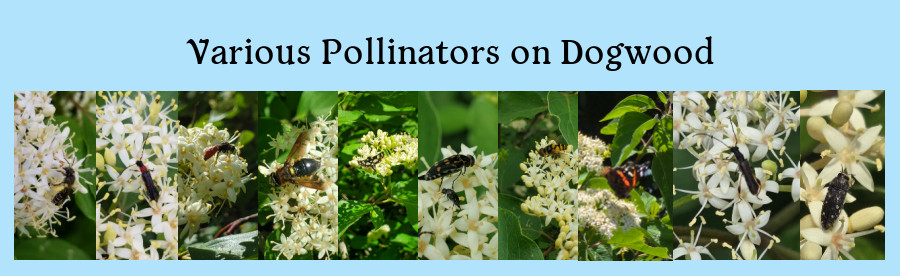
Insects which feed in or on dogwoods may also be pollinating them in turn. And while there are always new insects being introduced into the environment (mostly irresponsibly), there are some which are considered associated with dogwoods, but not major pests. The following is a list of dogwood "pests".
- 16 beetles
- 5 gall making flies
- 9 plant bugs
- 13 aphids
- Dogwood spittlebug
- 4 leafhoppers
- 5 armored scales
- 3 sawflies
- 2 thrips
- 27 moths/butterflies
Conclusion
Growing dogwoods in your garden can not only bring pollinators into it, but also will enhance the beauty whether you choose a tree or shrub variety. With showy flowers, red or yellow winter bark, and great fall color, why would you not put a dogwood into your landscape? There are many varieties to choose from and always a place to put one in your garden.
Happy planting!