Our 2026 May Plant of the Month is Siberian Iris. This perennial hails from Europe and Asia, being widely cultivated since the Middle Ages. There are records of of cultivation of it by Monks in Britain and throughout other parts of Europe. Because of its beauty and hardiness, it was a favorite among gardeners in Europe after the 1600s.
I first fell in love with Siberian iris after caring for a large planting of it at one of my client's landscapes. The first one I got to know was a cultivar called 'Caesar's Brother', which was developed in the 1930s, by hybridizing Iris siberica with Iris sanguinea. Most cultivars now are actually hybrids, but there are listed under Siberian iris in catalogs.
Now, I have a small collection of Siberian iris, and I am always trying to expand with new cultivars. I especially like those with multiple colors during bloom. Siberian iris is a tough, pest-free addition to the garden. And while it does prefer more moisture than a lot of other perennials in full sun, it is adaptable and drought-resistant when established. And it makes a great cut flower in the garden.
Care of Siberian Iris
Siberian iris is one of the easiest to grow perennial in the garden. While many people may warn you that they can be tricky to establish, that has not been my experience. True, I did have problems with one cultivar (Swans in Flight), but all my other experiences with them have turned out well. Just like other irises, they are best planted when semi-dormant, after flowering in August, September, and October. If you bury the crown (where the leaves emerge from) under soil or mulch, they will have trouble growing. Be sure to just plant the roots in soil.
Plant your Siberian iris in full to part sun, but be aware that in part sun the leaves will flop. In full sun, leaves stand nearly vertical, growing 3 to 4 feet tall, and the plants will spread outward to 2 to 4 feet in diameter. They can be divided anytime after flowering, but you may miss out on a year's worth of flowers as the plant regrows.
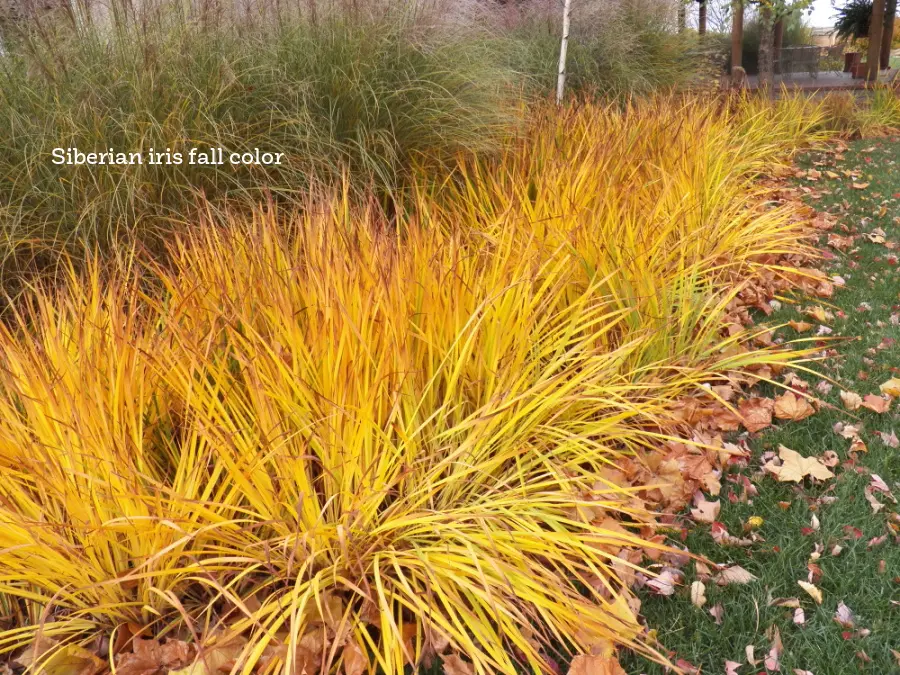
The leaves can turn bright yellow-gold in autumn, making for an addition to the garden. I recommend trimming the foliage back to about 4 to 6 inches tall in late October or November. It is easier to trim back in autumn than waiting until spring cleanup time in March or April.
Cultivars
When I first started at Grimm's, 15 years ago, we could only get 1 cultivar of Siberian iris from our suppliers. Now, there is a much broader range available, as growers are realizing how easy they are to get going. And we can grow them ourselves from bareroot plants. Since we grow several thousand perennials each season, adding Siberian iris to the mix is no big deal.
In my own gardens, I have expanded to 6 cultivars, though I am always looking to add more. I especially like doubles and multi-colored. I know that 6 does not seem like a lot, but if you have read my posts about my own gardens, then you know that space comes at a premium.
Caesar's Brother
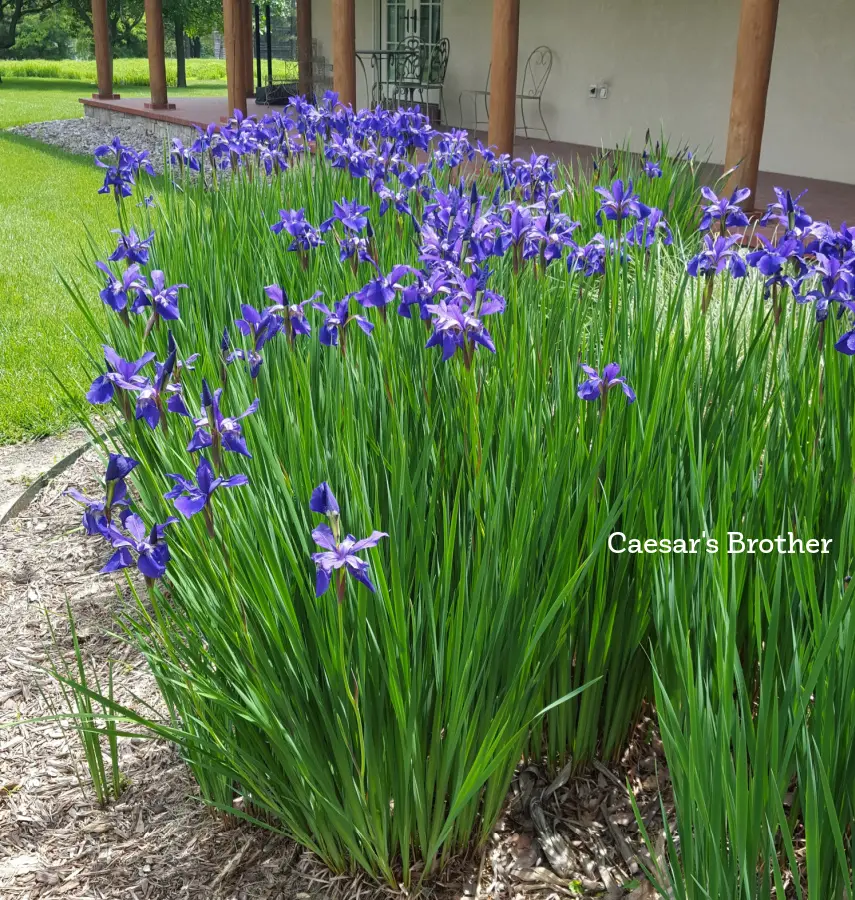
Probably the most well-known cultivar of Siberian iris, Caesar's Brother was developed in 1932, and has become a staple in the landscaping industry. Nearly every grower sells it, and it is used frequently. Its hardiness, stature, and adaptability make it invaluable in the landscape. I actually do not have this one in my own collection, because I like less traditional colors and styles. Caesar's Brother has deep purple-blue flowers, lasting around 4 weeks in the landscape. It grows 3 to 4 feet tall in full sun, but will flop in part shade.
Butter and Sugar
This is another well-known variety in the landscaping trade. In fact, when I began looking to add a new cultivar for our landscape designers around 2018, this was the only other variety available from growers. Introduced in 1977, it has creamy yellow and white petals. While it is a nice contrast to Caesar's Brother, I find that its color fades faster and bloom time is shorter.
Paprikash
It sounds like the name of an ancient Indian dish, served up with curry and lentils. But Paprikash is a recently introduced cultivar, developed in 2012. Known for its paprika-red speckled falls (falling petals) and honey-apricot highlights. And while I have not yet added this one to my garden, it is on order for our spring season. So I hope it will be an addition soon.
Peacock Tipped in Blue
The Peacock Butterfly Series of Siberian Iris were developed by American hybridizers Marty Schafer and Jan Sacks of Massachusetts, in the early 2000s. The series is known for its specific and unusual color complexes. Tipped in Blue is a truly unique variety. It has bright gold-yellow petals and falls which are not only tipped in deep blue, but fanned with blue veining.
Pink Parfait
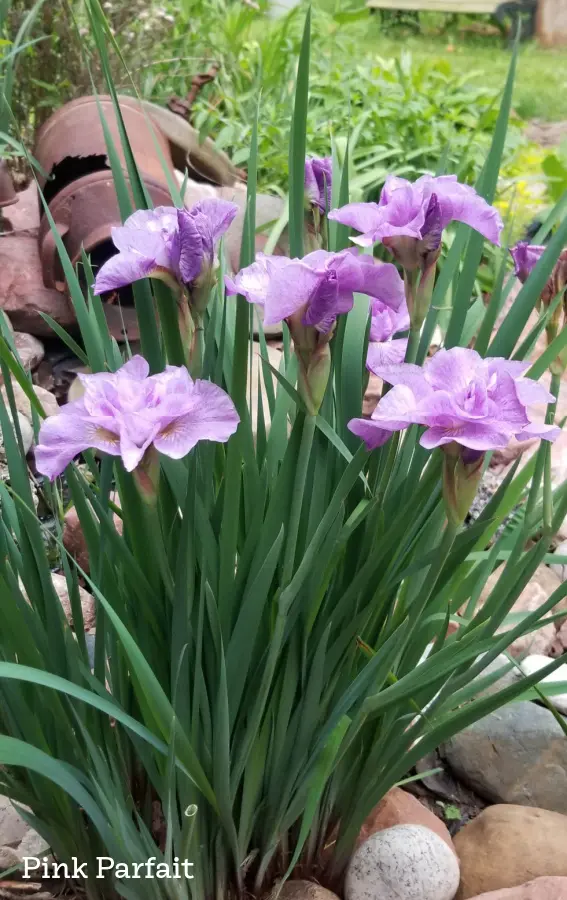
This was the first cultivar I introduced into my own gardens. I added it in the front yard by the steps to our door, but had to divide and move it when we had to replace our septic line. After moving, it did not flower again for 2 years! But the flowers are a light lavender-pink, double flowering. It is by far my favorite cultivar, for the color as well as the double flowers.
Purring Tiger
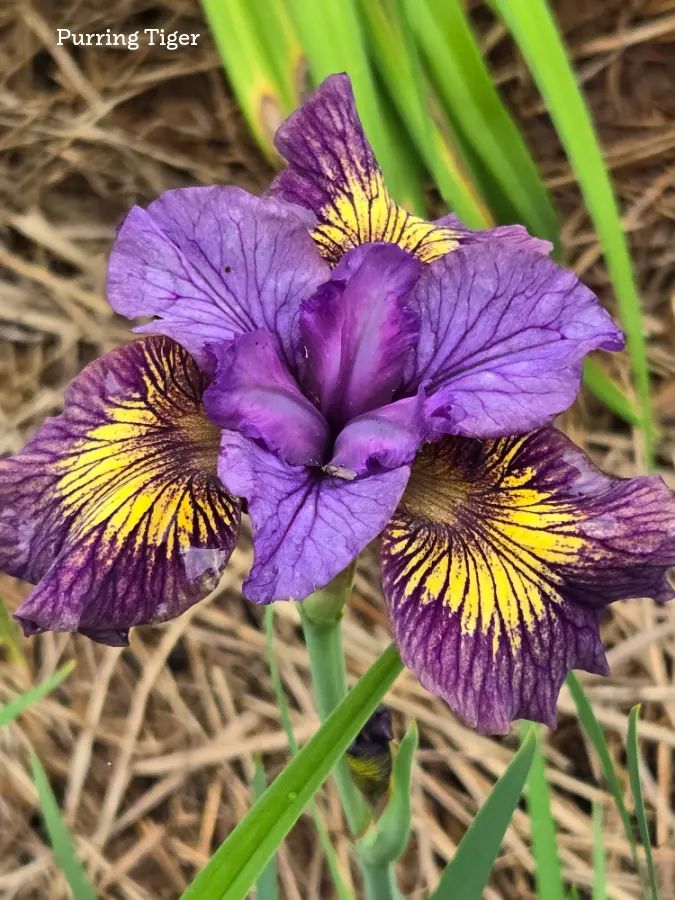
We ordered this one in bareroot in 2024, and it quickly became a seller for us. Introduced in 2017, Purring Tiger boasts similar colors as Tipped in Blue, but with a purple center and the falls being yellow with purple veination. I planted it in my own collection the fall of 2024 and it bloomed right away in 2025. It will be a favorite when it matures, I am sure.
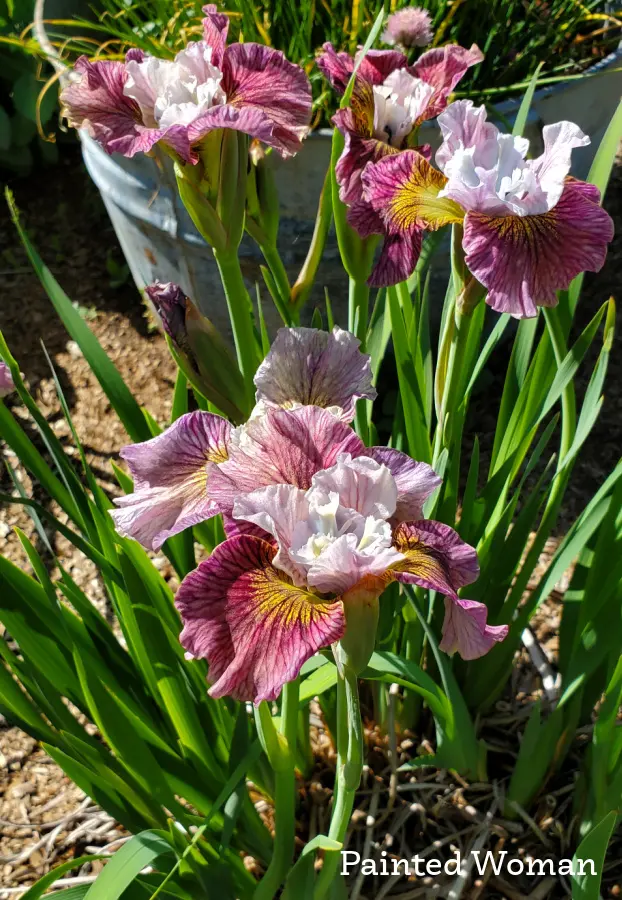
Painted Woman
Another from my collection, Painted Woman has become one of my favorites. I planted it at the same time as Swans In Flight, but Painted Woman thrived while the other did not. It was introduced in 2007, and has become quite popular. It has a creamy white center of petals, with reddish pink falls. Veination on the falls is dark red in color.
Shaker's Prayer
This Siberian iris was introduced in 1990. It is known for its bright purple-blue centers and falls. The falls also have yellow between the veins on the top 2/3s of ach. I put this one in my garden in 2020, and its results are less showy than Painted Woman or Pink Parfait, but it stands up well to the coloration of Caesar's Brother. A nice, clean addition for the garden.
Other Cultivars to Look for
The ones above are at the top of my recommendations, and we sell several of them at the garden center. Below are cultivars worth looking for if you are making a collection, or just want some variety in your garden.
- Black Joker (blue purple center with dark red falls)
- Tumble Bug (semi-double with lavender pink falls and center)
- Uncorked (purple/yellow falls, sky blue center)
- White Swirl (older cultivar, creamy white falls and center)
- Concord Crush (double purple)
- Gull's Wing (pure white fans and center)
- Miss Apple (dark pink center, red/yellow falls)
Companion Plants
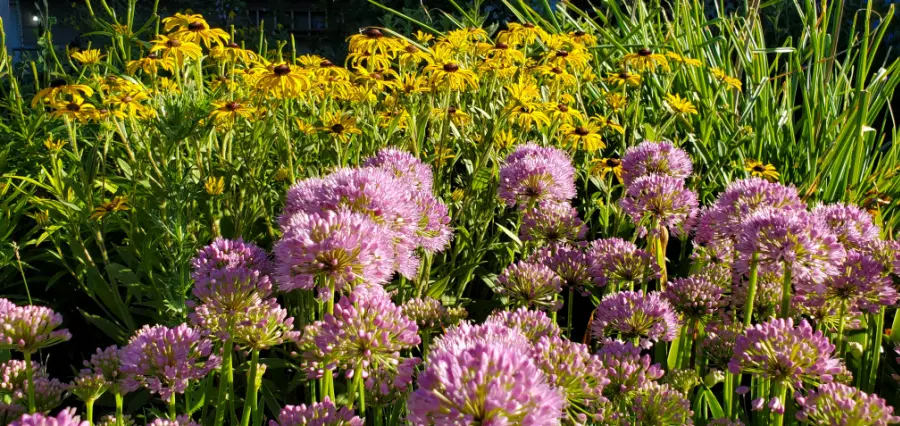
Siberian iris pairs well with many things in the garden. You can grown them in large masses or sink them among other perennials and shrubs. Or you can make a garden of plants with grass-like leaves such as Siberian iris, bearded iris, daylilies, sedges, ornamental grasses, and lilies. There are many ways to use them in the garden. I like to put them in a large bed, about 3 to 4 feet from the edge, with smaller plants in front of them (daylilies, ornamental onion). Because they bloom primarily in May, it is necessary to compliment them with early and later blooming perennials and shrubs. Mix any of the following with them:
- American Gold Rush rudbeckia (June-September blooming)
- Milennium ornamental onion (July-August blooming)
- Daylilies (May- July blooming)
- Butterfly milkweed (May-July blooming)
- Silver lining artemisia (color contrast)
- Prairie blazingstar (July blooming)
- Basket of Gold Alyssum (April blooming)
- Blue Fortune agastache (July-September blooming)
- Amsonia hubrichtii (April-early may blooming, similar texture)
Conclusion
Our May Plant of the Month is a quite a stunner when blooming, and makes a great companion for other perennials when it is done. It needs little maintenance and is very adaptable in different soils. There are a lot of colors and styles to choose from with Siberian iris, so get your ordered today.
Happy planting!