Fothergilla is our 2026 April Plant of the Month. Also known as bottlebrush or witch-alder, Fothergilla is a wet-loving shrub native to the Southeastern US. There are 2 species. Fothergilla major is native to inland regions of Florida, Georgia, Tennessee, and the Carolinas. Fothergilla gardenii is smaller and native to the coastal regions of these same states.
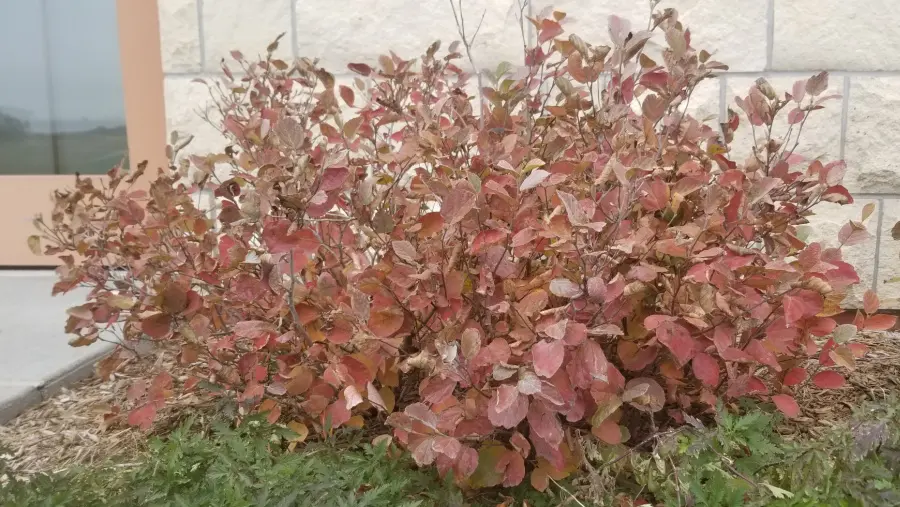
This shrub has some of the best 3 season interest of any shrub for the garden. And it can play a major role in helping with water-holding soils. Besides its ability to soak and thrive in water, Fothergilla has early spring color, blue-green leaves, and amazing fall color. With recent breeding programs such as Proven Winners, there are more cultivars to try in your own gardens.
Growing Fothergilla
As I mentioned above, Fothergilla prefers wet or moist soils. I would not plant it where water is standing, but is can handle boggy, moist, or consistently wet soils. And too many of us put it where it only gets sporadic irrigation. It does appear to be somewhat drought tolerant after establishment, but I have seen leaf diseases on drought stricken plants.
In our region, the Central Great Plains, it is best to plant Fothergilla in dappled or part sun. I have seen it used in full sun applications, but it tends to struggle instead of thriving. It can go under the canopy of large shade trees, especially those with airy canopies such as Kentucky Coffeetree, Honeylocust, Black Walnut, Hickory, Soapberry, Birch, Yellowwood, or Japanese Pagodatree.
The best placement for Fothergilla would be in dappled or part shade, in consistently moist soils. A low spot where water collects, or where a sump-pump drains out, or where water from the downspouts go would be ideal for this shrub.
Problems and Pollinators
Of course, the two biggest questions about Fothergilla are: "Does it have any problems?" and "Is it beneficial to pollinators?". And the answer is yes to both. But the problems associated with Fothergilla mainly come from being planted in the wrong place. Even though it will grow in our region, should it? We tend to have drier, high pH soils. And Fothergilla likes wet, acidic soils.
Chlorosis, which is a yellowing of the leaves is the most common concern. It is caused by high pH soils resulting in iron deficiency. Lowering the pH with acid fertilizer can help Fothergilla to grow better. It can also get leaf spots if it is planted in the wrong place. Sunburn on the leaves causes brown edges and spots (from being in full sun). Deer and rabbits may also feed on the stems during winter.
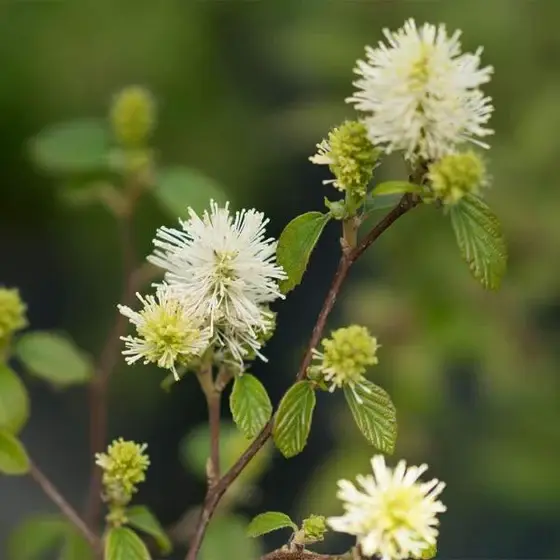
On a brighter side, the early spring flowers (April) are fragrant and attractive to many early pollinators including bees, butterflies, and flies. Besides early bumblebees, mason bees, and honeybees, butterflies such as the red admiral, mourning cloak, and spring azure may all visit the flowers. Hummingbirds, which usually arrive in Northeast Kansas in April, may also visit the flowers.
Cultivars
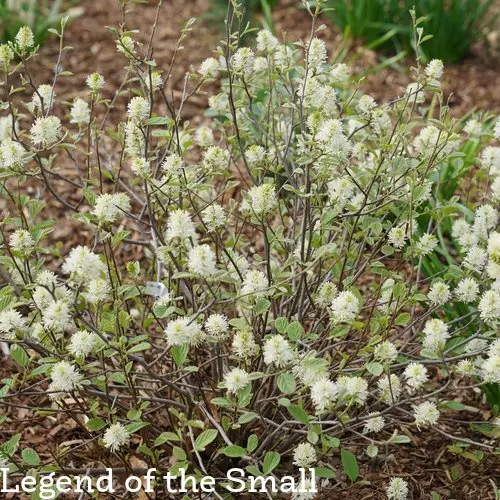
Proven Winners has developed two cultivars of Fothergilla which are used quite well in the landscape, as long as they get enough water. The flowers are white tinged slightly yellow, petal-less, and very fragrant. Summer color tends to be blue-gray-green or blue-green. And fall color can be a mix of red, orange, apricot, and yellow, similar to the Katsura in fall.
- Legend of the Small - and intermedia hybrid from Proven Winners which stays small, at 2 1/2 feet tall by 3 feet wide.
- Legend of the Fall - is a larger hybrid from Proven Winners which grows 5 feet tall and wide.
- Blue Mist (F. gardenii) - grows 3 feet tall and wide with very blue-green leaves.
- Mt. Airy (F. major) - is one of the more popular cultivars, growing 6 feet tall and wide, with excellent apricot-red fall color.
Companion Plants
Where should you plant Fothergilla in the landscape? Beside just under trees, what are the companions to plant alongside it. I keep thinking of this bank we maintain in Hiawatha, where Fothergilla is planted along with sweetspire, red-stem dogwood, and roses. The roses struggle, but everything else thrives, because the soils are over-irrigated from the lawn runoff.
Fothergilla should be planted alongside other plants, both perennials and shrubs which can take over-irrigation, acidic soils, and some shade. Plant it with the following:
- Virginia sweetspire
- Swamp dogwood
- Buttonbush
- Witch-hazel
- Joe-pye weed
- Siberian iris
- Swamp milkweed
- Cardinal flower
Conclusion
Fothergilla can be a bright spot in the landscape, especially when planted in the shade and where it can soak up moisture. The bright spring flowers and excellent fall color should be only part of the reasons to add this shrub to your landscape.
Happy planting!