With the onset of spring also comes flowers galore. But some flowers (and their plants) seem to leave far to soon, after staying for only a little while. These are ephemerals of course. What is an ephemeral? It is by definition: a plant that lasts for a very short time. Many gardeners who have shade gardens already have some ephemerals growing. Bleeding hearts, one of the most beloved shade plants of early spring, is an ephemeral which often dies back to the ground as it get hot in June and July.
But there are a lot of ephemeral plants in nature, and many of them could belong in our gardens as well. Ephemerals come up, usually with leaves first in March or April, flower for a only a few weeks (sometimes only a few days), set seed quickly, then dies before the leaves on trees are fully developed. They are most commonly found underneath trees in the woodlands, because sunlight is only available in early spring before the trees are fully leafed out.
Where to Put Them in the Garden?
You might think "Ephemerals do not really go in the garden since they disappear after flowering". But I say what about bulbs? Annuals? Just because something disappears in the garden after flowering, does not mean it has no place. The best use for spring ephemerals is in the shade or woodland garden. These plants are naturalized to grow, bloom, and set seed before the leaves on the trees mature to size. True, they could go out in sunnier spot of the garden, but those areas are typically reserved for long blooming perennials and shrubs.
Now, some of these plants can spread quite aggressively, so it is a good idea to have some room for them. If you are doing a smaller pocket garden, or have a large collection of hostas and Japanese maples, steer away from the more aggressive ephemerals. However, they can still colonize the soil with rhizomes, even as the tops fade away in the summer heat, holding the soil in place. So they can be treated like a groundcover that loses its leaves in the summer instead of the winter.
The Plants
I have 10 plants on my list that could be added into the garden. Just remember to order your plants from legitimate businesses, not field "collectors", facebook; nor dig them out of wild places yourself. I will list some mail-order companies where you can find these plants at the end.
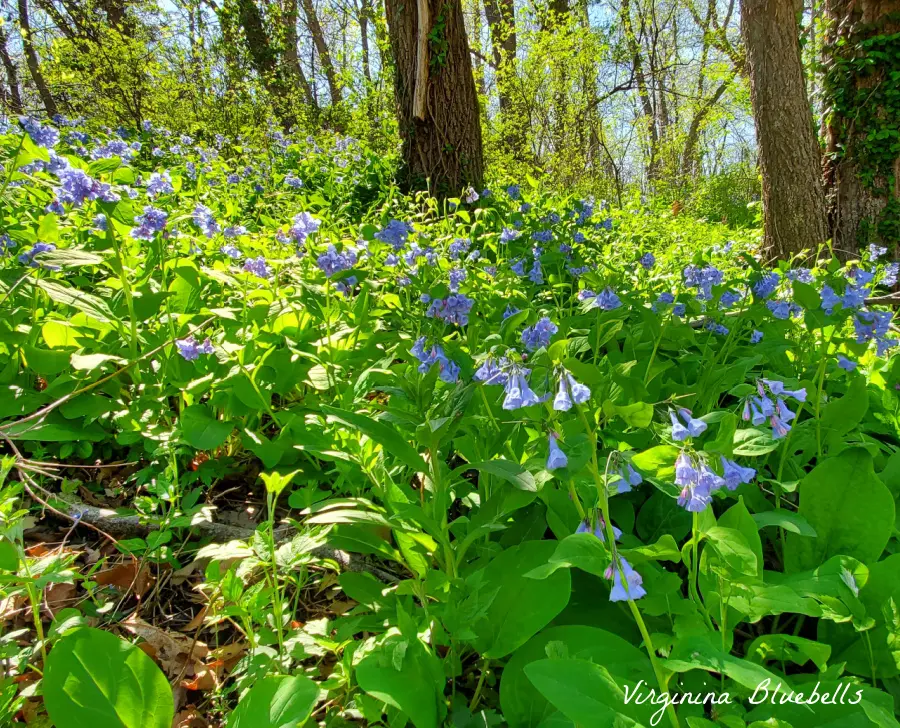
Virginia Bluebells - Mertensia virginica
One of the prettiest of the ephemerals, these groundcover plants are not aggressive in the garden. A few years ago, I found a wild clump of these growing and blooming behind the hotel at Sycamore Springs Whitetails in Northeast Kansas. I think this was a remnant native population, not planted. But there are a lot of people who plant these for their lavender-blue flowers. The flower buds are typically lavender, and then open to a rich sky blue. They grow around 18 inches tall with the flowers on then fade away in the heat of summer. Bees, especially bumblebees, are the primary pollinators of Virginia bluebells.
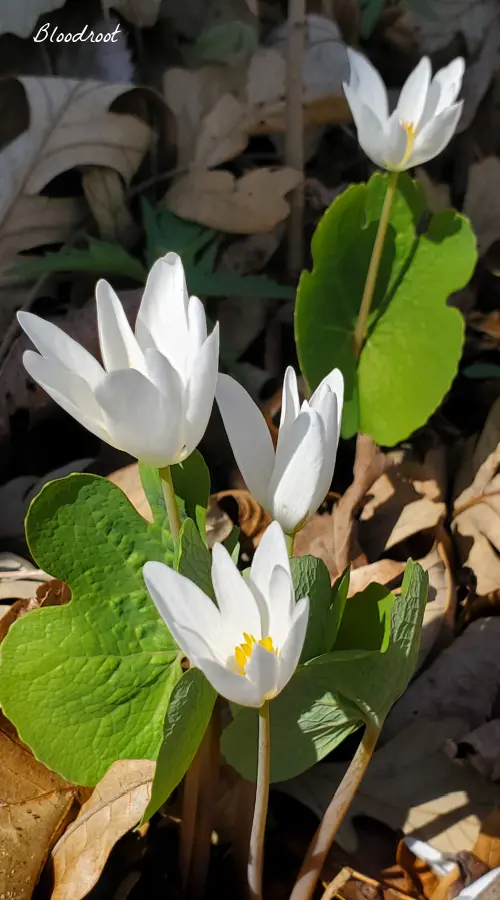
Bloodroot - Sanguinea canadensis
I first learned about this ephemeral (whose leaves get huge and last into summer) while taking an early spring hike at the Overland Park Arboretum on a day too windy to work. It was a spring wildflower hike put on by the arboretum, and I was excited to learn about spring flowering plants. The bloodroot was just starting to bloom on a rocky hillside at the arboretum. Since then I have found it growing in Atchison County Kansas and in Nebraska along the Missouri River. And I have added it to my garden.
Bloodroot has small, rhizomatous stems which if broken, exude a reddish juice, hence the name bloodroot. It spreads very slowly outward. The leaves emerge first, cupping around the individual flowers. Each pure white flower has a yellow center of anthers, pollinated mainly by native mining and sweat bees. The overall shape of the flower is slightly squared (if you look from the top you will see this). With the flowers on, it is around 6 to 8 inches tall. After the flowers drop (they only last a couple days), the leaves continue to grow and become mis-shaped until it gets hot, when they turn yellow and fade away.
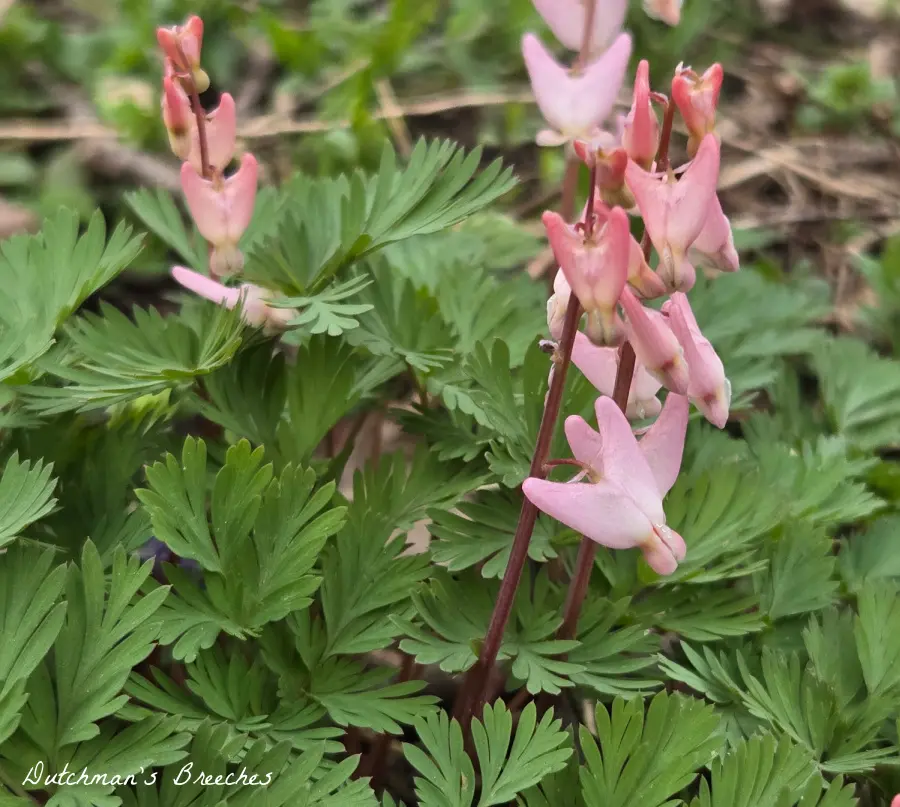
Dutchman's Breeches - Dicentra cucullaria
A slowly creeping groundcover, Dutchman's breeches are related to the bleeding hearts in your shade garden. In the wild woods around my homes, there are thousands of these blooming in April. The are generally white, but can also be varying shades of pink as well. Instead of being heart-shaped, the flowers look like mini pantaloons or breeches from a bygone era. The leaves are cutleaf, attractive in the garden setting, but they do not last nearly as long as the garden variety bleeding hearts. These plants grow around 6 to 8 inches tall, and the flowers add another 4 to 8 inches to that. They continue to spread outward, but will disappear from the garden in by June. Only tiny bulblets can be found if you dig in the area they were at. They are primarily pollinated by bumblebees.
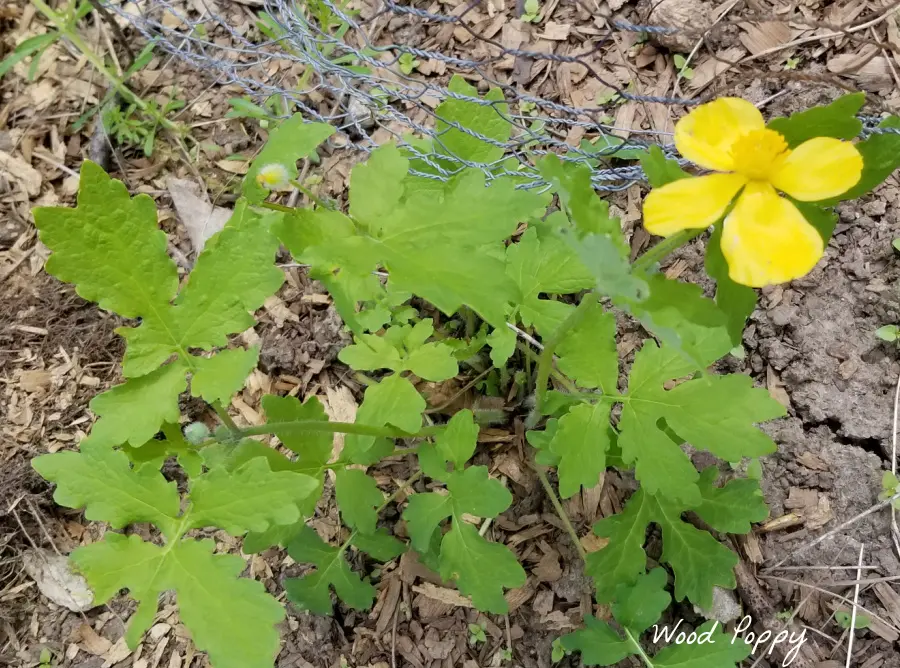
Wood Poppy - Stylophorum diphyllum
Also known as Celandine poppy, wood poppy is a native ephemeral, blooming over a longer period than many of the others. In my own garden, I have observed it blooming from mid-April through early June, then disappearing when the weather turned hot. Individual plants grow around 10 to 14 inches tall and wide with four-petaled, bright yellow flowers, attractive to bees. It mixes well into the shade garden, but will reseed like an annual, instead of spreading around like a groundcover.
Mayapple - Podophyllum peltatum
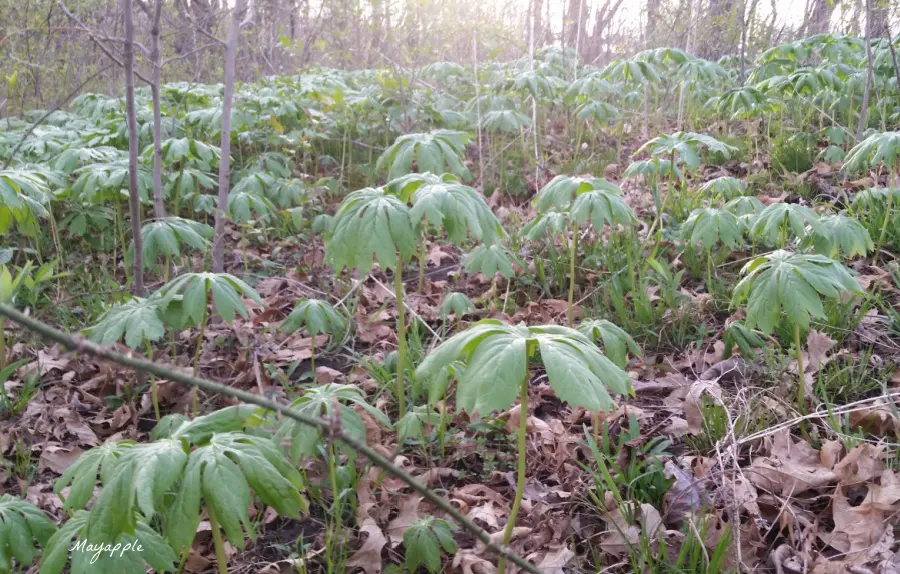
When these begin emerging from the ground, the leaves wrapped around the stalk resemble a strange mushroom. When the leaves open fully, they are one of the largest leaves in the woods. Spreading outward up to 16 inches in width, the leaves cover the ground in ever-widening thickets. The plant itself (as an individual) only consists of 2 leaves, a stalk, and 1 or 2 flowers. The flowers do not produce nectar, but do have nutritious pollen, which attracts bumblebees and other long-tongued bees. Also, the flowers are fragrant, if you ever want to get on the ground to smell them ( I have!).
Winter Aconite - Eranthis hymenalis
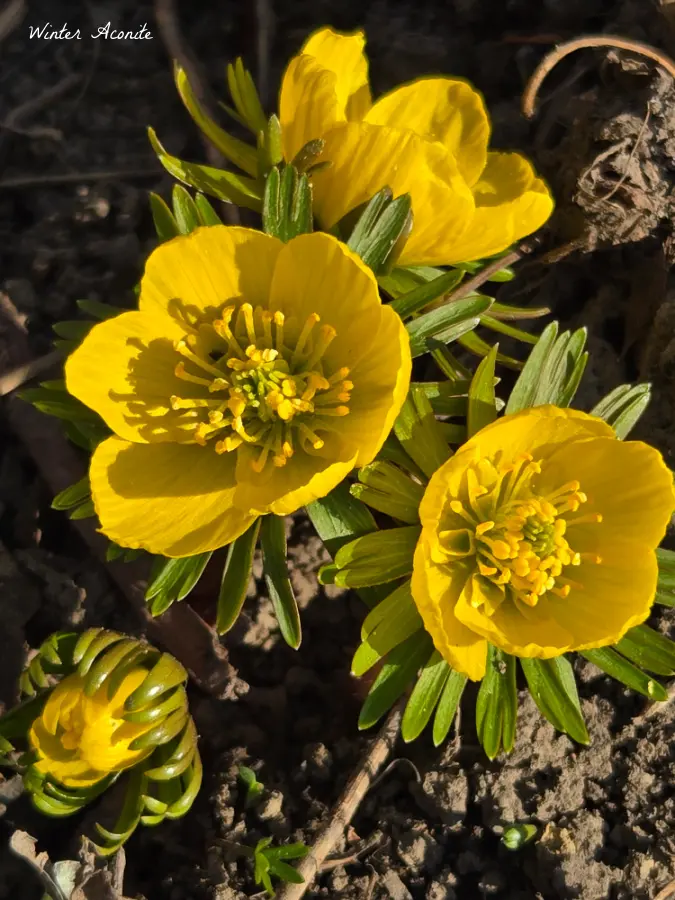
When I first saw this plant in a bulb catalog I was surprised when it said it blooms in winter. So I bought some bulbs (yes they are bulbs) and planted them around my property. And sure enough, they bloom in winter. In fact, it blooms even when there is snow on the ground in early March. And while the plants are not large, growing only 6 inches wide and 4 inches tall, the bright, cherry yellow flowers can light up the dreariest winters. The flowers are pollinated mainly by mining bees.
Shooting Star - Dodecatheon meadia
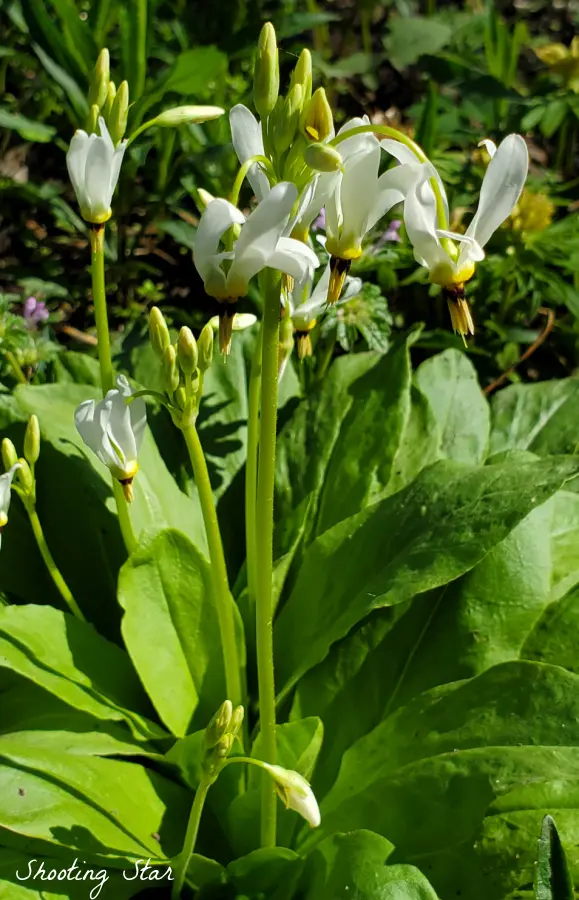
In my garden, I only have one small clump of shooting star in my eastern border garden. The clump has been slowly getting bigger each year, and now after 5 years it is around 14 inches wide. It comes up early, leaves first in late March, then sends up stems with multiple white flowers, rising 10 to 15 inches above the rosette of leaves. The flowers hang down, tipped in black and yellow, like shooting stars. And by mid May everything but the seedpods has vanished. It also comes in purple.
Cutleaf Toothwort - Cardamine concatenata
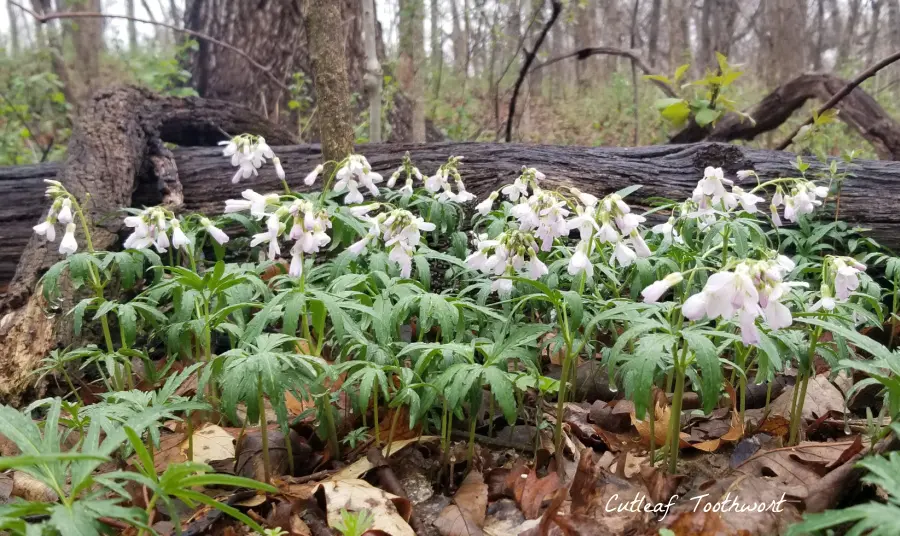
A member of the Mustard Family, this woodland ephemeral has narrow, cutleaf leaves holding upright stems. It only grows around 12 inches tall and wide, but can grow in clumps of 5 to 50 plants per clump. In early March it rises out of the forest leaves and begins to grow leaves. The flowers are four-petaled, white and attractive to bees, mainly mining bees and some bumblebees.
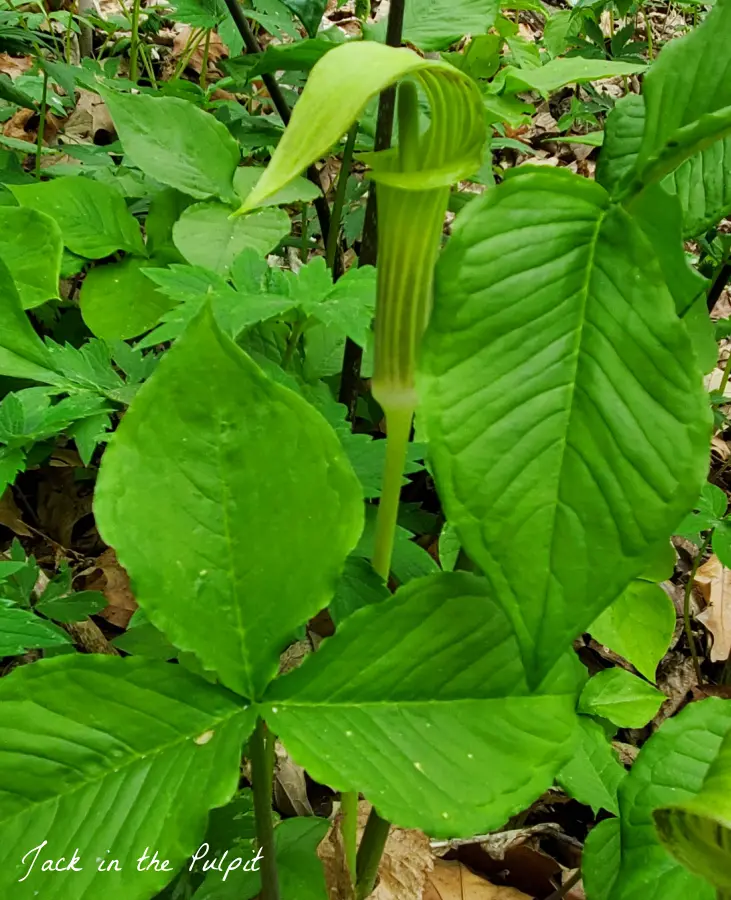
Jack in the Pulpit -Arisaema triphyllum
Before I ever saw one in the wild, I read about these in books when I was a teenager. One of my hobbies back then was to read and write about plants from identification books. Now, I have seen many of the plants I memorized back then. Jack in the Pulpit is an interesting ephemeral, pollinated by gnats or midges, who get trapped inside the female flower after fertilization. The central flowering stalk, called a spadix, is covered over by the hood, called a spathe. This creates the "pulpit" where Jack preaches from.
These flowers, unlike other ephemerals can last for several weeks, as the leaves get larger and larger. The spathe is usually green but can also be purple, or green with purple streaks. Jack in the Pulpit grows singly or in clusters of flowering stalks, with each stalk having one set of trifoliate leaves. They grow 1 to 4 feet tall and wide.
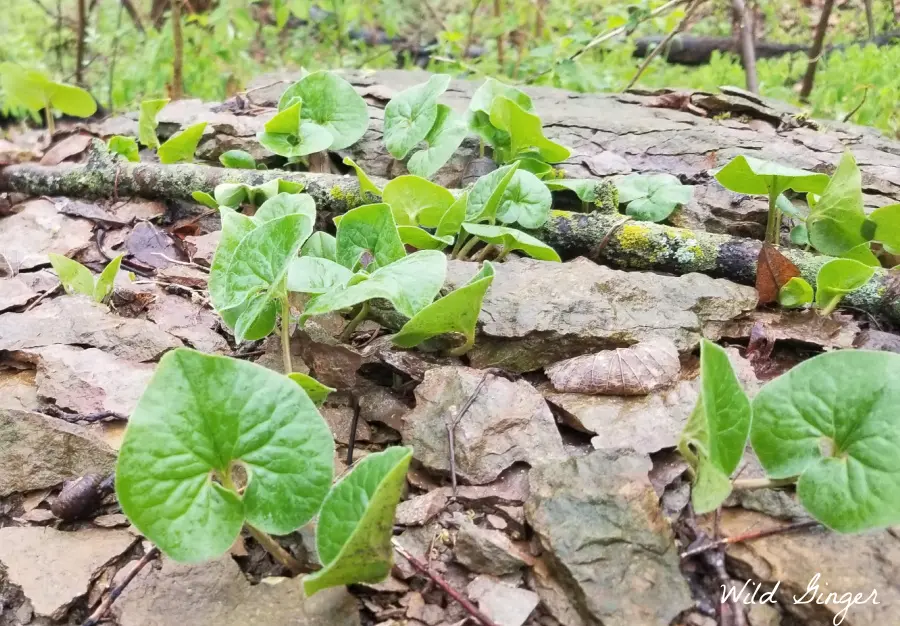
Wild Ginger - Asarum canadense
Wild ginger, if given more sun than in the wild, will have leaves on most of the year, unlike other ephemerals. But, if it is in its natural environment, then the leaves get larger and larger, trying to catch more sunlight before fading away in midsummer. The flowers, which are pollinated by flies, are on the soil surface, though very pretty. They are cup shaped, reddish-brown. Just like the name suggests, the stems have a ginger like fragrance when broken open, but they are not a substitute for Asian ginger used in cooking. Wild ginger is a groundcover, slowly spreading over the area, preferring rocky, well-drained soils.
Where Can I Get These Ephemerals?
Well, the best way is to find a friend with some growing in their garden and get seeds, roots, or divisions. For example, I have several of these in my gardens, and could easily have starts (seeds, roots, or divisions) for wild ginger, shooting star, wood poppy, and Dutchman's breeches. But the others I only see in the wild, and I do not recommend collecting from the wild. That could disrupt native ecosystems. So where to get them?
There are many mail order nurseries who specialize in native plants. But not all of them carry everything. However, there is one nursery which does carry all of these plants. That is the Missouri Wildflowers Nursery in Jefferson City, MO. They have it all. Another good place is Prairie Nursery in Westfield, WI. They have some things like bluebells, wild ginger, shooting star, and mayapple, but not the others.
Conclusion
Spring ephemerals come and go with the season. But even though their charm is momentary and fleeting, they remain an integral part of our woodlands and our gardens, at least for those who have them. Adding them with give a new sense of the beauty of early spring to your garden.
Happy planting!