Many gardeners have a love and hate relationship with clematis. They either love it because it blooms so well, or hate it because it will not bloom at all. What camp are you in? I have been blessed to be in the love side of clematis. Although I have not planted very many at my own home, I have had the care of it for many of my maintenance customers over the last 2 decades.
Clematis, like roses, seem to have a fond but stubborn place in the minds of many gardeners. We often associate clematis flowers with romance, and garden success. If we can grow them, then we feel as if we can grow anything. From what I can gather, it seems that placement, planting, and pruning are what gives gardeners difficulty with clematis.
There are more than 350 species of clematis across the world. They are members of the Buttercup Family, which also includes Anemones, Pasque flower, Columbines, Larkspur, Meadow Rue, Lenten Rose, and Monkshood. Clematis can be bushy (1 to 4 feet tall) or climbing. And there are variety of flower shapes, from bells, double bells, saucers and double saucers, and anything in between.
Types of Vining Clematis
People go wrong with their clematis because of placement, planting, and pruning. Be careful when placing clematis in the garden, because too much sun can limit flowering on most varieties. While there are some species of clematis which prefer to grow in part shade, most types sold at garden centers prefer full sun. And something to climb on. Whether you use a trellis over the mailbox or lamp post, an arbor, a pergola, or a fence, there are many ways to add clematis into the garden. I have some customers who even plant it on rusty wagon wheels.
Planting is an essential part to getting clematis right. The main thing is to get the roots in the ground, then plant something to shade them. Clematis prefers to have cool roots. You can plant any number of things to shade the roots, either annuals or perennials. Some plants that pair well with clematis include hardy geraniums, showy sedum, roses, peony, and many other things. Mulch too can keep the roots cool.
Clematis comes in 3 types, based on flowering and pruning. You must keep these in mind when planting, to keep up on their maintenance.
Group 1 - Spring Flowering
The first group of clematis are spring blooming. These are typically not large, showy flowers, though there are a few exceptions. Group 1 blooms on old wood, or growth which was put on during the previous season. They should only be pruned after the spring flowering period, or you will not get flowers the next season. Flowers in this group tend to be bell, urn, or double-bell shaped.
Cultivars which fall into Group 1 include:
- 'Funyella'
- 'Mayleen'
- 'Sparky Pink'
- 'Betty Corning'
- Pitcher's
Group 2 - Midseason
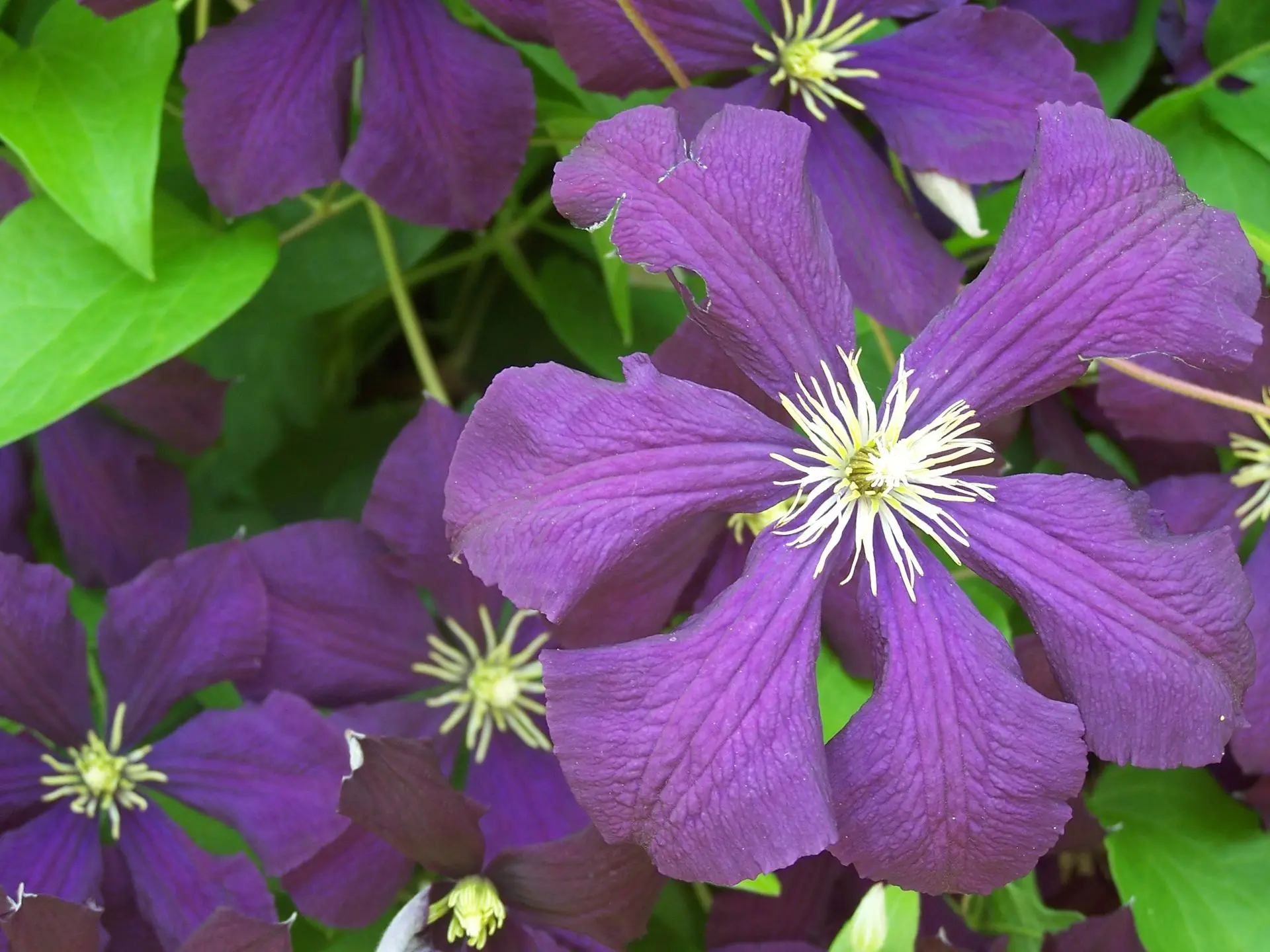
The second group of clematis includes large, saucer shaped flowers, both singly and doubly. They are also repeat bloomers, blossoming again in mid to late summer. Blooming first on old wood, and then again on new wood, they are best pruned only for shape or to remove dead wood. Cultivars in this group include:
- Toki
- Niobe
- Nelly Moser
- Blue Light
- Pink Champagne
- Henryi
- Multi-blue
- The President
- Jackmanii
- Boulevard Series
- Crystal Fountain
- Josephine
Group 3 - Fall Blooming
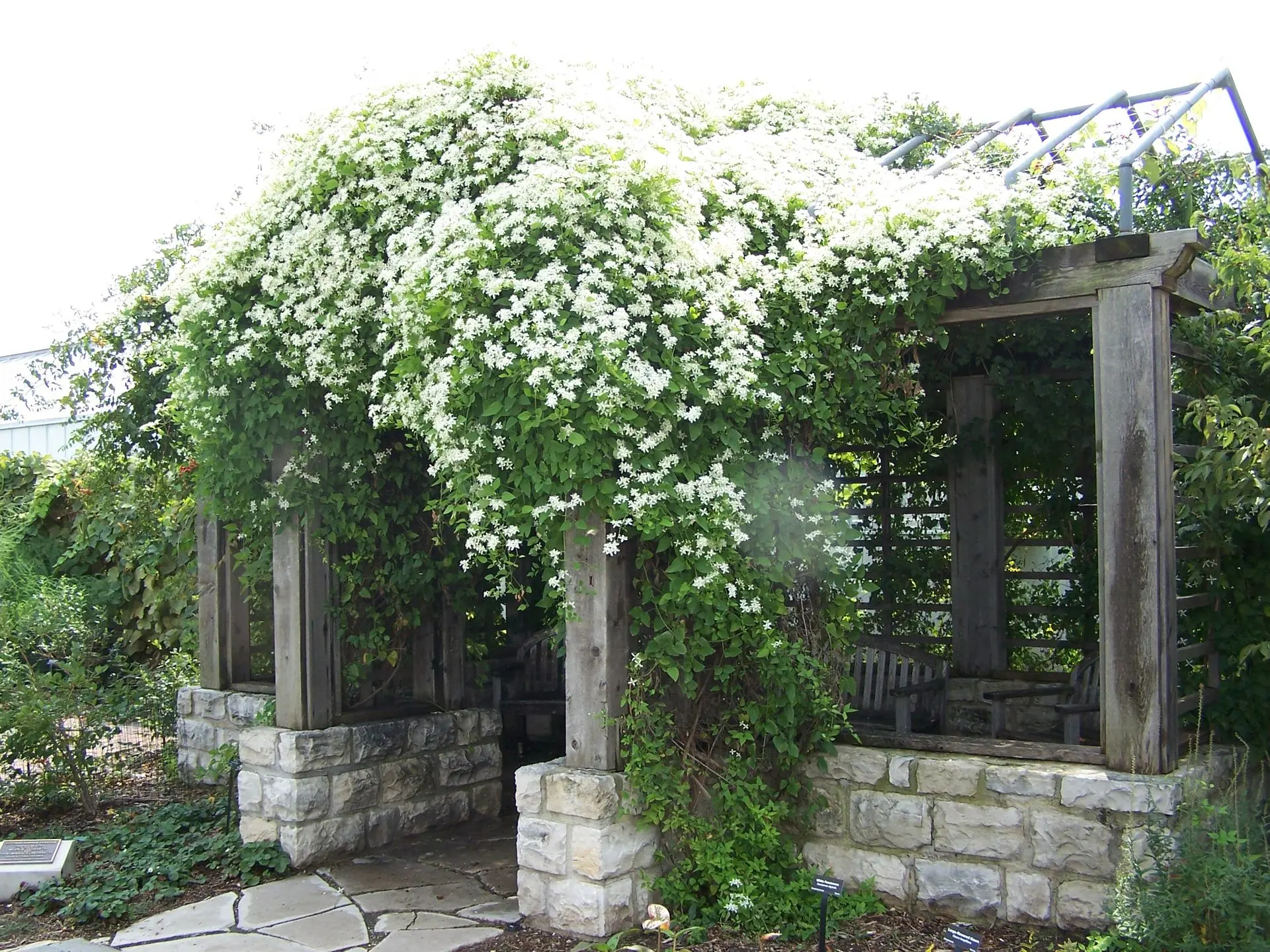
The final pruning group blooms primarily in fall, but with some large, late summer bloomers too. These are typically small flowers, around an inch to 2 inches in size, but there are some larger saucer sizes as well. Because they bloom on new growth each season, it is best to cut these to the ground in late winter or early spring. Some places say 12 inches, but as long as you are above the root zones, you should be good to mow them down. This group contains the most fragrant varieites as well.
- Sweet Autumn
- Virginia clematis
- 'Sweet Summer Love'
- 'Jackman Superba'
- 'Vienetta'
- 'Princess Diana'
- 'Rouge Cardinal'
- 'Rain Dance'
Conclusion
It is recommended to plant clematis from different pruning groups to get the best show of flowers possible. Or you can mix them with other vigorous climbers such as roses, wisteria, honeysuckle, passion vine, or Dutchman's pipe. Clematis does best in full sun, with shaded roots, and where it can vine and climb.
Happy planting!