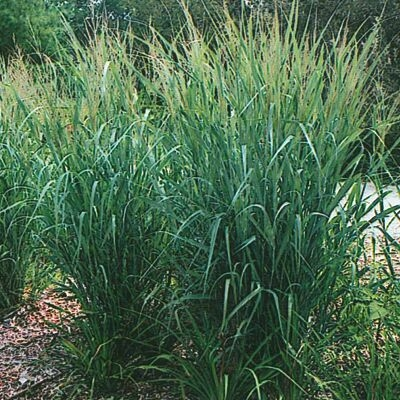
Switchgrass is our 2026 August Plant of the Month. This native grass has become one of the landscape industry's top performers thanks to breeding programs. Native from the Rocky Mountains east to the Atlantic seaboard, switchgrass can be found in almost every type of environment. And while there are some subspecies and regional distinctions, the cultivars produced are planted all over.
Although it is one of the big 4 grasses of the tallgrass prairie (big bluestem, little bluestem, Indiangrass, switchgrass), it is common in all types of prairies, as well as in meadows and glades in the Appalachian Mountains.
In the wild, it is often found in sloughs or mesic prairies, where wetter soils prevail. Thus it is often used for rain gardens and wet meadow restorations where the focus is on water retention.
In the Landscape
In your own gardens, do you add grasses for color and texture? If you have not yet, consider adding in some switchgrass. There are many different cultivars to choose from, and all of them have a place in the garden.
Switchgrass can be used to create screens, block views, or planted in masses to create meadows or mini prairies. It is also a great plant for planting along foundations or mixing into perennial borders.
Care & Maintenance
One of the reasons switchgrass made the plant of the month is its care. It has no disease problems, and only a few pests. It is the host plant for various grass skippers, some moths, and several grasshoppers. But they only cause minimal damage to the leaves. In some of the larger cultivars, some species of native bees may use the hollow stems to overwinter in.
Most perennial grasses can be cut back in either the spring or the fall. I prefer to let them shine through the winter, and cut them back in March or April. They can be cut back to 3 or 4 inches tall. I like to remove the tops to a brush pile or compost pile to let overwintering insects emerge. It can also be burned, with caution.
Switchgrass can grow in moist to dry soils, and are salt tolerant making them perfect for beds along roads and streets. They can also be used for erosion control.
Cultivars
There are a lot of cultivars to choose from, so I am giving you the ones I recommend for the Central Great Plains region.
Prairie Winds Collection from Proven Winners
October Sky is the latest from the Proven Winners collection. It stays upright, growing 5 feet tall by 2.5 feet wide. The flower panicles are rosy pink to purple.
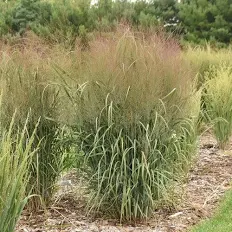
Apache Rose grows 4 feet tall by 2.5 feet wide, with dark green summer leaves with hints of purple. The flower panicles are silvery purple.
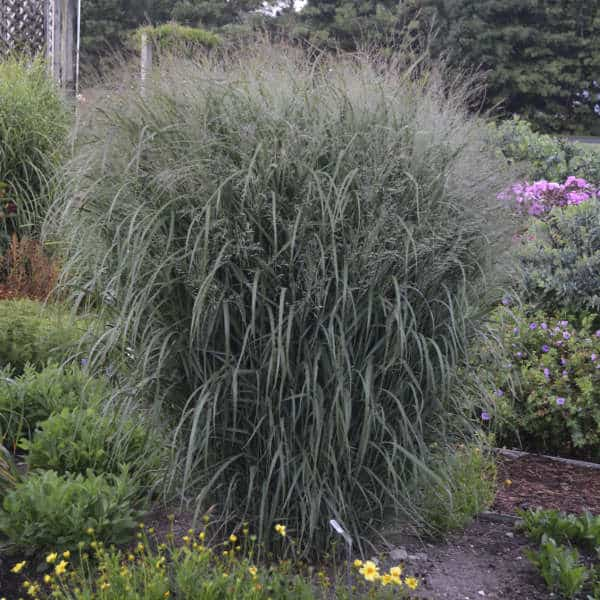
Totem Pole is a narrow, upright form, growing 6 feet tall and 2.5 feet wide. It would be great for a corner by the house or in a row behind shorter perennials. It has greenish flower heads.
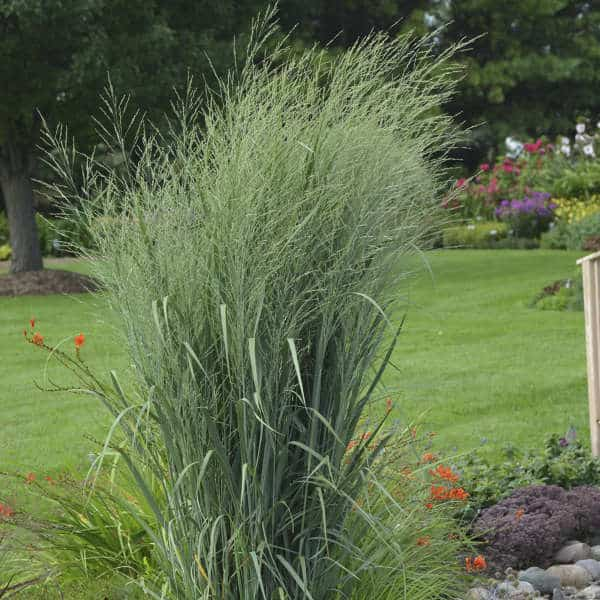
Niagara Falls has a more spreading and vase shaped habit, growing 4 feet tall and wide with tan-ish green flower panicles.
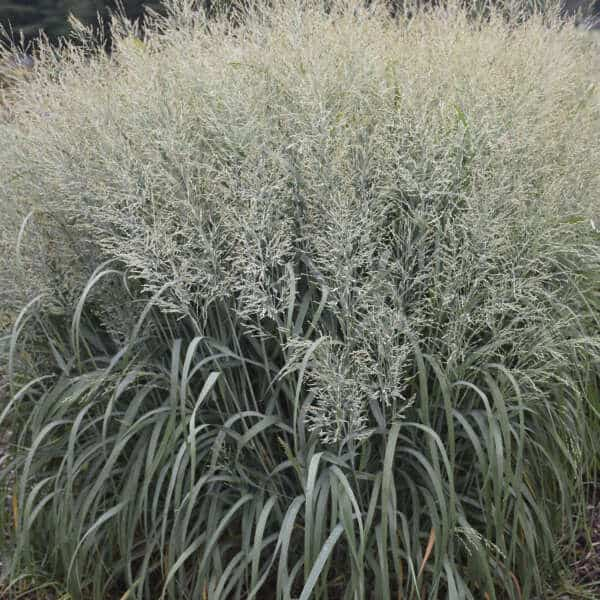
Cheyenne Sky is the best in my opinion from this collection. It grows 3 feet tall by 18 inches wide. The green leaves have reddish tips and highlights, and the flower panicles are rosy-pink to purple.
Other Cultivars
Blood Brothers has deep, dark red streaking on the foliage and near-purple flowers and seedheads. It grows 4 feet tall by 3.5 feet wide.
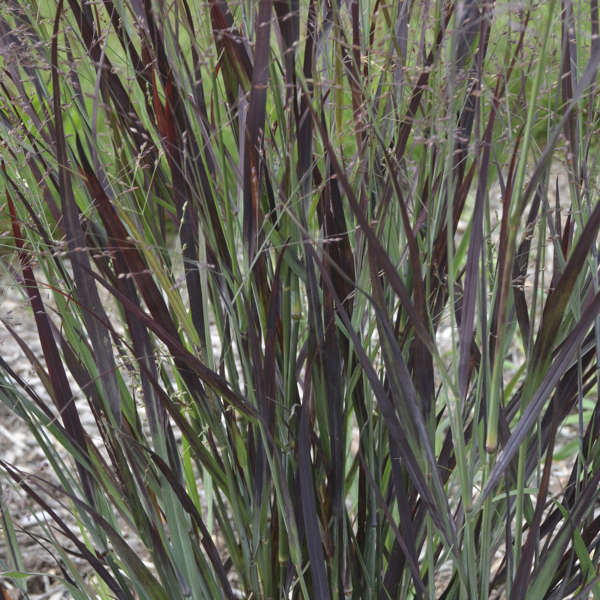
Hot Rod has reddish leaves with tan flowers and seedheads. It grows 4 feet tall and only 2 feet wide, a narrow selection for tight spaces in the garden.
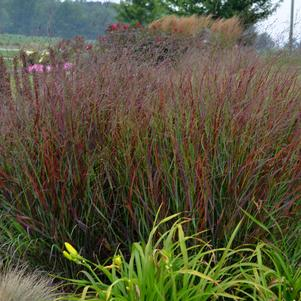
Northwind was the first of the up and coming upright switchgrasses which did not flop in the landscape. Selected by Roy Diblik of Northwind Perennial Farm, it grows 6 feet tall by 5 feet wide with gray-green leaves and tan flowers.
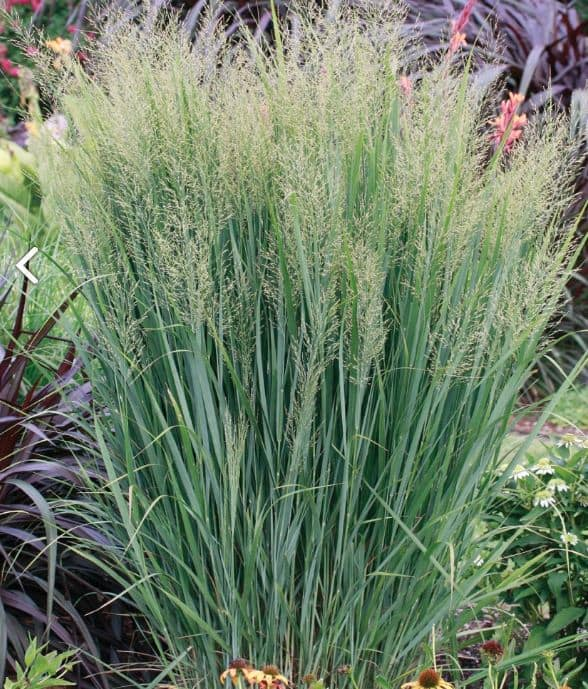
Shenandoah was the standard of red-tinted grasses for many years and still continues to be a favorite of gardeners. It grows 3 feet tall by 4 to 5 feet wide.
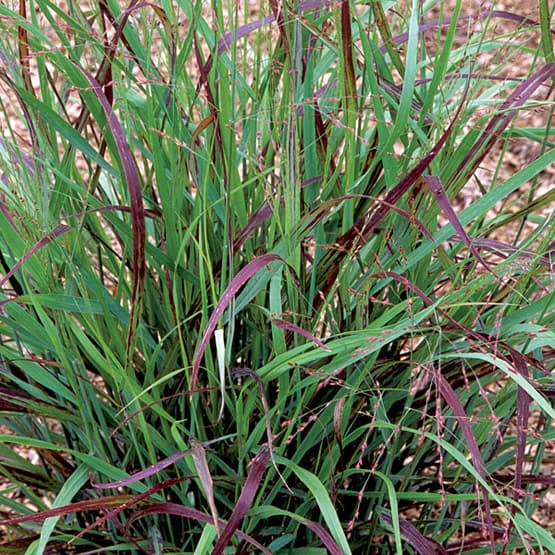
Purple Tears was discovered by Piet Oudolf in his garden and is supposed to be a seedling of Shenandoah. It is an airy plant, growing 4 feet tall by 3 feet wide with lavender flowers and seedheads on gray-green leaves.
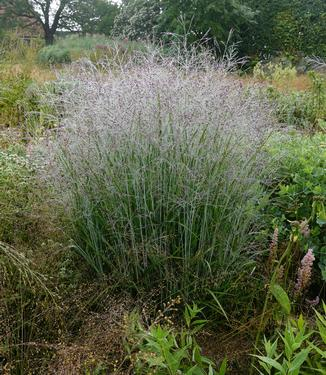
Dallas Blues is the largest cultivar available, growing 6 to 7 feet tall by 5 feet wide. It has steel-blue green leaves, gray blue flowers and tan seedheads. In my own garden, I have had to use cages to keep this variety from flopping.
Wildlife Associations
A variety of insects, birds, and animals use switchgrass for food, shelter, and nesting materials. Insects including grasshoppers, beetles, leafhoppers, plant bugs, and aphids feed on the foliage. It is the host plant for several butterflies and moths including the Delaware skipper, Leonard's skipper, and Northern broken-dash skipper among many more.
Birds including our favorite prairie birds eat the seeds and nest among the foliage. These can include the bobolink, dickcissel, horned lark, many types of sparrows, and American woodcock.
Several mammals eat the foliage including bison, deer, elk, antelope, rabbits, and more.
Companion Plants
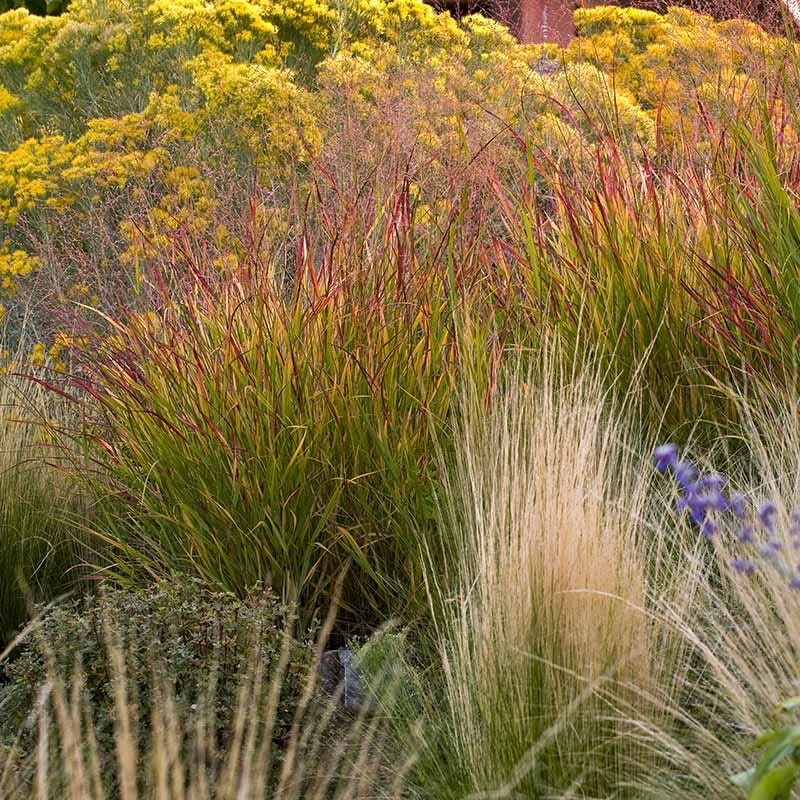
Switchgrass can mostly stand alone in the landscape, either singly or in mass. But there are many times when it would be better to have complimentary plantings of shrubs, perennials, or other grasses around it.
- Little bluestems
- Big bluestems
- Indiangrass
- Sideoats grama
- Sedges
- Rushes
- 'Jade Parade' sandcherry
- 'Little Devil' ninebark
- Siberian iris
- Daylilies
- Tall sedums
- Garden phlox
- Common boneset
- Downy skullcap
- Panicle hydrangeas
Conclusion
Switchgrass is one of the most iconic natives grasses in North American, from the Rocky Mountains to the Atlantic Coast. It grows well in landscapes and can be planted in masses or used singly. And it pairs well with many other plants. Add it to your garden today.
Happy planting!