Beautyberry is one of the most overlooked shrubs for the garden. Besides being low-maintenance, it shines from mid-autumn into winter. Did I mention it was low-maintenance?
There are three main types of beautyberry which need to be discussed before choosing the right one for your garden. I would say I prefer the native over hybrids and Asian species, because of wildlife value.
Native Beautyberry
The North American beautyberry, Callicarpa americana, is native to the southeastern US, but is very adaptable into the Midwest and Great Plains regions.
In the wild, without regular pruning or browsing, it can grow 6 feet tall and wide. With yearly pruning to around 6 inches tall, it grows 4 feet tall and wide, in full sun. But we have also used it as a part shade shrub in out Great Plains' landscapes.
American beautyberry provides food source for a large number of birds, including:
- Thrushes like robins and thrashers
- Mockingbirds
- Carolina wrens
- Quail
- Finches
- Cardinals
- Towhees
It is also a food plant for squirrels, deer, and other mammals in early winter.
The leaves provide a host for the Spring Azure butterfly, snowberry clearwing moth, and the rustic sphinx moth.
Hybrids
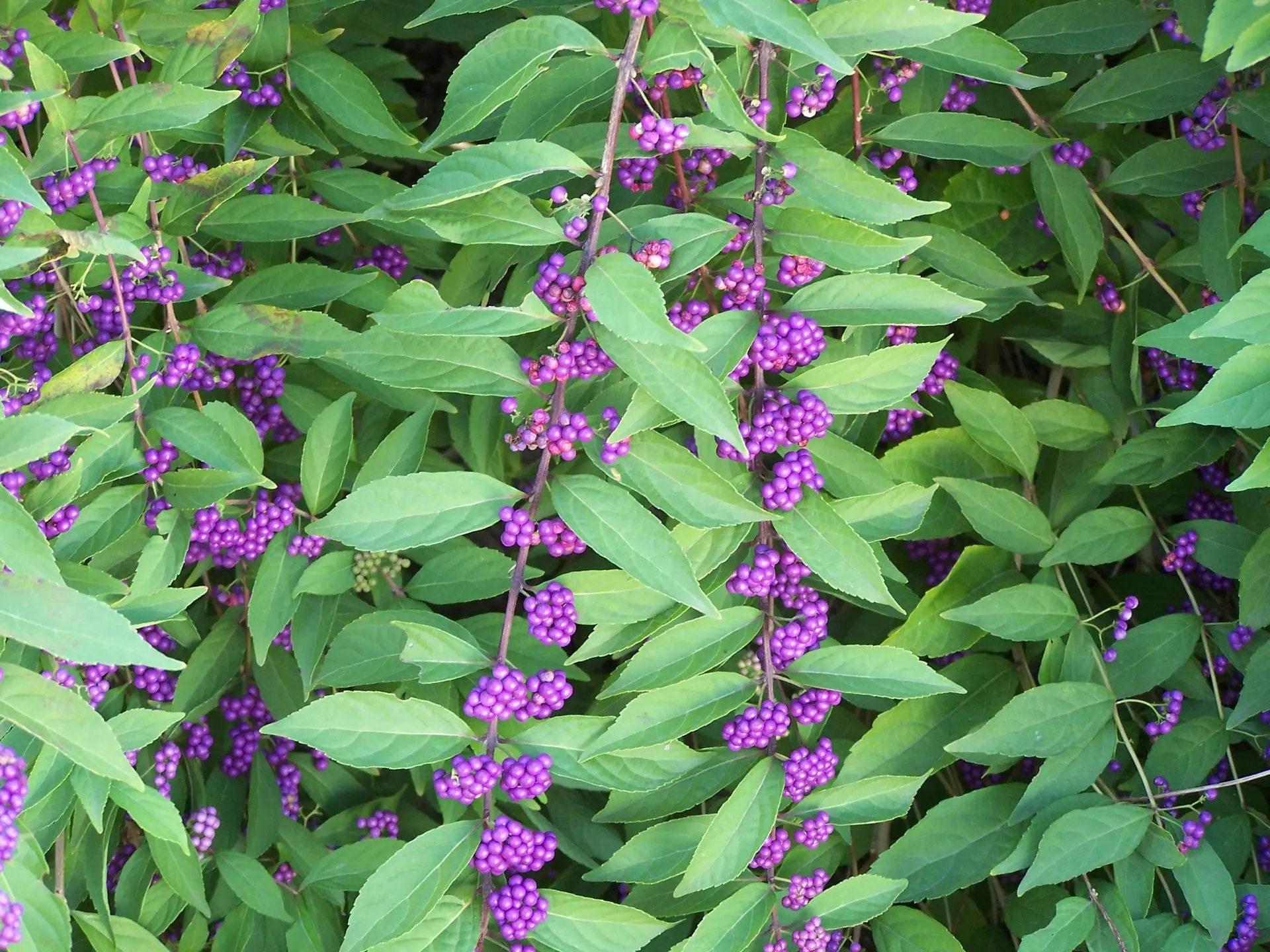
There are many hybrid beautyberries coming to the market. These are usually American and Asian crosses, not necessarily Japanese and Chinese crosses. Proven Winners has a few of the best hybrids on the market. The main difference is in the fruit. While American beautyberry has clusters of fruits held tight against the stems, Asian species have berries which have a short stalk. The hybrids have even shorter stalks, but are not held tight on the stem.
Cultivars include:
- Bubble Up which grows 6 feet tall by 3 feet wide
- Pearl Glam which has dark stems and leaves and grows 5 feet tall by 4 feet wide
Asian Beautyberries
I would recommend steering clear from most of these, especially if you want to attract wildlife. I had several Japanese beautyberry in my yard for a couple of years, and the berries were never consumed. And they spread all over! It was a delight to rip them out and start over with native.
Care and Maintenance
Beautyberries do not have a lot of pest problems. Surprisingly, beautyberry is in the Mint Family, and has few pests. There are a few insects which feed on the foliage (mentioned above), but they cause minimal damage.
In the spring, cut back the old stems of beautyberry to around 6 inches tall. The plant produces flowers and fruits on new growth, and it will send out brand new shoots for the season.
Conclusion
American beautyberry is a wonderful native shrub which provides color from mid-Autumn into winter with its intensely purple berries. The pink summer flowers are visited by small bees and butterflies. Add it to your landscape for a pop of late-season color.
Happy planting!