What kind of organic mulch should I use? Wintertime for the gardener is planning time. When snow comes and the frigid winter winds keep us from tinkering in the garden shed, we curl up on the couch with seed catalogs, garden magazines, and design ideas. It is usually in the spring we start thinking about mulches and groundcovers. But winter is a good time to learn and plan on what mulches we want to use, either to update existing gardens or for adding new.
There are a plethora of choices for mulch. However, we need to remember that each region of the United States has its own availability of mulch choices. Because we are talking about organic mulch, we can leave out things like rock and rubber. On the west coast you may find redwood and pine mulches, by the gulf it may be cypress & pine straw. And while we can certainly order those mulches in, they may be over-priced and not well-suited for our region. I have noticed over the years that pine bark nuggets do not deteriorate down as fast as other mulches. And while this might seem like a benefit to using less mulch, it actually means that the soil micro-organisms cannot utilize the nutrients in the mulch for the plants.
Why Use Organic Mulch?
Organic mulch is preferred over rock, rubber, and other inorganic soil coverings for various reasons. I like to use it because it can provide a source of nutrients for micro-organisms and plants as it breaks down into the soil layer. It can increase the organic matter content of the soil as it breaks down, creating a richer growing environment for plants.
Organic mulches, when laid down correctly, do a better job of holding soil moisture, keeping soil temperatures from fluctuating, and at suppressing weeds than inorganic coverings do. One of the most important things for growing a better plant in the landscape is keeping the soil as healthy as possible. Organic mulches prevent erosion, compaction, and provide for life in the soil. Adversely, when using weed barrier and rock or rubber, you are creating compacted soils; and you have to provide more processed nutrients and fertilizers, which can be harmful to soil micro-biology.
Here in the Great Plains and Midwest regions, we find cedar, hardwood, sawdust, cardboard, spoiled hay, and alfalfa mulches. Let us discuss those.
Cedar Mulch
This is probably the most commonly used mulch here in the Central Great Plains. We have an overabundance of eastern red cedar trees, which is where cedar mulch comes from. There is a mill for it in southern Kansas, as well as others throughout the region. It is cheap and you can buy in by the bag or bulk. We sell it here both ways.
Cedar mulch can be chunky, with pieces in size from 1 to 4 inches long by 1/2 to 1 inch wide. You can often find double milled mulches, often called premium or extra fine in bags. These have been shredded over a second time. When first laid down, cedar mulch is golden in color, but fades in 1 year to a grayish tan. It is easy to lay down, but can be difficult to make smooth. I like to use a metal leaf rake, turned upside-down to smooth out mulch clumps, but cedar is tricky.
One of the benefits besides cost is that cedar mulch can help keep weeds and pests down. Cedar has both aromatic and allelopathic compounds in the oils of the bark and wood. These chemical compounds suppress some weeds' ability to germinate and grow. The aromatics in the oils also deter some moths, beetles, and other pest insects.
What I do not like about cedar is that it does a poor job of holding in soil moisture unless laid down at 4 to 6 inches in depth. Because of the density of the wood and bark mixed in the cedar mulch, there is a lot of pore space, creating more air movement through the material. This results in more air reaching the soil surface.
Hardwood Mulch
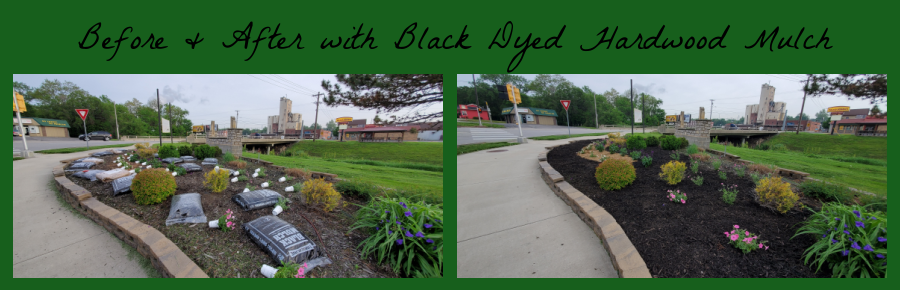
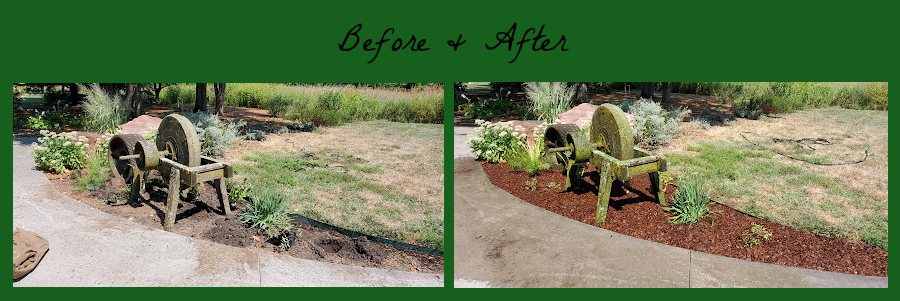
Mulches labeled as hardwood tend to be dyed with colors such as black, brown, or red. I get a lot of calls for red mulches in Nebraska, and dark brown mulch everywhere else. These mulches can be great color addition to the garden or walkway and can help plants pop out in the garden.
However, dyed mulches are chemically colored and these chemical colors can leach into the ground and be detrimental to the garden. I generally only recommend using dyed mulches on permanent walkways or where there are few if any plants.
Hardwood mulches can be chipped from any source, including recycled pallets or brush brought to the recycling yard. The problem is that pallets are often treated with chemicals to reduce rot and these chemicals can affect plant health. Hardwoods like oak, hickory, and walnut have natural allelopathic compound which inhibit plant growth.
Therefore, if you must use hardwood mulches, use them where you have no plantings but need a mulched surface, such as walkways, parking areas, or strips along buildings to keep back plant growth.
Sawdust Mulch
We started using sawdust mulch several years ago. It comes from a local company and is the ground cover for their hog trailers. They apply this mulch to the inside of their trailers. Then, after hauling hogs to market, they dump the mulch out into piles at a recycling facility where we pick it up.
This mulch is finely chopped pine and cedar flakes, which we call sawdust. It has been heated with hog manure and urine, and retains the moisture that it collects from watering and rain. While it may not sound like something you would want in your garden, we recommend it for a variety of places.
We have done various testing and trialing to determine if there are any lasting parasites or diseases being transferred from the mulch to garden plants, and have found nothing. This mulch is easy to lay down, easy to make smooth, and give a natural fertilizer boost to the plants. Also, it retains moisture and does a great job of retaining soil moisture.
We usually apply sawdust 4 to 6 inches deep and it compacts down to 3 to 4 inches. At this rate, it breaks down and composts in about 18 months, so another application is necessary every other year. But it is very cheap, and we sell a lot of it. The color is dark brown to tan-brown and does not age to gray.
Using Cardboard As Mulch
There has been a lot of talk, both negative and positive about using cardboard in the garden, both as mulch and under mulch. Cardboard is made by converting wood fiber and recycled paper into pulp, then pressing into sheets and running it through a corrugating machine, and then glued between 2 flat sheets. It is then cut into sheets for making into boxes.
The problem that those against cardboard in the garden state is that the glues and waxes often used can be detrimental to the garden. However, my research has shown that the glues used in cardboard construction are plant-based and break down in the soil as fast as the cardboard itself. Waxy coatings are only used for waterproofing specific grades of cardboard, mainly white.
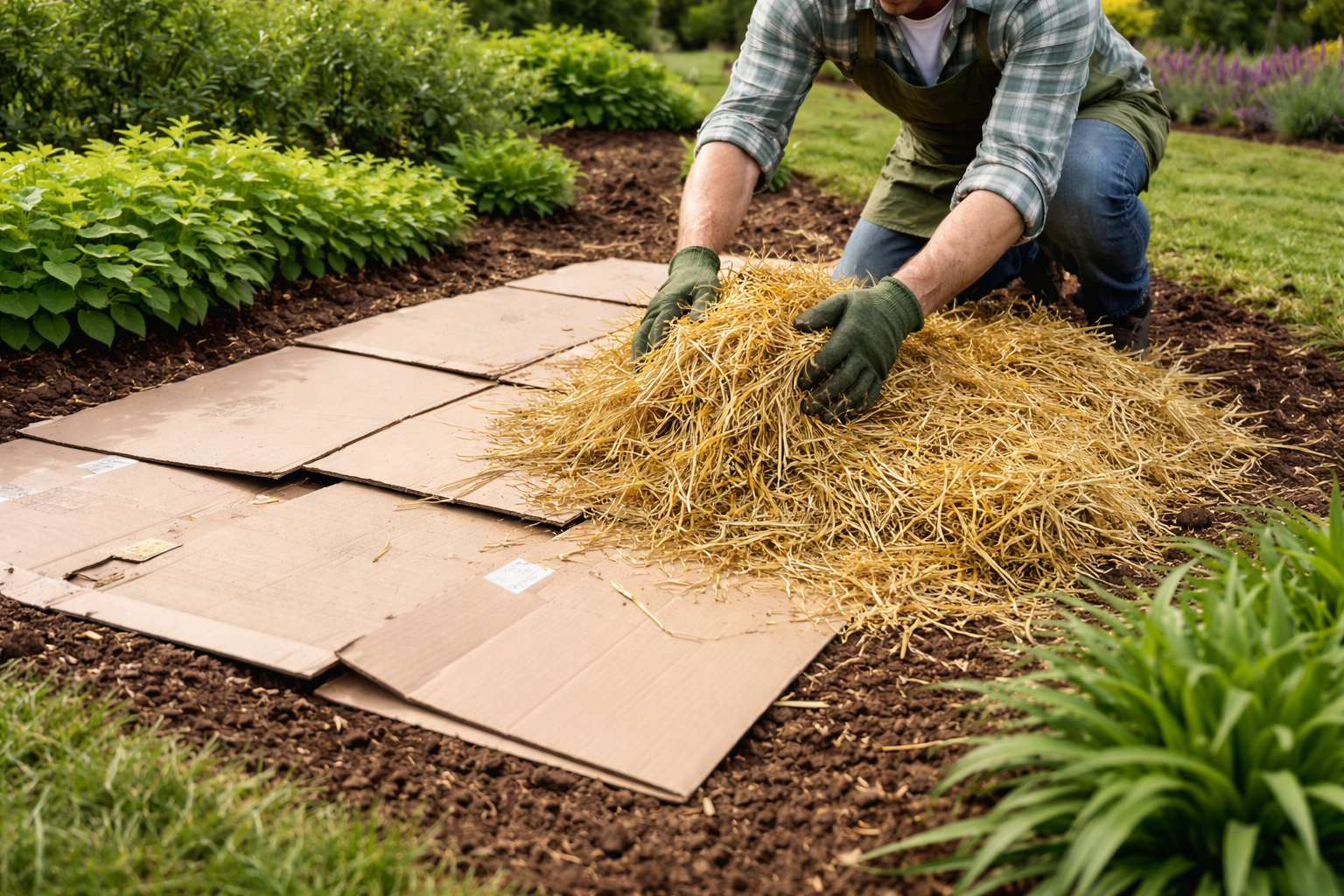
I only recommend using brown cardboard with black ink markings on it in the garden. Do not use white carboard or those with brightly colored markings. Remove all tape as it will not break down in the soil. I like to put cardboard down underneath my hay or sawdust mulch. Both the cardboard and hay mulch will completely break down in less than a year, although uncovered cardboard can take 2 years to break down fully. The point? Cover your cardboard to help it break down. It is great for smothering grass, weeds, and you can cut it to easily fit around desired plants.
Spoiled Hay/Straw Mulch
Now, for my commercial customers I would not recommend using hay as mulch. Mainly because it breaks down faster than ordinary mulches. I like to use the spoiled hay from my goats for mulch in the garden. This hay has been picked through by the goats as they seek the more nutritious parts, then dropped and stepped on, and finally, fertilized with urine and manure. It piles up in the barnyard, mainly around the hay feeders, and gets rained on as well. By the time I get it hauled out, it is already starting to partially decompose, and often has worms and beetle larvae in it.
I take this hay and lay it over cardboard in my flower and vegetable garden beds. I use it as mulch mainly during the spring and early summer months. In the winter I lay it in containers and garden beds to break down over winter before spring planting. Also, I have used a lasagna style method of layering it into large planter boxes for soil improvement. I layer hay with cardboard, compost, chopped leaves, and repeat as it decomposes.
Using Straw as an Organic Mulch
Straw is the recycled parts of wheat and oat harvesting, mainly the stems and some leaves. It is baled and available for sale at garden centers around the country. Its best use is for starting new grass as it can be spread evenly over the soil surface to prevent water splash/erosion while watering in new grass. It can also be used like hay in the garden as mulch.
However, straw often has more weed seeds than hay in it, because it is not used for animal feed. This makes it less ideal for flower beds, as mulch is supposed to suppress weeds, not provide them. I would only suggest using straw if it has be partially composted or only in the vegetable garden, over a layer of cardboard.
Alfalfa Mulch
This organic mulch is produced by a local grower in our region. They chop alfalfa into small clippings and bag it for sale. Alfalfa mulch is lightweight, but the particles lock together when laid down and watered, holding in moisture very well.
The biggest drawback to alfalfa is the cost. It is expensive. I recommend using alfalfa for annual plantings of flowers and vegetables. It has minerals and nitrogen that helps plants grow. I would not use alfalfa over the whole landscape unless you had really poor soil which needed amending.

Other Organic Mulches
The above mulches are the most used and most recommended mulches in the Central Great Plains and Midwest regions. However, if you are shopping for mulch at most garden centers or big box stores, you may see the following other organic mulches as well.
Cypress Mulch
This mulch is from the logging industry in the southeast United States and comes from cypress trees. Cypress mulch lasts as long as cedar and has similar allelopathic and aromatic compounds. However, cypress is not a regional choice and does not support local logging, trucking, or shipping companies.
Cocoa Hulls
This organic mulch is by-product of the chocolate industry. Cacao beans are shelled (hulled) and the hulls are packaged to use as mulch. They are very lightweight and should only be used in areas that get little wind. They do have a chocolate-like aroma, but are not toxic to dogs. Cocoa hulls as mulch are expensive, more even than alfalfa mulch.
Pine Straw Mulch
Pine needles straw is used as mulch mainly in the southeast and along the gulf states where it is common. They slowly acidify the soil, not quickly as is sometimes reported. When applying it takes more than other mulches to cover the same area because the needles are thin. They do not do a good job of retaining soil moisture unless they have been chopped.
Pine Bark Mulch
This mulch is made by shredded pine bark into different size chunks or nuggets. There are usually 2 sizes available; small and large. Small pine bark nuggets are 1/2 to 1 inch long by wide. It makes a nice, dark brown mulch that lasts for at least 2 seasons, but it does fade to gray in 1 year. The bigger size is 2 to 4 inches wide and long.
Tips for Spreading Organic Mulch
- When spreading organic mulch, lay down at least 3 inches of mulch. Never lay less than 3 inches and try not to lay more than 6 inches. If you cannot tell the depth or do not carry and tame measure, use your hand. Most adults have an index finger that is at least 3 inches long from the tip to the base.
- Use a metal, spring-type leaf rake, upside-down to smooth out fine mulches like sawdust, cocoa hulls, and pine bark. A hard garden rake, turned upside-down can be used for smoothing out cedar, cypress, and hardwood mulches.
- Use a wheelbarrow to move bulk or bagged mulches.
- Leave a space of 3 to 8 inches between the mulch and plants. Shrubs and trees should have the largest spacing, while perennials can be closer.
- Never pile mulch on top of plants.
Conclusion
Now you can decide which mulches to add to your garden or walkway. Knowing this helps you in the long run, as mulches are beneficial in retaining soil moisture and preventing excessive weed growth.