Let's face it, if it is not big, bold, or beautiful, then it is an unseen pollinator. What I mean is that there is a class of pollinators which mostly go unnoticed by gardeners. These are unseen pollinators. And there are a lot of them. What do most gardeners think of when the term pollinator comes up? Butterflies? Bees? Hummingbirds? Yes, and that is mostly it. Oh sure, many of you know there are beetles, wasps, and flies. But do you really notice them the way you do the others?
I am sure you notice some of them, especially the wasps, hover flies, and bee-mimics. But there is a world of other pollinators which remain mostly unseen. It is not because they are less important. Indeed, many of them are better at pollination. It is because they are not super showy, or colorful, or large.
Flies
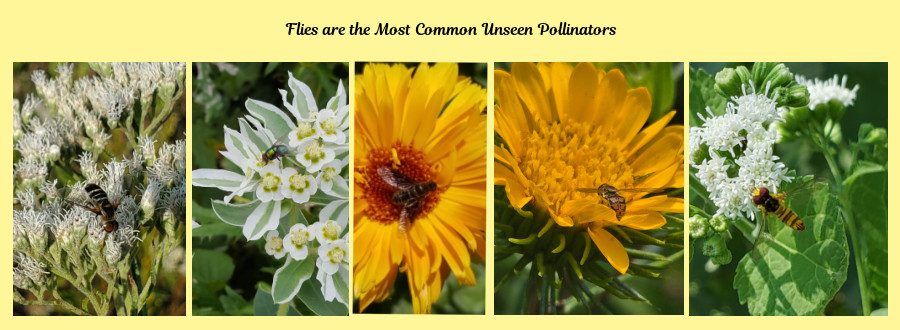
Typically, when we thing of flies, we are mostly thinking about horseflies and houseflies. But there are A LOT of different species of flies. And they pollinate a lot of things. They are really good and necessary pollinators for flowering plants with stinky flowers, or insignificant flowers (think evergreens). If you have boxwoods or holly in your landscape, then check them out when they bloom, you will see a lot of flies there.
Sure, we see them on the flowers, but how many of you really stop to notice all the different species of flies? I admit, I was just like you. And then, a good friend of mine introduced me to iNaturalist, and I started learning to notice everything.
There are at least 6000 species of flies in the United States, compared to 850 species of butterflies. And while some of them are less likely to be pollinators (robber flies, deerflies), most are considered important pollinators for many different plants. Hardly unseen.
Beetles
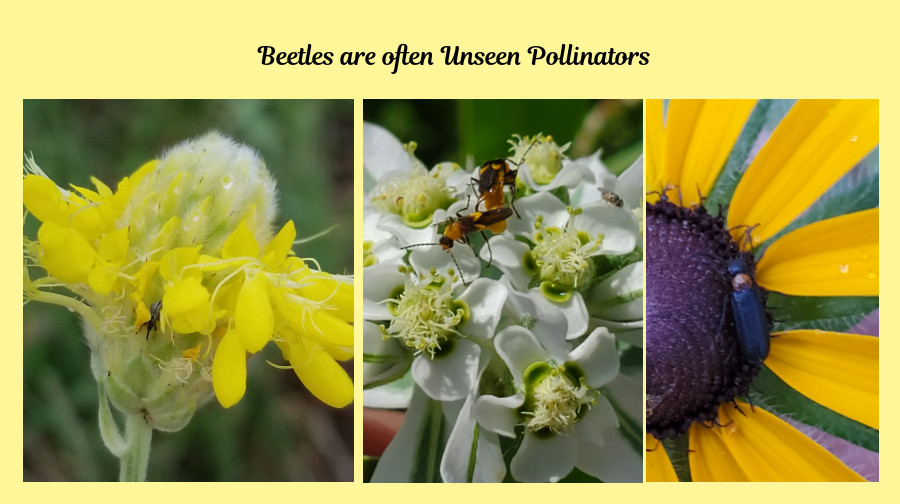
While some beetles do certainly get noticed, they are usually unseen when it comes to pollination. The ones that typically stand out are the ones which mimic bees. But there are a lot of beetles which provide pollination services to a lot of plants. And because there are so many more beetles than anything else (some 12,000 species in the US alone), they do a lot more pollination than butterflies, bees, or birds.
Smaller beetles do a lot of the work, along with long-horned beetles, soldier & blister beetles, and leaf-feeding beetles. Even some lady beetles get in the act, when there is no prey to feed upon. And some beetles are VERY tiny!
Ants
Ants are probably the most unseen of all the pollinators. And it is because they are so small. While ants are not as good at pollinating as beetles, bees, or flies, they do some pollination. Especially on smaller flowers such as dill, wild carrot, and poison hemlock. True, you would never put out ants to pollinate your orchard, but they are sufficient for plants which have both male and female flowers in the same flower.
Small Bees
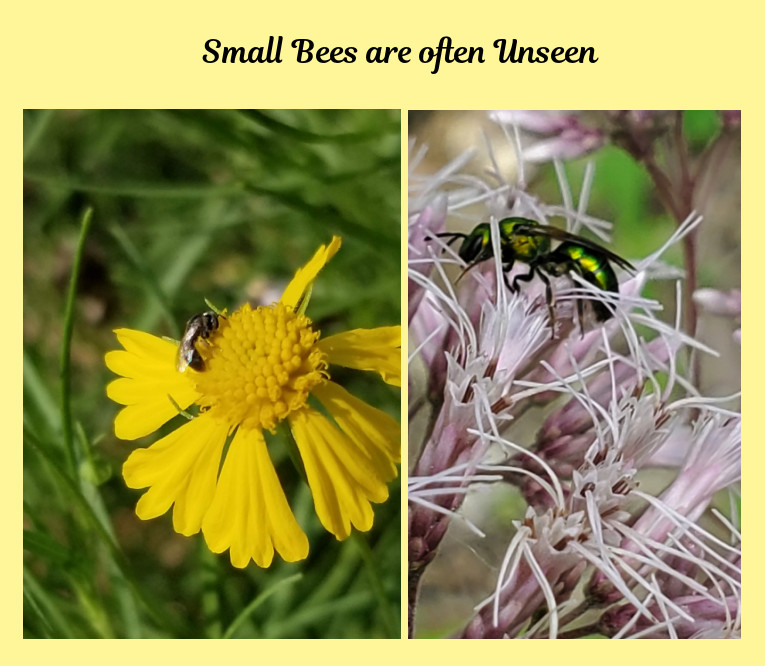
The honeybee unfairly is considered one of the more important pollinators. But it gets too much credit. Our native bees, nearly 5000 of them, are much better at pollinating. But many of them are unseen. We do see bumblebees, large bees, cuckoo bees, and other colorful bees. But sweat bees, small carpenter bees, and many of our specialist bees go unseen by gardeners. We know they are there, but they hardly matter to most.
Others
What are some insects we do not typically associate with pollination? Well, I often find insects who are incidental pollinators, meaning that they are there for food or nectar, and end up pollinating at the same time. Spiders are an example of this, though they are not insects. Many true bugs such as shield bugs, plant bugs, stilt bugs, and assassin bugs are incidental pollinators. Other insects may include mantids, katydids, grasshoppers, and robber flies.
Conclusion
Unseen pollinators may also be the unsung heroes of the insect world. We may not all appreciate what they do for us, but they are actively taking a part in our gardening world. So here is to the unseen pollinators of the garden!
Happy planting!