When I first heard about this gardening technique, I was probably like many other gardeners, thinking "What is the Chelsea Chop?" This technique was called after the Chelsea Flower Show, which happens around the same time as when this technique should be done. But what is it?
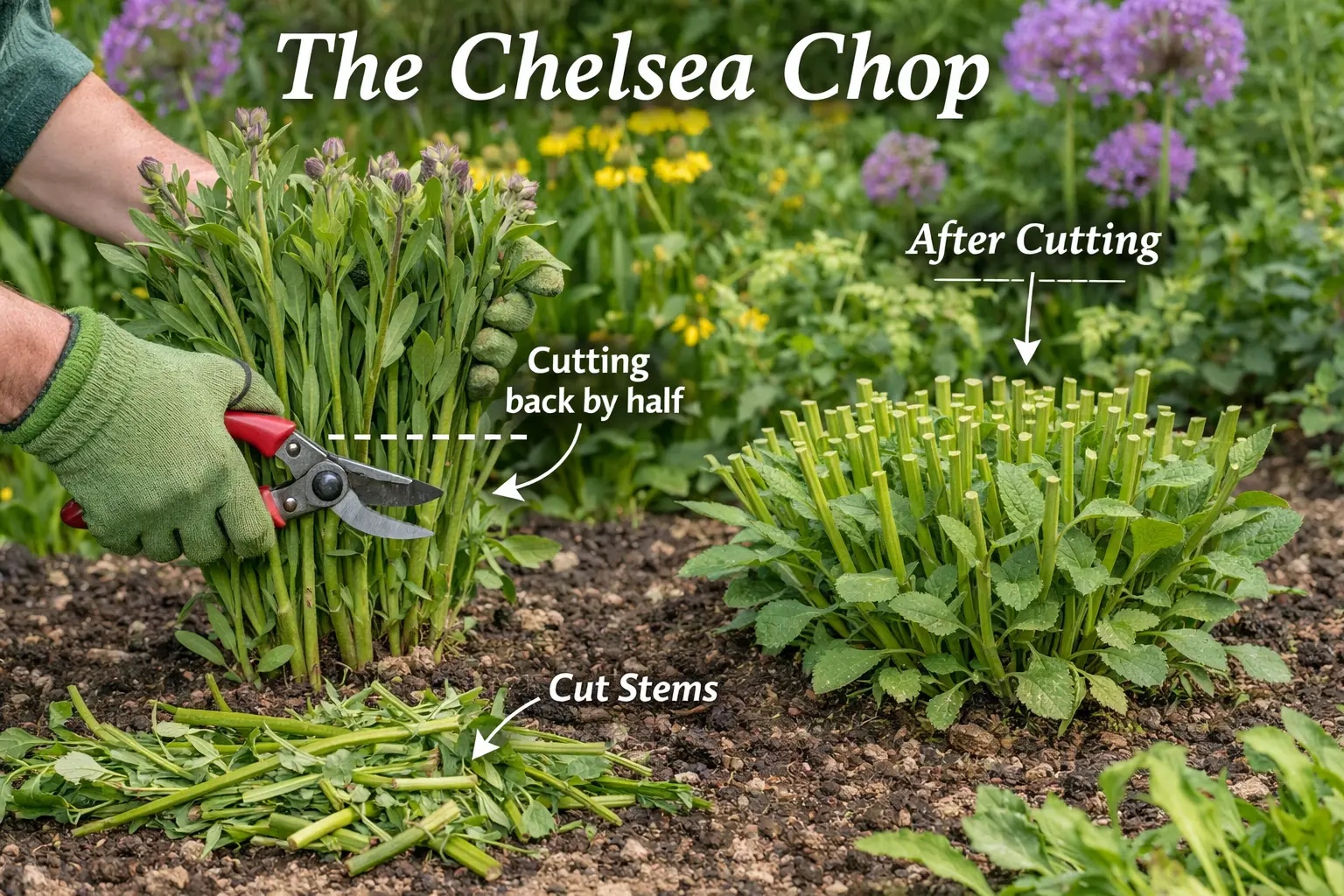
The Chelsea Chop is when gardeners cut back certain perennials in the landscape by 1/3 to 1/2. It promotes bushiness, more flowers, and stronger stems that do not need staking. Instead of cutting or pinching back stems multiple times from May to July 1st, the Chelsea Chop takes it all off at once. But do not confuse this with the needed chopping of salvia, daylilies, and catmint in July. That is entirely different.
What Plants Benefit from the Chelsea Chop?
There are a wide range of perennial plants which can benefit from the Chelsea Chop. Many of the plants mentioned by English gardeners for this should seem familiar to gardeners in the Great Plains. After all, many of their garden plants came from here, brought over to Europe by plant collectors in the 1700s and 1800s. If you are keeping plants in a meadow garden, then this might not be for you. But the rest of you, who have primarily foundation plantings, or small gardens and landscapes, can make use of the Chelsea Chop.
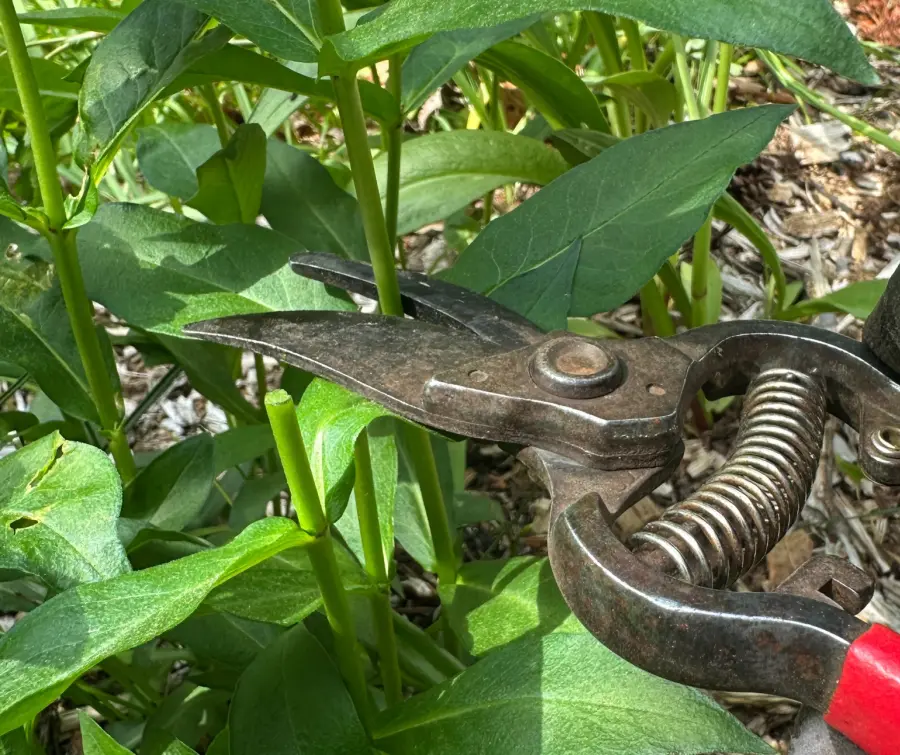
Plants that are not yet in blooms, such as late summer and fall blooming are the best for this technique. But there are other plants which respond well that also benefit. Use the Chelsea Chop of the following perennials:
Natives
- New England Aster, S. novae-angliae
- Aromatic Aster, S. oblongifolium
- Oldfield Aster, S. pilosum
- Anise Hyssop, Agastache foeniculum
- Yellow Giant Hyssop, Agastache nepetoides
- Bee Balm, Monarda species
- Wingstem, Verbesina alternifolia
- Western Ironweed, Vernonia baldwinii
- Missouri Ironweed, Vernonia missurica
- Downy Skullcap, Scutellaria incana
- Garden Phlox, Phlox paniculata
- Jerusalem artichoke, Helianthus tuberosus
- Sawtooth sunflower, Helianthus grosseserratus
- Willowleaf sunflower, Helianthus salicifolius
- Common boneset, Eupatorium perfoliatum
- Tall boneset, Eupatorium altissimum
- Goldenrod, Solidago species
Non-native Perennials
- Showy sedum, Hylotelephium
- Chrysanthemum
- Shasta Daisy
Timing and How-To
When exactly should this be done? While the time is not perfectly set, it is best to perform this technique on the above plants between the 3rd week of May and the 2nd week of June.
Most gardeners prefer to use a pair of hedge trimmers (looks like giant scissors) to do the job right. If you keep them sharp, then a couple of quick snips to approximately 1/3 to 1/2 of the plant works best. Another way to do it would be to use any number of the electric shears available. We keep a a few of the Milwaukee 8" hand-held hedge trimmers for our crews, and they work great on most stems for this purpose.
The July Chop
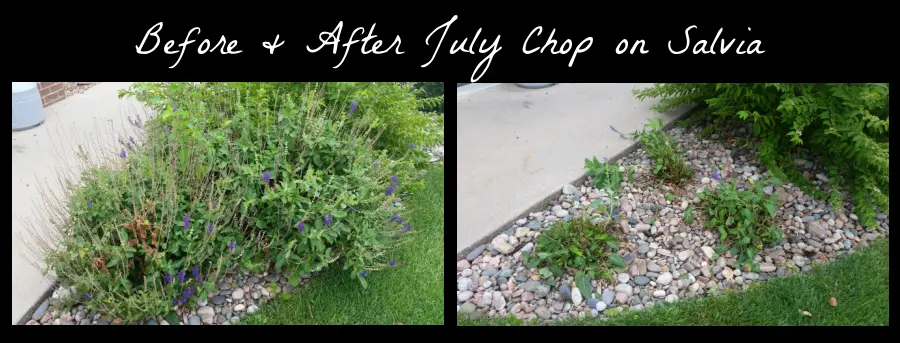
Yes, I know the name needs some work. But this is separate from the Chelsea Chop. It is done on perennials which have already done their big burst of blooming in May and June. These perennials are often re-bloomers, but the blooms are sporadic, not big flushes like in late spring. By cutting them back by at least 1/2, they will send out new leaves and new flowers, as if they were blooming in spring again.
The following perennials benefit from being cut back hard in July, anytime from the 4th to the 30th.
- Perennial Salvia
- Catmint, Nepeta species and cultivars
- Most daylilies
- Bigflower coreopsis, Coreopsis grandiflora
Conclusion
The Chelsea Chop and July Chop are important pruning techniques for managing perennials in the garden. Plan to do these each season on various perennials to promote healthier plants, bushiness, sturdier flowering stems, and more flowers.
Happy planting!