Milkweeds are fast becoming one of the most talked about if not grown plants in American gardens. Everyone is joining the effort in adding milkweed in their gardens to help our monarch butterflies. And the monarchs seem to be making a rebound. The 2024 season for the monarch was one of the lowest in 30 years, according to the World Wildlife Foundation, with the overwintering sites covering only 2.2 acres. But in 2024-2025 the numbers have doubled to 4.42 acres! Put in perspective, I saw only 5 adult butterflies in all of 2024, and no caterpillars. But so far in 2025, I have seen a few hundred butterflies, and a dozen caterpillars.
Types of Milkweed for the Garden
Depending on which part of the country you live in, you can have several to only a few choices for milkweeds to grow. There milkweeds native in all 48 of the lower states. This means that even in the mountains, the floodplain, the desert, the prairie, or the coast, you can grow milkweeds to help monarchs. But because milkweeds are so diverse, it also means there are more chances for pests.
Here in the Central Great Plains, we have 13 species which can be found in the wild, but not all of those can or should be grown in the garden. Mead’s milkweed, A. meadii, is threatened and should never be removed from its location, if you can find it at all. So what types should be planted in the garden? I will break it down by eco-region as best as I can.
Eastern Temperate Forests
This region includes everything east of the Mississippi River except southern Florida. However, not all land in those areas are made equal, so I will divide it again into North and South. The North includes North Carolina, Virginia, Southern Missouri, Kentucky, Tennessee, Illinois, Indiana, Ohio, West Virginia, Pennsylvania, New York, Delaware, Massachusetts, Rhode Island, Maryland, and New Jersey. The South includes most of Florida, southeast Texas, Arkansas, Louisiana, Alabama, Mississippi, Georgia, and South Carolina.
Milkweeds for Northern Gardens
Finding some of these milkweeds for the garden might be a bit of a challenge, though seeds are usually more readily available than plants. But plants are becoming more available as new nurseries are carrying them. Milkweeds need to be planted in the right place in the garden to thrive. So be sure to pick out your spot before purchasing plants or sowing seed. Some milkweeds new room to run as they are spreaders which can overtake a garden bed.
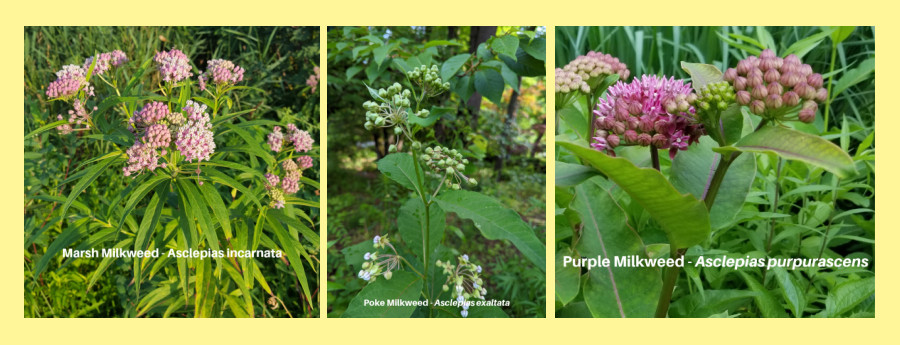
- Marsh milkweed, A. incarnata – pink flowers, wet loving, full sun, 3 to 5 feet tall
- Poke milkweed, A. exaltata – green/pink flowers, moist soils, shade/part shade, 2 to 4 feet tall
- Purple milkweed, A. purpurascens – dark pink/reddish-pink flowers, moist soils, part to full sun, 2 to 4 feet tall
- Common milkweed, A. syriaca – white, pink, or reddish pink flowers, dry to slightly moist soil, full sun, 3 to 6 feet tall
- Butterfly milkweed, A. tuberosa – orange, red, or yellow flowers, dry to moderate soils, full sun, 1 to 2 feet tall
- Whorled milkweed, A. verticillata – white flowers, dry to moist soils, full to part sun, 1 to 3 feet tall
Southern Gardens
I have not visited any places south of Tennessee, but I do know my milkweeds, even if I have not seen them in person in the South. The following are ones best suited for garden areas in the Southern Region.
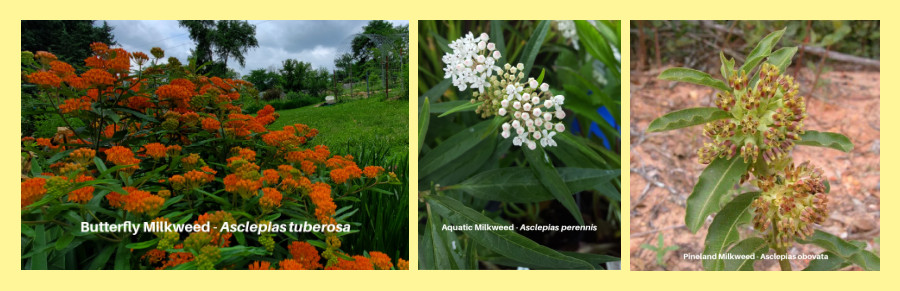
- Marsh milkweed, A. incarnata – pink flowers, wet loving, full sun, 3 to 5 feet tall
- Butterfly milkweed, A. tuberosa – orange, red, or yellow flowers, dry to moderate soils, full sun, 1 to 2 feet tall
- Whorled milkweed, A. verticillata – white flowers, dry to moist soils, full to part sun, 1 to 3 feet tall
- Pineland milkweed, A. obovata – reddish/green flowers, dry soils, full sun, 2 to 3 feet tall
- Tall Green milkweed, A. hirtella – greenish/red flowers, moist soils, full sun, 2 to 3 feet tall
- Aquatic milkweed, A. perennis – white flowers, moist to wet soils, full sun, 2 feet tall
- Redring milkweed, A. variegata – white/pink flowers, moderate soils, full to part sun, 1 to 4 feet tall
- Spider milkweed, A. viridis – purple/green/white flowers, dry to moderate soils, full to part sun, 1 to 2 feet tall
Great Plains
Now back to my homeland. Even the Great Plains can be divided into sub regions, because of varying types of weather and plant species. While regionally some milkweed grow in all parts of the Great Plains, there are subspecies among them which are more adapted to various climates. I will break it into 3 categories: the Northern Plains, Central Plains, and Southern Plains.
Northern Plains
This region roughly runs from Omaha northward, including Iowa, western Minnesota, South and North Dakota, and eastern Montana and Wyoming. Ideally, it also extends into Canada as well, but we are more concerned with the United States for the purpose of this blog.

- Marsh milkweed, A. incarnata – pink flowers, wet loving, full sun, 3 to 5 feet tall
- Common milkweed, A. syriaca – white, pink, or reddish pink flowers, dry to slightly moist soil, full sun, 3 to 6 feet tall
- Whorled milkweed, A. verticillata – white flowers, dry to moist soils, full to part sun, 1 to 3 feet tall
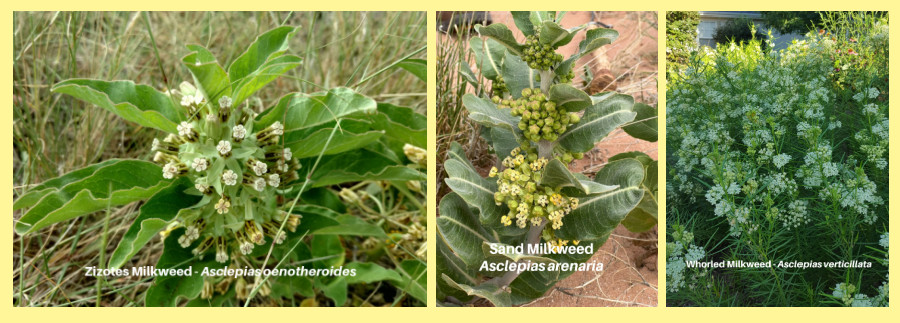
- Sand milkweed, A. arenaria – greenish flowers, dry soils, full sun, 2 to 4 feet tall
- Woolly milkweed, A. languinosa – white/greenish flowers, moderate to dry soils, full sun, 1 to 2 feet tall
- Dwarf milkweed, A. ovalfolia – white flowers, moderate soils, full sun, 8 to 24 inches tall
- Plains milkweed, A. pumila – pink flowers, dry to moderate soils, full sun, 1 to 3 feet tall
- Showy milkweed, A. speciosa – pink star shaped flowers, moderate to dry soils, full sun, 2 to 4 feet tall
Central Plains
While my portion of this is generally from Highway 81 eastward, I am acquainted with western Kansas and Nebraska, where much of my family is from. It is a tough environment for anyone, but beautiful in all seasons. This area includes the south half of Nebraska, all of Kansas, northwest Missouri, the northern half of Oklahoma, and eastern Colorado.
- Marsh milkweed, A. incarnata – pink flowers, wet loving, full sun, 3 to 5 feet tall
- Common milkweed, A. syriaca – white, pink, or reddish pink flowers, dry to slightly moist soil, full sun, 3 to 6 feet tall
- Whorled milkweed, A. verticillata – white flowers, dry to moist soils, full to part sun, 1 to 3 feet tall
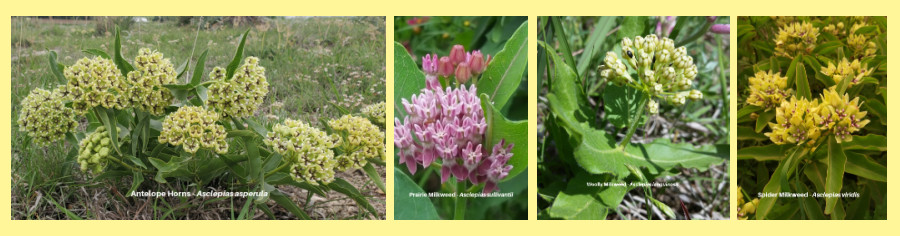
- Woolly milkweed, A. languinosa – white/greenish flowers, moderate to dry soils, full sun, 1 to 2 feet tall
- Plains milkweed, A. pumila – pink flowers, dry to moderate soils, full sun, 1 to 3 feet tall
- Showy milkweed, A. speciosa – pink star shaped flowers, moderate to dry soils, full sun, 2 to 4 feet tall
- Tall Green milkweed, A. hirtella – greenish/red flowers, moist soils, full sun, 2 to 3 feet tall
- Prairie milkweed, A. sullivantii – pinkish/purple flowers, moist to moderate soils, full sun, 2 to 4 feet tall
- Spider milkweed, A. viridis – purple/green/white flowers, dry to moderate soils, full to part sun, 1 to 2 feet tall
- Antelope horns, A. asperula – purple/green flowers, dry soils, full sun, 1 to 2 feet tall
- Butterfly milkweed, A. tuberosa – orange, red, or yellow flowers, dry to moderate soils, full sun, 1 to 2 feet tall
Southern Plains
This is for Texas, as well as the southern half of Oklahoma. Let’s face it, the weather down there is just different. I love it, but I am glad to live in Kansas over it. For all you in Texas, God Bless you!
- Spider milkweed, A. viridis – purple/green/white flowers, dry to moderate soils, full to part sun, 1 to 2 feet tall
- Antelope horns, A. asperula – purple/green flowers, dry soils, full sun, 1 to 2 feet tall
- Whorled milkweed, A. verticillata – white flowers, dry to moist soils, full to part sun, 1 to 3 feet tall
- Butterfly milkweed, A. tuberosa – orange, red, or yellow flowers, dry to moderate soils, full sun, 1 to 2 feet tall
- Pineland milkweed, A. obovata – reddish/green flowers, dry soils, full sun, 2 to 3 feet tall
- Broadleaf milkweed, A. latifolia – greenish/yellow flowers, dry to moderate soils, full sun, 2 to 3 feet tall
- Zizotes milkweed, A. oenotheroides – white flowers, dry to moderate soils, full sun, 16 inches tall
North American Deserts
While I have had strange calls here for people wanting plant ideas for places like Florida, New York, and Georgia, I have yet to receive any calls from desert states. But milkweeds grow there too! This list is for those of you residing in Nevada, parts of Utah, Arizona, New Mexico, Wyoming, Oregon, and Washington off the coast. I have been to this area of Oregon, so I can understand what you go through.
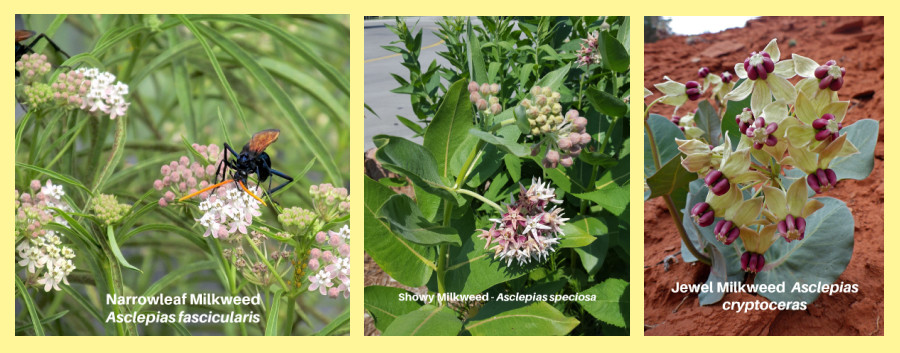
- Antelope horns, A. asperula – purple/green flowers, dry soils, full sun, 1 to 2 feet tall
- Jewel milkweed, A. cryptoceras – purple/green flowers, dry soils, full sun, 1 foot tall
- Narrowleaf milkweed, A. fascicularis – pink flowers, dry soils, full sun to part shade, 1 to 3 feet tall
- Broadleaf milkweed, A. latifolia – greenish/yellow flowers, dry to moderate soils, full sun, 2 to 3 feet tall
- Showy milkweed, A. speciosa – pink star shaped flowers, moderate to dry soils, full sun, 2 to 4 feet tall
- Butterfly milkweed, A. tuberosa – orange, red, or yellow flowers, dry to moderate soils, full sun, 1 to 2 feet tall
Mediterranean California
This part of California runs along the coast from Baja inland to Shasta Lake, east of the Mendocino Mountains. It is similar in climate to the Mediterranean region of Europe. The weather is semi-arid, with wetter winters and drier summers. Despite being apart from much of the rest of the country geographically, there are many milkweeds which will grow in this region.
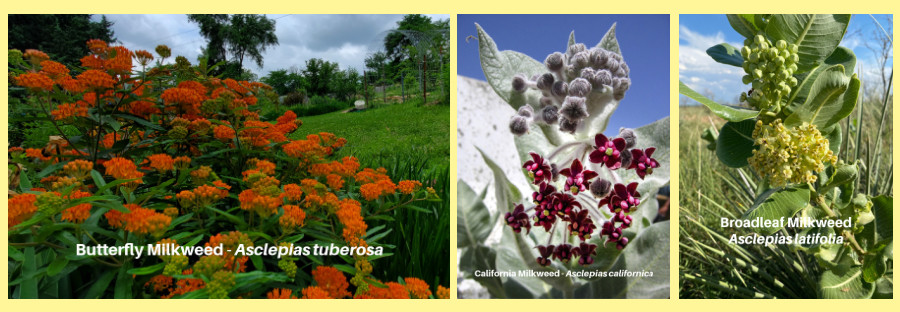
- Broadleaf milkweed, A. latifolia – greenish/yellow flowers, dry to moderate soils, full sun, 2 to 3 feet tall
- Showy milkweed, A. speciosa – pink star shaped flowers, moderate to dry soils, full sun, 2 to 4 feet tall
- Butterfly milkweed, A. tuberosa – orange, red, or yellow flowers, dry to moderate soils, full sun, 1 to 2 feet tall
- Narrowleaf milkweed, A. fascicularis – pink flowers, dry soils, full sun to part shade, 1 to 3 feet tall
- Antelope horns, A. asperula – purple/green flowers, dry soils, full sun, 1 to 2 feet tall
- California milkweed, A. californica – showy pink flowers, dry to moderate soils, full sun, 3 to 4 feet tall
Pests of Milkweeds
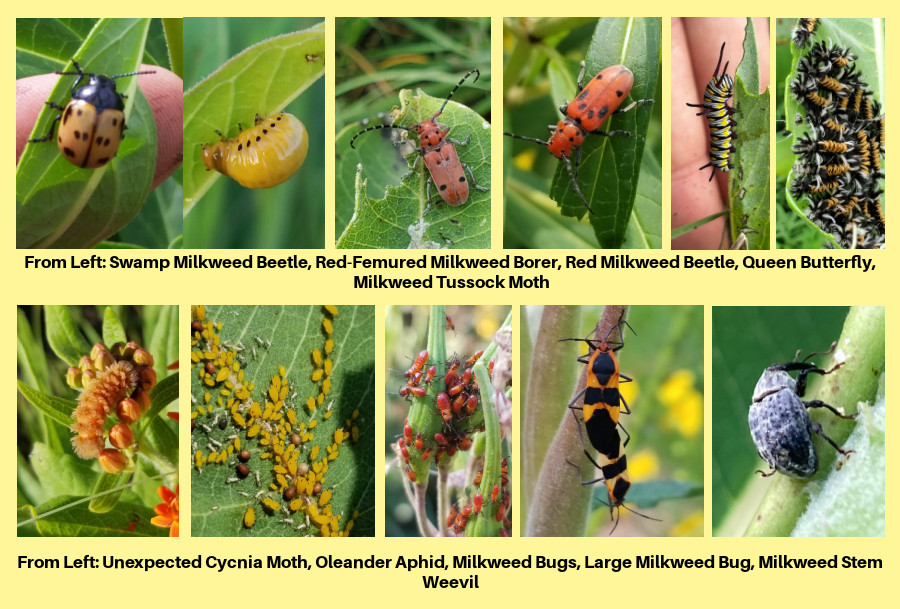
Why do we plant milkweeds? For monarchs of course. But a lot of new gardeners do not know what the caterpillars of monarch butterflies look like and tend to freak out a little when they see something chomping on their milkweed plants. But besides monarchs, there are a number of specialist insects which feed on milkweed plants. I personally leave these alone, because they are part of the ecosystem and everything gets eaten by something. Even monarchs are eaten by spiders, assassin bugs, and mantids.
That being said, it is important to know what is feeding on your milkweed, so you do not have to have a fear of the plant’s chompers.
- Cobalt blue beetle – found in the western 1/3 of the United States. Adults feed on foliage and the larvae feeds on roots.
- Red milkweed beetle – eastern United States. Adults feed on foliage and larvae feed on the roots.
- Red-femured milkweed beetle – western 2/3 of the US. Adults feed on the foliage and flowers, and the larvae feed on the roots.
- Large milkweed bug – eastern 2/3 of US and southern 1/2 of California. Adults and nymphs feed on all parts of the plant.
- Small milkweed bug – entire US. Adults and nymphs feed on all parts of the plant.
- Swamp milkweed beetle – eastern 1/2 of US. Adults and larvae feed on leaves, flowers, and stems.
- Oleander aphid – entire United States. Adults and nymphs feed on all parts of the plant.
- Japanese beetle – eastern 1/2 of US. Adults feed on the flowers of common and showy milkweed.
- Milkweed Leaf-miner fly – primarily the northeastern US and Ohio valley. Larvae chew tunnels in the leaves.
- Milkweed stem weevil – eastern 1/2 of US. Larvae bore into the stems of common and showy milkweed.
- Milkweed tussock moth – eastern 1/2 of United States. Larvae feed on the leaves gregariously. They can decimate whole plants quickly.
- Queen butterfly – southern 1/2 of US. Larvae mimics monarch and feeds on the leaves, flowers.
- Delicate Cycnia moth – eastern 1/2 of US. Larvae feed on leaves.
- Unexpected Cycnia moth – eastern 1/2 of US. Larvae feed on leaves and flowers.
- Soldier butterfly – southern US and Mexico. Related to Monarchs, larvae feed on leaves and flowers.
Pollinators of Milkweeds
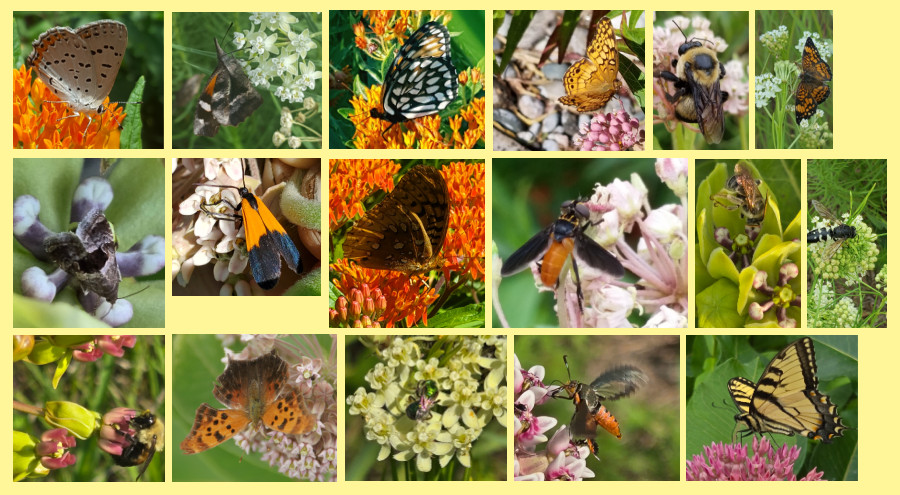
While we do grow our milkweeds primarily for monarch butterflies, there is a host of other insects which feed on the nectar and pollen of milkweeds. Monarchs are there for the plant as a whole, but other insects are there for a snack and then move on. Instead of listing all the many insects which feed on and subsequently pollinate milkweeds, I will share photos of them. A list of that sort could fill another page!
Conclusion
Learning what types of milkweeds are best for your gardens and your region is the first step towards creating a paradise for the monarchs. And we as gardeners need to do everything possible for monarchs, but also for all native living things within our region. If we do not, they trying to make a difference for one individual will become harder and harder. For the pests of milkweeds listed above, they have their predators within a healthy ecosystem. If you remove any of those by spraying or adding in too many nonnative plants, then you risk catastrophe in the landscape. But I think we are on the right path for the future.
Happy planting!