Typically, a week in June or the entire month of June is set aside as a month for natives. Native plants that is. The Kansas Native Plant Society has for years petitioned the Kansas Governor to make June Native Plant Month. And it usually is. Also during June, a week is often set apart as Native Plant Week by various organizations like Nebraska Statewide Arboretum, Kansas Native Plant Society, or Midwest Native Plant Society. June has long been a time to celebrate natives.
But why do we pick on June for natives? Because even though there are natives blooming from March to November, the Plains States such as Kansas, Nebraska, Oklahoma, the Dakotas, Iowa, and Minnesota have the most abundance of native plants during June. June is when wildflowers are blooming, grasses are swaying in the wind, and butterflies are doing their thing.
Why Grow Native Plants?
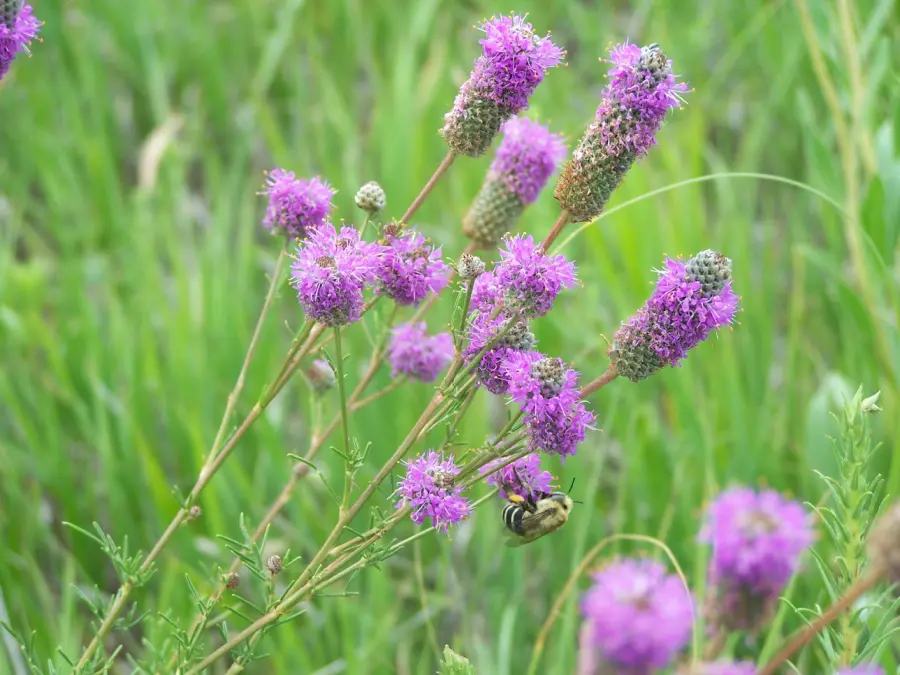
Native plants have become more and more popular in recent years for a variety of reasons. One of the biggest ones is pollinators. People love seeing bees and butterflies, and they have found that our natives do a better job of providing pollen and nectar than introduced plants. And natives are hosts for many moths and butterflies.
Natives are adapted to their ecoregion, making them the perfect choice for landscapes in those regions. And while there is a lot of overlap in regions and natives in those regions, a coneflower from Kansas may not be the same as the same species from Kentucky, or Massachusetts. They are adapted to those specific regions.
Many see natives as the solution to climate issues, but native plants cannot do the work of ecosystems by themselves. As we have ripped apart and fragmented native plant communities (ecosystems), there is not one way to restore the balances of nature. It will take decades and a commitment by more than just conservationists. All of us are needed.
Their Role in the Landscape
I do not mean just your home landscape. But also the American landscape all around us. So many native plant groups try to say natives (broadly) are drought tolerant once established, or can completely replace introduced plants, or are more beautiful than hybridized plants. Some of that is true, but not always.
Natives that are found in dry regions are resistant drought pressures. But to blindly group all natives under the heading of drought tolerant is irresponsible. What about American water willow? Would this water-bound perennial be perfect for the prairie? No. And you would not put Missouri foxtail cactus into a bog garden either. We must not forget about proper plant placement of natives.
Out there, in their proper places, natives are holding the soil in place. They are bringing nutrients up from the soil and sequestering carbon. Natives are providing homes for birds and wildlife, and food for butterflies and moths. They are part of a bigger ecosystem than we can even imagine, if looked at only from from the top down, instead of from the soil line up.
Adding Native Plants
How do I add natives to my own landscape though? We need to think regionally. I am not saying that it is wrong to grab a perennial you really like from the store or online and try to grow it in your own yard. That often does work. But if we are trying to add natives to our yard to help local and migratory animals, birds, and pollinators, then we need to think about where our plants are coming from.
Is the seed source for the plants found in our region? Where are the plants being grown? Have the plants been changed or hybridized in any way? Most nurseries sell a range of native plants, some they grew and some they brought in ready to sell. Usually, the ready to sell ones are harder to grow for small setups, and instead come from out of their region growers.
What is in a Name?
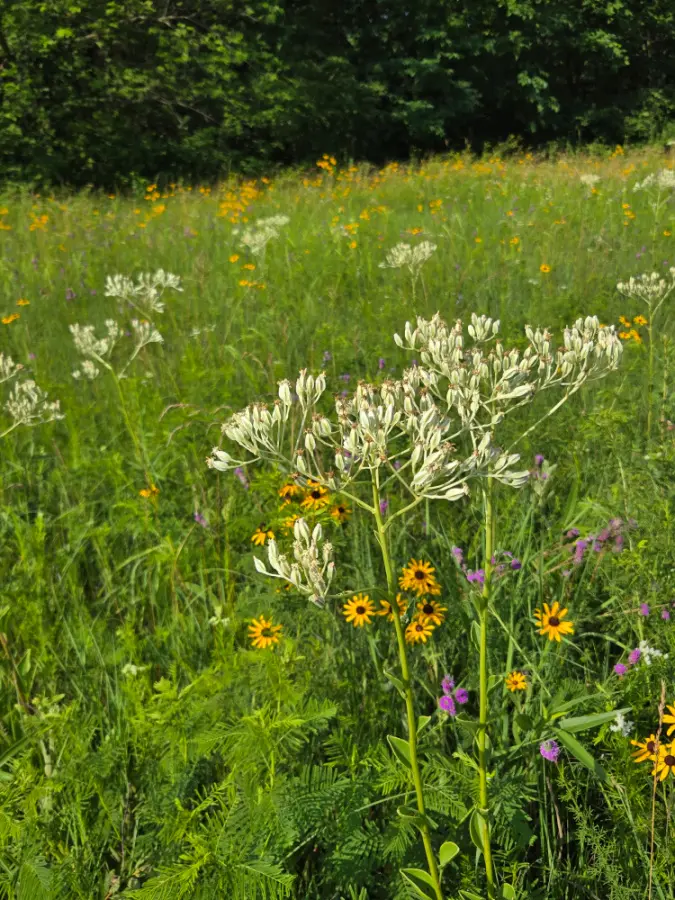
For the most part, natives are not bred or hybridized when they assume a cultivar name. Most native cultivars or nativars are just selected for a specific trait and given a name to distinguish from other similar natives. For example, Swamp Milkweed 'Cinderella' looks exactly the same as true swamp milkweed. But it was chosen and names to sell better in nurseries and garden centers.
But there are some natives out there which were hybridized or bred for specific traits. This is especially true of coneflowers. A lot of breeding has been done to produce new colors, double flowers, and longer flower times. These things would not be found in nature, so man has done what he could to make it happen. And many buyers like the "diversity".
So when you are looking to add native plants to your own gardens, and want to be strictly native, ask about seed source and for true species, not cultivars.
Designing the Native Garden
If you are have a new home or want to re-design your landscape to include natives, then I would ask for help. Hire a qualified landscape designer, someone who has experience in using natives as well as knowledge of meadow gardens, rain gardens, bog gardens, and swales. All may be needed to properly design your landscape using natives.
Now, I am not a purist, I have no problem mixing native plants with introduced plants in a landscape, as long as they work together and you are not using invasives. There are many ways to plan and design your landscape. I recommend using the natural landscape around you as a starting point for you design. For example, if you live somewhere in the Great Plains, and the natural landscape is mostly prairie around you, then do not put in a Colorado mountain-style landscape. Focus on the beauty of the prairie and mimic that in your design.
Styles
I have gone over some of this before. Your home landscape should mimic as mush as possible, the natural landscape around you. This will reduce your impact on natural ecosystems, and increase your ability to have a beautiful landscape through local weather patterns. A landscape that uses regionally sourced natives will be more resilient when wind, rain, drought, heat, and cold come to call.
There are different patterns and micro-ecosystems even within the whole. Here in Northeast Kansas, within 75 100 miles of Grimm's Gardens, there is prairie, savannah, woodlands, woodland glades, forest, lake, swamp, fen, bog, and ravine types of landscapes. My own yard has prairie, mesic (wet) prairie, and woodland. And that is all in a 5 acre space.
Each type has its own requirements. They all have certain plants that do better in one versus another. Make sure your designer takes into account your soil type, your land shape and contour, and the different micro-ecosystems around you.
Adding Non-native Plants?
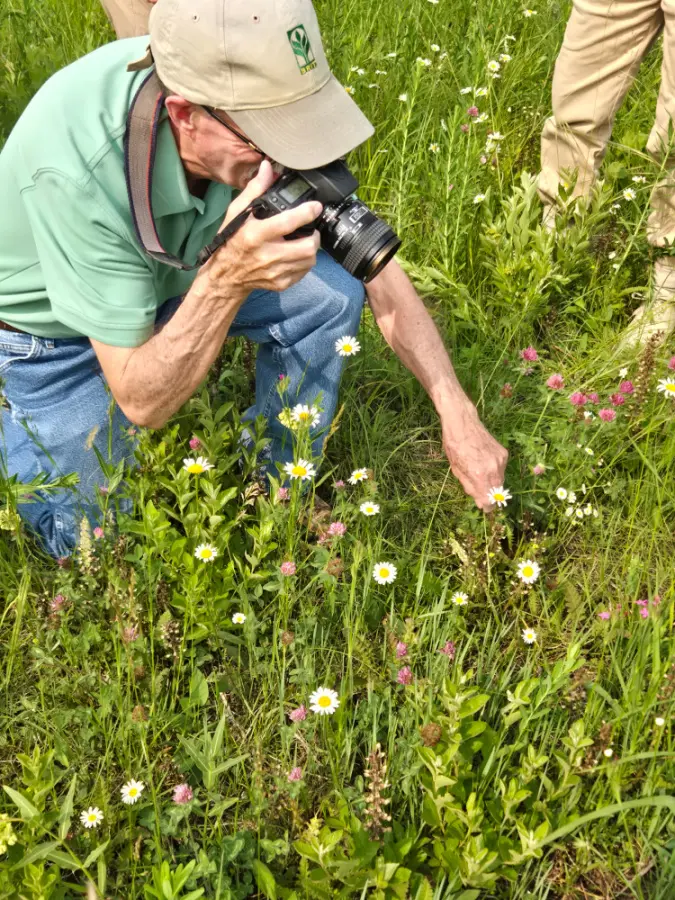
It is possible to mimic the natural landscape around you and still have some of your favorite introductions. For example, in a savannah type of landscape, groups of trees and shrubs can be placed among the meadow grasses. These groups can be made up of introduced or naive trees and shrubs. In fact, most landscape types can be integrated with both natives and nonnatives. However, that does not mean that you should go with more introduced plants than nonnative. A good rule is to go with at least 70% native to 30% nonnative in your landscape.
Conclusion
Natives are beneficial to landscaping in many ways. Besides bringing our favorite pollinators, they are more adaptable to our ever-changing climate, can handle micro-climates if placed correctly, and are more tolerant of varying soil conditions. Bringing them into the garden can make a difference biologically and economically for years to come.
Happy planting!