With Kansas Day over and done, we think back to the symbols of our state. What is mightier than the cottonwood, the tree that towers over the Great Plains? The Eastern Cottonwood, Populus deltoides, is the symbol tree of Kansas because of its tough nature and survivability. The cottonwood grows where it should not, survives fires, floods, tornadoes, and drought, and is a resilient member of the Kansas family. Yes, the cottonwood to me is family.
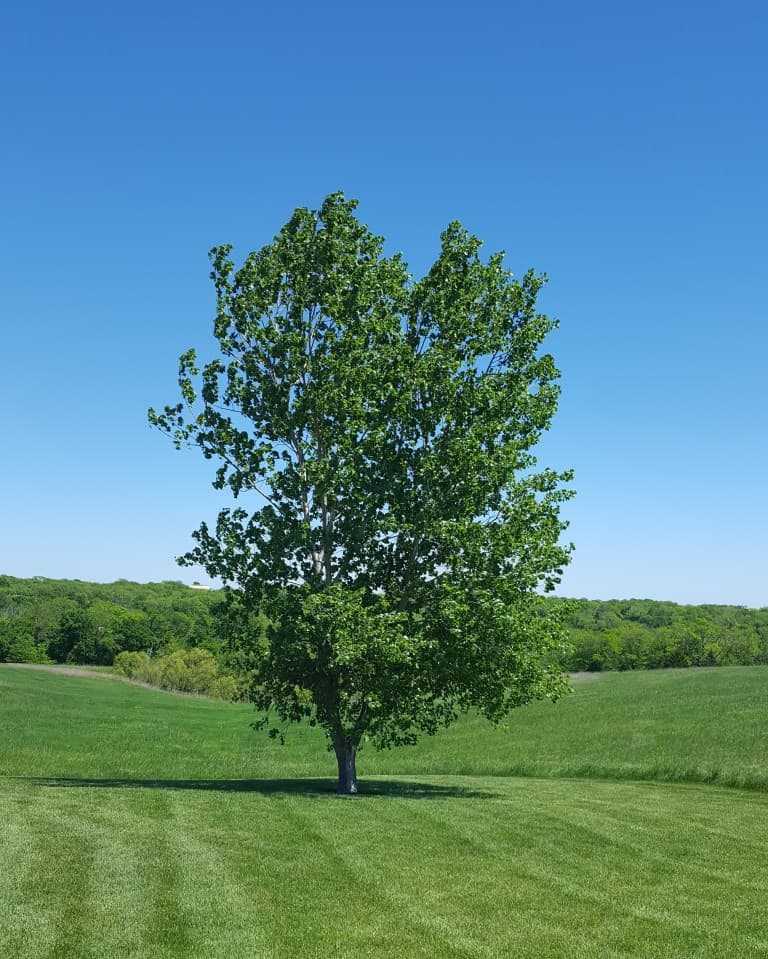
I have long been a true Kansan, a lover of prairies and shade, honest and kind, tough and unyielding, and a friend to all; just like the cottonwood. My early memories lead me to the shade of the cottonwoods in our creek-bottoms, where my siblings and I played under its branches. We hunted for morels in spring and oyster mushrooms in fall among the cottonwoods along the Republican River. And now, after moving to the northeast corner of the state, I have 2 large cottonwoods in my yard, shading me in the morning and playing the air with their tattling leaves.

Although the cottonwood does not have the musical ability of the quaking aspen (Populus tremuloides), it still has its own musical enrichments. And even though it is a large and quite messy tree, it is a wonderful addition to the landscape. I would recommend a cottonwood to the landscape, and here is why.
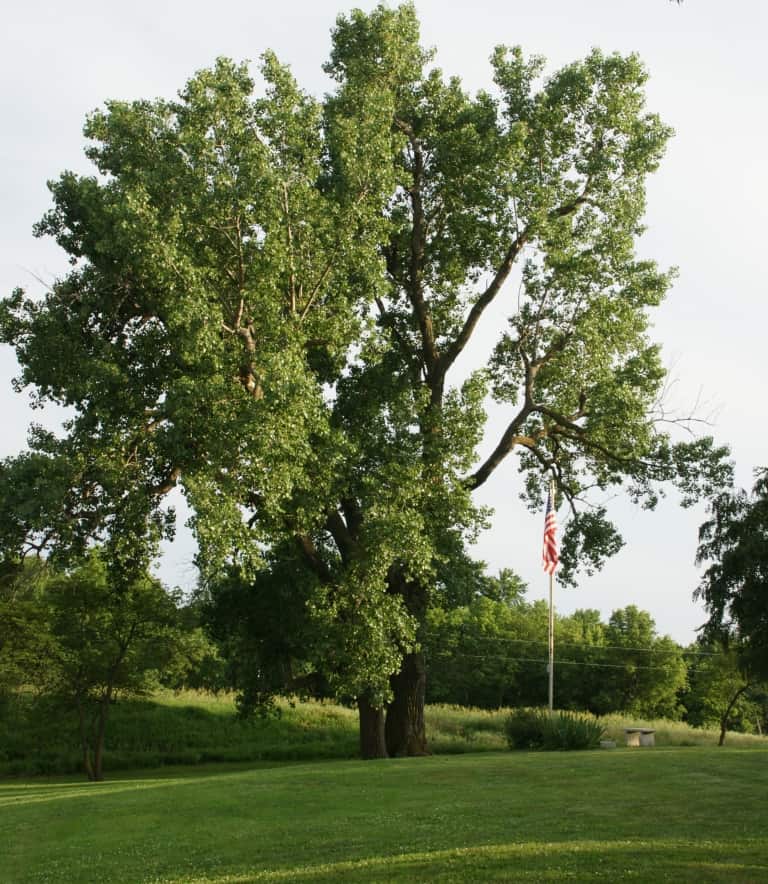
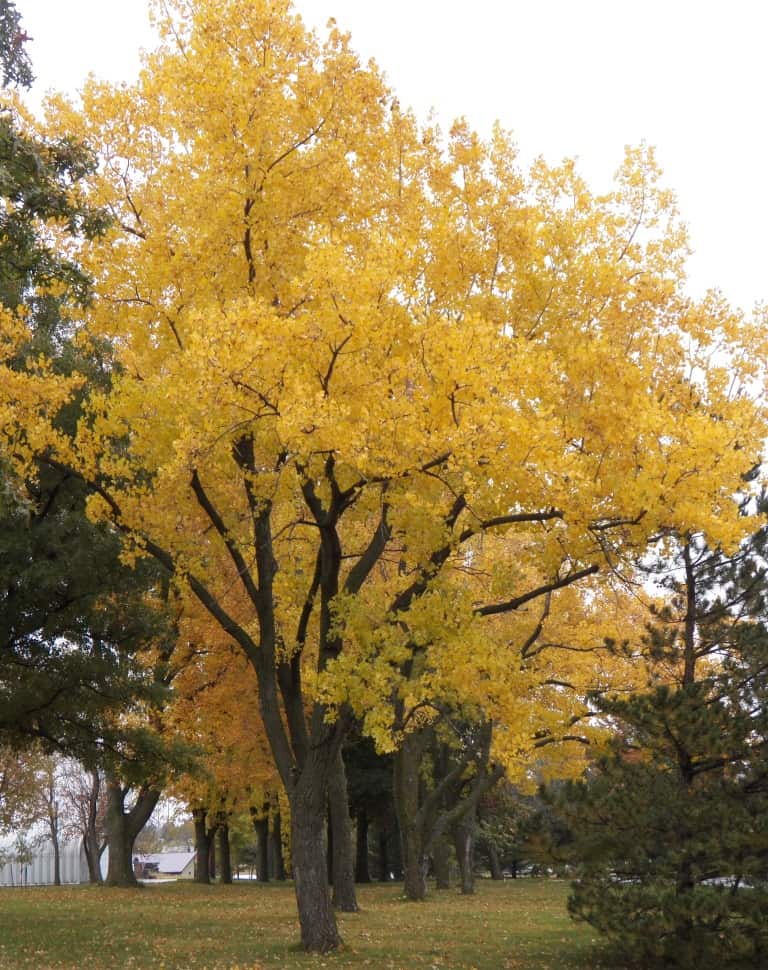
Cottonwoods are great shade trees. They grow fast, but slow down as they get older. Yes, they can be weak in spots and may lose branches regularly, but if planted the proper distance from the house, no damage should occur. Remember that proper pruning on all trees can help correct poor branch angles and trunk development. Cottonwoods, like the aspen, make music in the seemingly unending Kansas winds. Cottonwoods are tough, like I said above, they can withstand nearly every natural disaster, and certainly everything in Kansas. They have great fall color-when we get moisture in August and September, we have great fall color on everything, however, cottonwoods nearly always turn a bright shade of yellow. And some cottonwoods have reddish colored new growth in the spring.

Cottonwoods are host to a variety of insect species including pollinators. Butterflies such as the viceroy, mourning cloak, and the eastern tiger swallowtail all use it as a food source for their caterpillars. The cottonwood dagger moth and numerous other moth species feed on it. There are also a variety of insects that feed on it, including aphids (which are eaten buy lady beetles and lacewings), and beetles including the cottonwood leaf beetle.
Yes, you may have to deal with the dreaded cotton if you have a female tree, but it is no worse than the helicopters of the overplanted silver maple (Acer saccharinum), or the huge leaf and seed drops of sycamore (Platanus occidentalis), or even the nuisance seeds of sweetgum (Liquidambar styraciflua). You can try the male cultivar ‘Siouxland’ or other cultivars on the market if you really do not want to have cotton from your own tree.
So take another look at the Kansas state tree, the Eastern Cottonwood. And enjoy the shade!
Happy planting!